
Category: ADVERTISING

  • Is Gaming the Silver Bullet that can change Brand Marketing in 2021?

    Barack Obama used in-game advertising hoardings in the game Burnout Paradise among others, during his 2008 Presidential campaign


    By Bhuvi Gupta


    Bhuvi GuptaThis is the first time I am going on the record to admit that I have spent a lot of time playing online. Luckily though, these obsessions were recognised before they became addictions after an unhealthy time spent on Farmville, Angry Birds and lastly Candy Crush, before I admitted that I would not go down the slippery rabbit hole that can be gaming and have kept myself away since 2015.


    I am definitely the exception. In the last few years, driven by increased digital penetration and bandwidths, (and this year COVID-19) mobile gaming in India has exploded. As per a report from app intelligence firm Sensor Tower, Indians installed 7.3 billion games, nearly 17% of all worldwide downloads in the first nine months of 2020, beating countries like USA and Japan to the number one position.


    Basis the Google-KPMG Media Report 2020, the Indian gaming industry will cross USD 1.1 billion in 2021. With around 500 million people in India having smartphones (give or take a few million) and around 300 million+ gamers, there is no denying that this market is growing with the lockdown having helped accelerate the growth. The biggest USP of mobile gaming is the level of engagement that the audience has while playing a game. A GroupM- Mobile Marketing Association report (link – https://www.groupm.com/mobile-marketing-association-and-groupm-launch-mobile-ecosystem-report-2020/) highlighted that gamers are more than twice as likely to pay attention to advertisements placed in mobile games at 41 percent, as compared to ads placed on the internet at 17 percent, in magazines or on billboards at 15 percent each.

    This implies the inherent value of digital impressions becomes much higher.


    Marketing during gaming takes three forms primarily –

    :: Integrations – which are well-integrated into the narrative like branded ‘Virtual Real Estate’ like banners within the game, branded items like clothes or accessories worn by avatars, and fully branded modes or levels

    :: Advertisements for additional lives, etc. which can be typically purchased on ad exchanges

    :: Events such as e-sporting leagues
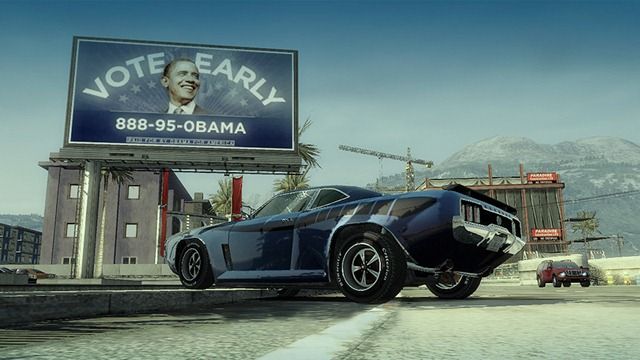
     

    Barack Obama used in-game advertising hoardings in the game Burnout Paradise among others, during his 2008 Presidential campaign


    Barack Obama used in-game advertising hoardings in the game Burnout Paradise among others, during his 2008 Presidential campaign.


    In India, Gaming in India can primarily be classified into four heads-

    :: Fantasy Gaming – which already has 100 million users with companies like Dream 11, Mobile Premier League dominating.

    :: Action games – such as PUBG and Fortnite. While Fortnite doesn’t have as many users in India it has been the front-runner in terms of brand integrations globally.

    :: Real Money Gaming – like online Rummy, Poker, and Ludo King. This comes under the purview of gambling and hence basis Indian law is subject to laws as dictated by states. While skill-based games such as Poker and Rummy are usually permitted, games of chance are prohibited. The recent PayTM First Games ban on the Google Play Store was also related to the definition of what constitutes ‘Gambling’

    :: Live Trivia apps – such as Pocket Aces owned Loco


    Why Gaming?


    With more people coming online there is ad fatigue that takes place due to the high number of ads users see. Many users also use ad blockers, and hence awareness and engagement with even well-targeted ads is low as the audience is just waiting to skip the ad.


    This is as opposed to the active audience that plays online games, where they are tuned to engage with the gaming platform to maximise scores. By using product integrations, or branded levels, brands can also help create immersive experiences for the target audience.

     

    Poco introduced their new launch, POCO M2 Pro via the game Tappy birds. A weeklong tournament called ‘Tappybird showdown’ was held where the mobile phones were placed inside the game, and players had to collect the phone to earn extra cookie points.

    Secondly, as the market is still nascent, brand integrations remain relatively unexplored. With 5G coming into India in the next 5 years, gaming will become immersive and hence technologies such as AR/VR will help create a value-added gaming environment, which is perfect for marketing.


    Poco introduced their new launch, POCO M2 Pro via the game Tappy birds. A weeklong tournament called ‘Tappybird showdown’ was held where the mobile phones were placed inside the game, and players had to collect the phone to earn extra cookie points.


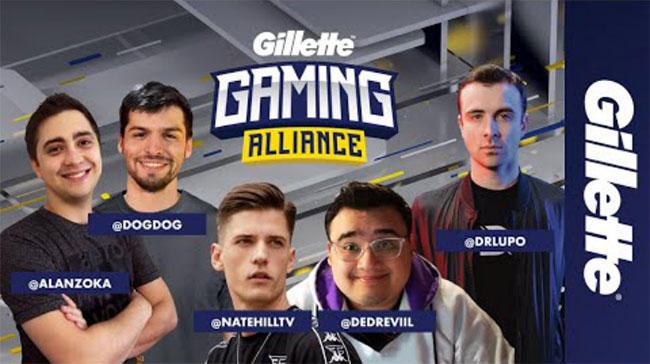
    Thirdly, emergence of e-sporting leagues and tournaments and live game streaming allows brands to leverage gaming influencers, do cause marketing, sponsorships etc. for a well-defined audience. The Google-owned YouTube has a vibrant community of gaming live streamers such as Tanmay Bhat, Gagandeep Singh (Sikh Warrior), Manasvi Dalvi (Manasvivi) etc. in India. Globally such campaigns are have already become common, for e.g. P&G’s Gillette has hosted the Gillette Gaming Alliance on Amazon-owned live streaming platform Twitch in 2019 and 2020 with a team of five Twitch influencers to create content for their fans, and highlight other campaigns and causes.


    Lastly, just like in digital advertising, brands can target users on the basis of demographics and geographies, which makes in game advertising all the more effective. There is also high prevalence of gamers in Tier2 and Tier 3 cities, which can be leveraged by brands.
    While it may seem that Gaming is more relevant for youth-focused brands, the 35+ age group has high usage in more traditional games such as LudoKing, Online rummy and Poker. Hence, depending on the target audience, brands should choose games online to create impact.


    The timing is right, the lockdown has helped accelerate user growth, and Indians brands must strike when the iron is hot to make the most of a relatively undiscovered avenue for advertising before it gets too crowded.


    Bhuvi Gupta is a marketer with over 10 years across industries, of which the last six have been in Media & Entertainment. She has been a part of many launch marketing campaigns – specifically at the Times of India group, Republic TV and the latest in marketing a Bollywood film. She will write on A&M (mostly marketing, but often on advertising too) every other Tuesday. Her views here are personal. She tweets at @bhuvigupta3



  • Why Brands have a Responsibility to Step Up & Help in Economic Recovery


    By Bhuvi Gupta


    Bhuvi GuptaIndia has been under a full lockdown since March 24, 2020. After three subsequent extensions, a relatively unsuccessful Unlock 1.0 & 2.0 in June and July, spikes in positive cases are forcing many Indian cities to go under full lockdowns, again.


    As the economy degrows, unemployment rises and sales decreases and every subsequent FY21 GDP forecast is worse than the previous one, the future seems bleak and unlikely to bounce back soon.


    Basis a GroupM report released in June 2020, India’s GDP will contract by 3.7% and subsequently overall advertising spends will decline by more than 20% this year.  This follows, as advertising in current scenarios is an after-thought, with most companies focused on reviving production and distribution. The drop in advertising has led to unprecedented job losses in the ad-dependent media industry, so much so that industry body International Advertising Association (IAA) has been running a campaign, ‘Let’s Advertise’ to spur advertising, since June 2020.


    The campaign seems to have made some impact  – brands in the Health & Hygiene categories or those that can pivot their messaging to sound Covid-wise have started advertising. However, this is a small portion of the market, and for the economy to revive, brands which can afford to, should, play a bigger role in recovery.


    As Keynesian economics espouses, spending spurs consumption during times of economic downturns. If brands (which can) spend monies, this will spur demand, and the money will help the economy as a whole. In such pandemic times, the messaging of many brands is irrelevant, a great way to remain visible is by running Public Service Announcements (PSAs) campaigns.


    While a decade ago, PSAs were issued by govt bodies, with the advent of social media, brands regularly run socially relevant campaigns because they help the brand earn respect and hence brand equity while also doing social good. Due to their affirming messages, PSAs also have higher than average trend-worthiness, i.e. audiences share these ads more because it helps them feel good about themselves to do something socially relevant.


    With the notable exception of Mumbai Police PSAs, most PSAs released by government bodies in India, are pedagogical spiels, which are not engaging, even when starring celebrities.


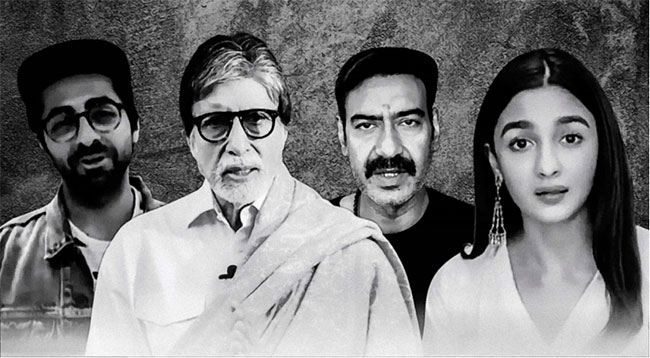
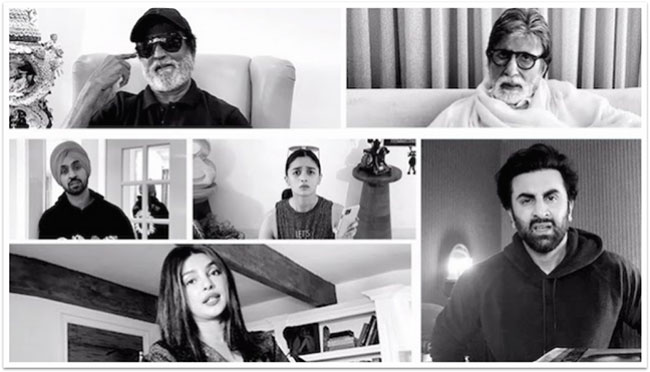
    In March 2020, just as the lockdown was announced, the Maharashtra government released a pedagogical PSA on Covid-19 headlined by the biggest stars of Bollywood including Amitabh Bachchan, Ranveer Singh, Ayushmann Khurrana, Alia Bhatt, Akshay Kumar etc. A month later, Sony launched a PSA with a similar Bollywood lineup but a much better storyline. (The PSA can be viewed here – https://www.youtube.com/watch?v=OQk0VrL2I-w


    Short film – ‘Family’, conceptualised and virtually directed by Prasoon Pandey for Sony Network starring celebs from across the country used storytelling creatively to communicate the importance of staying at home. It was telecast in April 2020. https://www.youtube.com/watch?v=ju7ku–S6F4


    Hence, in Covid-stricken times, effective PSAs can help brands kill many birds with one stone  – create brand equity, earn public goodwill, spur good behaviour, meet annual CSR target spends as mandated by Indian law and, most importantly, help the economy recover.  Earned goodwill will also spur trials for those whose loyalties lie with competitors.


    Budget-struck brands can collaborate with other brands; conduct digital-only campaigns to give the push to the economy to help its recovery.


    As brands with diverse target audiences release PSAs, different strata of society will get targeted which will help in overall compliance. This is backed by research conducted by 2019 Nobel laureates in Economics, Abhijit Banerjee and Esther Duflo. In a paper released last month, they have shown that frequent celebrity messaging, in addition to the existent large-scale government messaging on Covid-19, can positively impact behaviour by nudging people to follow best practices. The research also shows that there are spillovers of good behaviour in the entire community even when a few are targeted.

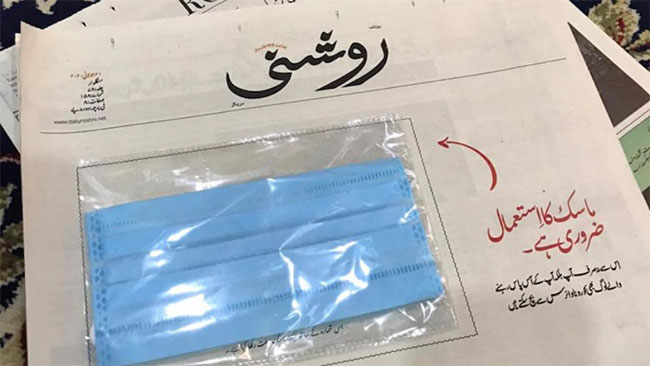
    In a CSR initiative, waiting to be replicated by national dailies, Kashmir ‘s Urdu newspaper Roshni, affixed a mask on the front page of the paper on July 20 to drive home the message about mask usage. Kashmir was under complete lockdown from 22-27 July, due to a rise in Covid cases.

    VIRALITY TO BEHAVIOURIAL CHANGE

    The challenge even for good PSAs is translating virality to behavioural change. The ease of communication brought on by social media has made armchair activists of the majority of the population. However, while these activists enable knowledge-sharing with other people they don’t bother much with acting upon the gained knowledge before moving on to the next trending topic. Which is why, despite the dangers of inobedience, many who wear a face mask, style it as a chin-guard.


    Hence, brands should be careful to create PSAs which are not just a retelling of facts, but facts communicated in way to appeal to their targeted audience, whether it is through high quality storytelling, a new ‘Hook Step’ or a ‘Challenge’ which is creative enough to warrant sharing.  Basis the research by Banerjee and Duflo, leveraging brand ambassadors signed on for lavish multi-year contracts will also help to drive behavioural change. So brands, any takers?


    Bhuvi Gupta is a marketer with over 10 years across industries, of which the last six have been in Media & Entertainment. She has been a part of many launch marketing campaigns – specifically at the Times of India group, Republic TV and the latest in marketing a Bollywood film. She will write on A&M (mostly marketing, but often on advertising too). Her views here are personal. She tweets at @bhuvigupta3


  • Pivot or Perish… Using your business moat to survive in the pandemic


    By Bhuvi Gupta


    Bhuvi GuptaAs a marketer for the last decade if there is one thing that I can attest to be true is that marketing jargon comes and goes with an average lifespan of a year or two. The jargon du jour is backed by stellar logic, often introduced by a book, or a widely respected businessperson, and has wide applications in the entire gamut of business strategy.


    The latest buzzword is the concept of the ‘moat’ as espoused by Warren Buffett. While he first shared this concept during a Berkshire Hathaway shareholder meet in 1995, it has seemed to catch on in pandemic. (Maybe, because being stuck at home is like a having a moat around you?). Mark my words, we are just at the beginning of the lifecycle of this jargon and you’ll see multiple applications in interviews, podcasts, CEO roundtables et al in the coming times. 


    What are economic moats?


    The usage comes from ancient times, when a moat was a water body built around a castle so as to give the king some time to plan his defense when attacked by an invader.  The concept itself is golden, as most espoused by Buffett are – An economic moat is a distinct competitive advantage a company has over its competitors, which allows it to protect its market share and profitability over the long term. Companies can build moats by strengthening their brands like Apple and Coca-Cola, achieving economies of scale like Amazon, or even lobbying for special status from the government like Patanjali.


    Economic moats have existed since commerce has, but in the digital age, using data, network effects, online marketplaces, search, and social networks can help create wider and longer-lasting moats.


    According to a report from CBInsights, moats can be classified into four types –


    Network Effect– those products whose value increases the more people who use it. All social media networks have network moats, which explains why a Telegram has not replaced WhatsApp despite offering some advantages

    Cost Moats– when users have a high sunk cost in the product or service (high one-time or recurring membership fee) which make them reluctant to switch

    Cultural Moats– when consumers buy into the product for the brand promise and the values it represents. For e.g. people consume Dove because it promotes ‘real beauty’, Coca-Cola due to its great emotional marketing which talks about happiness

    Resource Moats– due to patents or preferential treatment on account of a governing body. Typically why pharmaceutical companies have huge lobbying budgets


    How companies have used their moats in India to remain relevant in the pandemic


    The pandemic has been a death knell to the global economy – USA’s economy has contracted by a third, in its largest quarterly contraction since 1921. India is not expected to fare any better, when numbers release later this month.


    Companies are being forced to be agile and leverage their business moats, and pivot to newer consumer behaviors to remain afloat. Many companies have successfully pivoted their products, launched line and brand extensions to have new health and immunity claims, which is why we even have Chyawanprakash and Haldi ice-cream now (from Amul and Dairy Day Plus). This has come easier to the behemoths like ITC and Dabur, which have both Innovation teams sitting on years of research, and vacant factories to put into use.  As a result, in the last three months, ITC has launched six, and Dabur 15 new products. Such companies also have the business advantage of well-established supply chain and distribution channels.


    How companies which don’t have a moat can remain relevant in the pandemic


    A July 2020 McKinsey survey found that an overwhelming 91% of consumers reported trying a new shopping behavior in India due to the pandemic. Two key trends that stand out from the survey are an acceleration in the rate of digital adoption which has seen a 10+ percent growth in online customer base during the pandemic & a new DIY culture in the middle class which was reliant on household help or access to almost everything via a few taps on their mobile screens. New product categories for fruit & veggie wash, contactless dispensers, dishwashers which would have years of promotion and audience interactions have seen demand rise exponentially.


    These two are the life jackets for Indian companies that can help save them in the coming months.


    The pandemic has facilitated trials (often via e-commerce) as well as repeat buys in the 5+ months of its duration. This is one of the silver linings of the pandemic because categories and products, which would have taken companies years to launch and for consumers to adopt, especially in a value-conscious market like India, have launched overnight.


    Restaurants, which are arguably the worst hit, have started retailing recipe and ingredient kits and sauces. Pictured above are the ready-to-cook sauces, and gravies launched by Jubilant FoodWorks (which runs Domino’s Pizza and Dunkin’ Donuts in India)


    Indian companies, especially the beleaguered ones, must leverage this time to pivot, because even if some of these consumption shifts are pandemic specific, many new behaviours will stick because, getting consumer trials is one of the most difficult parts in a product’s lifecycle.


    Talking from personal experience, now that I have been forced to realise that I am not a half-bad cook, I have often wondered why was I so reluctant to cook earlier and why was I so dependent on my cook or ordering food in. If the rough survey of my social circle is to be believed, I know I am speaking for scores of us in the middle class. These cooking sauces and cheaper dishwashers are only helping to cement this new-found realisation into a resolve to be more independent.


    Bhuvi Gupta is a marketer with over 10 years across industries, of which the last six have been in Media & Entertainment. She has been a part of many launch marketing campaigns – specifically at the Times of India group, Republic TV and the latest in marketing a Bollywood film. She will write on A&M (mostly marketing, but often on advertising too) every other Tuesday. Her views here are personal. She tweets at @bhuvigupta3
     

  • New ad showcases Godrej Vaccine Refrigerators

    By Our Staff


    Godrej Appliances has launched a digital campaign sharing the story of #IndiaKaMagicBox – highlighting how Godrej Vaccine Refrigerators are contributing to the biggest vaccination drive in the world. The campaign is conceptualised and executed by Dentsu WatConsult.

    Talking about the film, Swati Rathi, Marketing Head, Godrej Appliances said: “We wanted to share the deep pride we feel in being India’s critical cold chain partners for the Covid Vaccination Drive, protecting the very vaccines that are expected to protect India. These world class vaccine refrigerators are the epitome of precision cooling – as they safeguard the Covid Vaccines at just the right temperatures of 2 to 8°C, keeping the vaccines safe and effective.  Made in India, these are a testimony of Godrej’s commitment to self-reliant India. The film allows us to talk about our expertise in this relatively lesser known, but in current times, critical space – of advanced medical refrigeration. We wanted to share all this in the context of consumer’s lives and who better than a child to bring alive the almost magical story of hope and optimism. This positivity, and the sense of pride, is also reminiscent of the role brand Godrej wants to play in the Indian consumers’ lives.”

    Added Heeru Dingra, CEO, Dentsu WatConsult: “The nation has undoubtedly worked extremely hard to reach at this stage today that we have a functional vaccine for Covid-19 ready to be administered to the public. Multiple stakeholders are responsible for making this vaccination drive successful and they need to be celebrated. #IndiaKaMagicBox intends to highlight the unspoken role of the critical cold chain which is working behind the scene to make this mission successful. It does so through the innocent yet highly effective voice of the nation’s children. It captures those proud notes from the kids that evoke powerful positive emotions. The focus remains on the fact that at the centre of it is an Indian homegrown brand, which is further heightened by the campaign being launched on the patriotic occasion of the Republic Day.”


  • Another wake-up call this R-Day


    By Sanjeev Kotnala


    The Nation was celebrating its 72nd Republic day. Dressed in a kesaria kurta, I had returned from a drive to Bandra Band Stand. The taste of Jalebi-Dhokla-Vada Pav from Punjab Sweets at Pali Hill was still fresh. It was slowly getting subdued with the fresh cup of Society Masala chai. A heavy dose of customary patriotic songs over the radio stations during the drive had charged me. On return to my society, I had even stopped and shot the typical picture, saluting the National Flag. And I had just watched the Republic Day communication developed by Manish Bhatt and the team at Scarecrow M&C Saatchi for the client Ambuja Cement.




    For a change, the TV set tuned to NDTV I was watching the live parade telecast. In such a pleasant situation, dulled with everything will be right. The NCC cadets marching on Rajpath, the helicopters flying over the parade.


    I was jolted to reality.


    In between the parade coverage, the channel kept the viewers updated with visuals from the three alternate parades happening in the capital—the tractor rally of so-called protesting farmers.


    What one saw was disappointing. One felt ashamed for the fellow countrymen taking this solemn moment to act in the way they did. They have been playing cat and mouse game with the government for long. January 26 was just a culmination of ill intension most likely supported by outsiders. This time it was not as bad as the riots of 2020.


    One wished we were not a democracy. That the protesters had some fear of the law-and-order machinery. That the machinery was allowed a free hand to do what they are meant to do- maintain law and order. Hoped that they were amply supported with right weapons and intelligence. And when one saw the visuals from Lal Qila, one wished they allowed to shoot at sight, instead of allowing the hooligans to keep the city terrorised.


    The law-and-order machinery was never in the game. The Government was put into catch 22 situations. The Government was anyway getting called for not acting. And would be called if they did act. Charged with this confidence, the patriotic farmers were busy challenging the Government.


    The WhatsApp groups were full of typical armchair analyses if the situation. I was one of the vociferous participants. Whatever may be the Rajneeti, the politics of protest. Whoever may be supporting such a protest and gundagardi. If they were Nihangs or Jats. If they were on tractors or on foot. If they agreed or were protesting against a law that the elected representatives have crafted. And one that a large part if the country finds no problem with. None had the right to act the way they did. I go a step ahead; none should dare to act the way they did.


    There is an urgent need in this country to bring new laws and take hard actions. Bring the destructors and penalise them. And if that calls for an emergency type of situation, so be it. The Nation has a responsibility. The Government has responsibility and accountability. What about the citizens of the country? What should the country expect from them?


    I don’t know how, but we cannot afford such destructive protests. The Nation cannot be held to ransom. The laws are enacted by the elected representatives, and any question must be raised in the parliament. In my view, they should not even be challenged in the supreme court. At the worst case just like the president, the court can ask the Government to reconsider – but not force to amend a law duly enacted by an elected government. The battle has to be fought inside the parliament. If the regulations are anti-people, the people have the opportunity in the next election to reject the appeal.


    When one sees the Rajpath Parade, and the Protestors violent parade side by side on the TV screen one gets disoriented. When one views a highly emotive campaign by brands on such occasions, one tends to get disoriented. When one listens to those songs that charge you up, one is unsure which country they refer to.


    I know advertising cannot reflect this violent mood of the Nation. It will still continue to play on the emotions that you hold so dear. The campaigns will remain idealistic and the brands purpose-led. I am sure no brand will comment on what happened on January 26, 2021. Not sure, if they should. The taste has soured. The Ambuja Cement commercial was no longer making sense. What made sense is the MTV and  GoldMedal electricals ad.

    https://youtu.be/yMd29gMcJXQ


    What I am sure is that we, hopefully, feel the need to wake up and take a stance. Tell the government we are with them. The citizens do not need to be threatened and terrorized of such gundas. We have elected a Government to keep order. As citizens, we just want to go about our business in peace and have a good night sleep. The citizen wants no more such incidents.


    That the citizens feel about the Nation. They are patriotic enough not to raise questions if the Government acts decisively. The citizens feel charged when they see the patriotic campaigns not because it is not real-life. But because it is the Nation, they want to live in. And for it to happen, the citizens look at their elected government and the whole opposition to be constructive and decisive in action. Otherwise, none will be spared, and that is not being said figuratively.


    So, if you are still not up. Here is another to close the argument- this time from Adani. And I am happy to note that instead of mussy-mussy all for the Nation- Tera Hai Par Mera Hai feeling- some are raising the questions.


  • Lintas Live to promote Tourism Spain brand

    By Our Staff


    Lintas Live has bagged the social media marketing mandate for Turespaña in India (Tourism Office of Spain for India). It will be responsible for management of the entire virtual community around Turespaña’s social media accounts in India, including content development, crisis management and online reputation management.

    Said Ameer Ismail, President, Lintas Live: “We are delighted that we have won such a prestigious tourism body like Turespaña to represent. The post-COVID world will challenge previously held notions, especially when it comes to the Travel & Tourism sector which will need to have creative and digital first strategies. Lintas Live has demonstrated the understanding of the sector with our years of experience working across hospitality, aviation and other tourism bodies. We have successfully married creativity and digital thinking through our ideas and will attempt to build our communication to position Spain as a preferred destination.”


  • Lowe Lintas bags OLX Autos mandate

    By Our Staff


    OLX Autos has appointed Lowe Lintas Delhi as its agency. The agency’s scope primarily includes delivering offline and digital communication for the brand, amongst other responsibilities.

    Sapna Arora

    Commenting on its association with Lowe Lintas, Sapna Arora, Regional Head for OLX Autos Brand, CMO (India), Head Public Relations (India) said: “We are delighted to welcome Lowe Lintas on board OLX, especially as we expand our retail presence and online autos marketplace business across India to solidify OLX Autos as India’s leading omnichannel pre-owned automobile marketplace. The consumer-centric approach of Lowe Lintas will enable us to extend our connection with the existing consumer base while also tapping into a newer consumer base of first-time car owners. We look forward to delighting our consumers, dealer partners and automobile ecosystem with memorable brand campaigns that have made OLX a household brand across India.”

    Naveen Gaur

    Added Naveen Gaur, Deputy CEO, Lowe Lintas said: “OLX and Lowe Lintas have had a great relationship, and the work we did in past still resonates with people today. It is great to be on board with them again for their Autos business. They appreciate our skill set when it comes to understanding the Indian consumer, insights, strategy and expertise in a digital consumption world. We look forward to creating powerful work on OLX Autos in the coming year.”


  • ASCI extends consumer connect initiatives

    By Our Staff


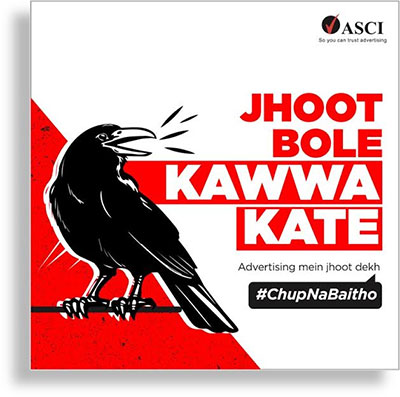
    The Advertising Standards Council of India (ASCI) has launched the #ChupNaBaitho, a call-to-action digital campaign, to create an awareness about objectionable advertisements and encourage consumers to report such advertisements. In the three-month pilot, ASCI will focus on Mumbai and New Delhi.

    Said Manisha Kapoor, Secretary General, ASCI: “One of ASCI’s key objectives is to turn consumers into allies. We want them to be more aware of their rights and what constitutes objectionable advertising. We want them to report such claims to us and we promise to act quickly and decisively on such complaints. The overall goal is to drastically reduce the number of misleading and objectionable advertisements. Over the last few months, we have introduced several guidelines, reports and advisories like the ones on COVID-19 advertising and Online Gaming for Real money winnings. The Trust in Advertising report that studied how much faith consumers have in advertising is another example of how focused we are towards protecting consumers. #ChupNaBaitho is another step towards this goal. We want to encourage consumers, especially the youth, to report advertisements that they find objectionable. This campaign is just the start and will be followed by other such initiatives in the year.”


  • Havas brings Conran Design to India

    By Our Staff


    Havas Group India has brought in Conran Design Group to India. This will allow Havas’ clients to tap into Conran’s expertise in brand strategy, visual identity, branded environment, and packaging. The Indian team will be led by Geet Nazir, Managing Partner, Conran Design Group Mumbai.


    Rana Barua

    Said Rana Barua, Group CEO, Havas Group India: “We are very excited to join forces with Conran Design Group (CDG). This joint venture complements our aggressive growth strategy and our mission to create meaningful work for clients. CDG’s competitive advantage of building brand strategy with deep consumer insights will add an enviable strength to Havas Group’s portfolio. I am delighted to welcome Thom and the team to the Havas Group Family.”


    Thom Newton

    Added Thom Newton, CEO, Conran Design Group: “I’m very excited about this partnership. India has vibrant creativity at its heart and rich design heritage. The forward-looking Indian consumer demands that global brands re-imagine their experiences and build a relevant local connection. This creates the perfect opportunity to test the impact that design-driven brand experiences can have to inspire, engage, and build long-term brand loyalty. We are confident that this joint-venture with Havas Group will help us become an even stronger identity and we look forward to a meaningful journey ahead, together.”


    Conran Design Group (CDG) is part of the Havas Group at a global level, as is Havas Group India.  The communique for CDG however mentions the entry is thanks to a joint venture. We have reached Havas Group India for a clarification on the same and will update this report when we hear from it.


  • In a world full of influencers, are celeb-endorsements worth it?


    By Bhuvi Gupta


    Bhuvi GuptaIt was 2015, Diwali had just passed and Snapdeal was one of the three big e-commerce players in India with Bollywood icon Aamir Khan as its brand ambassador. A personal comment by Khan at the Ramnath Goenka Awards event launched the first boycott trend online for Khan-endorsed Snapdeal, whose Play Store ratings plummeted, orders got returned. Despite the official statement released disassociating itself from both the brand ambassador and his views, the damage had been done. Aamir Khan was soon fired from his role as brand ambassador.


    Khan has since learnt his lesson and kept his personal opinions to himself, a dictum closely followed by the other two Khans as well (controversy’s favourite child, Saif Ali Khan not included!). But it was definitely the first time I thought about the wastefulness of celebrity endorsements, a point of view that has only since strengthened.


    Why do brands turn to celebrities?


    The simplest reason for using celebrity endorsers is for the awareness they help generate.  For most mass market brands in crowded marketplaces and high advertising budgets, a celebrity endorser is an easy and sureshot way of getting recall. The Duff& Phelps Celebrity Brand Valuation report which came out last week, showcases the same – despite the decrease in advertising budgets, the brand valuation of the Top 20 celebrities has remained more or less consistent at USD 1 billion. To get the most bang for your buck, a brand is only limited to signing these top 20 celebrities who are neither cheap nor easily available.


    Going any farther down the totem pole, especially when budgets have to be devoted to ensure a purchase decision is made is just not worth it.


    Consumers are also well aware that celebrities do not have any brand loyalty and are not really endorsing the product. This is evident when celebs routinely jump to competitor brands and claim innocence when the brand is found not to meet safety standards.


    Circling back to my initial thought, in 2021, brands no longer need to be dependent on celebrities to drive awareness. A much better option is effective influencer marketing.


    Why Influencer Marketing?


    The biggest differential that influencer marketing has with respect to celebrity-focused advertising is that (the right) influencers are believable, trustworthy and authentic.  An influencer post will typically have much higher quality with longer captions and explanations, and engagement by them in the comments section.


    Hence, when an influencer creates content recommending a product it doesn’t feel like an advertisement but like a close friend sharing a secret about something he or she liked. Hence, a brand endorsement from them really means something and can drive sales conversions.


    Secondly, most influencers have a specific niche and loyal audiences.  Therefore, even though their audience is a lot narrower, it is more focused than a typical celebrity’s audience.


    Thirdly, the influencer marketing industry in India has matured. Influencers are no longer hired purely on the basis of their follower count but also include parameters like average engagement rates and their demographic profile. Hence choosing influencers whether to target a specific geography or a specific interest is easier.


    Fourthly, influencer marketing is accessible. Unlike celebrity endorsements which can only be afforded by brands with deep pockets, a successful influencer campaign can cost as low as a few lakh, if one chooses to use nano-influencers (follower counts of less than 20,000) in their campaign.


    Fifthly, with the influencer marketing industry maturing, Advertising Standards Council of India (ASCI), announced plans to roll out new norms for social media influencers to promote products on the Internet. (Link – https://www.news18.com/news/tech/guidelines-for-influencers-are-incoming-a-few-folks-and-brands-must-be-very-worried-2350469.html) While the guidelines are awaited, once in place, either celebrity endorsement campaigns will reduce drastically or become a lot more cost-effective.


    In conclusion, testimonials and endorsements have been a mainstay in marketing for many years. Influencers combine the best of the word-of-mouth recommendation with the reach of a celebrity to help brands cover the distance between awareness to action in the marketing life cycle. With the influencer industry maturing, brands must move budgets from celebrities to influencers to get the most bang for their buck.

  • Allied Blenders and Distillers says cheers to Lintas Live

    By Our Staff


    Lintas Live (eka GolinOpinion) has bagged the PR mandate of Allied Blenders and Distillers (ABD), after a competitive multi-agency pitch. Lintas Live is set to develop the PR communication strategy for ABD and its brand portfolio, which will include, PR content creation and corporate reputation building. LL’s Mumbai office will lead the business. ABD owns brands like Officer’s Choice, Sterling Reserve, amongst others.


    Anupam Bokey

    On the appointment, Anupam Bokey, Chief Marketing Officer, Allied Blenders and Distillers, said: “As we embark on a journey of reinvention and transformation we were looking to partner with a modern, forward-thinking agency that understood our vision and demonstrated standout capability of execution backed by strategy. This is where the Lintas Live team stood out on every parameter and in addition showed immense passion, which helped us close on this partnership decision.”


    Ameer Ismail

    Added Ameer Ismail, President, Lintas Live said, “Allied Blenders and Distillers Pvt. Ltd., is one of India’s top alco-bev companies with powerhouse brands like Officer’s Choice and Sterling Reserve that have achieved great success and scale. This is an exciting time to partner with an excellent management team focused on a dynamic and audacious vision for the company and its brands. We intend to deploy our Lintas Live values of disruptive thinking and innovative & engaging storytelling, to reach new heights of success for ABD.”


  • 10 Super Creatives from Super Bowl LV

    Representative Image from Super Bowl XXXIX (2005)


    By Sanjeev Kotnala


    The first Sunday of February holds special attention for me. It is the Super Bowl night. A day full of anticipation and compulsory follow-up viewing. I am interested in the game but the commercials aired with it. As shared by Adweek, it is of minor relevance that Super Bowl 55 Ratings Fell 15%, With 96.4 Million Multiplatform Viewers. I know IPL will never be the Super Bowl of India. In fact, we don’t have an equivalent window where brands expose their freshly minted commercials.

    Every year, a few commercials break and experiment with creative barriers and execution styles. You end up applauding their insight and many times the calibre of execution. Unfortunately, this year, maybe because of lockdown-unlock and still remaining uncertainties, there was not much excitement. However, there were a few worth mentioning in the post. Here are the 9 Brands and 10 commercial ( from some 50+ commercials) that made my list compared to 12 Commercials that made my list last year.


    MEET THE KING. JIMMY JOHN- TONY BOLOGNAVICH.

    I was introduced to Jimmy John’s as one of America’s fastest-growing sandwich chains. I never knew that. The spot, “Meet the King,” with Brad Garrett starring as Tony Bolognavich, the “King of Cold Cuts’. I loved the humour. It made me smile when the war became too personal because the family and the employee preferred Jimmy John’s sandwich. I always love the way such creatives explain the rational- functional differences and drive home the point.


    NEVER JUST ABOUT THE BEER.

    It is never just about the beer. Let’s Grab a Beer or share a beer has so many inherently active cues and hidden meaning. After all, there are moments within moments when people share a beer. Beer moments are impact moments in many ways.  This is so insightful and true across the category, that it finds a special mention. Here is the commercial from Anheuser-Busch the largest brewery and own brands like SABMiller, Budweiser, Busch, Michelob, Bud Light, and Natural Light.


    JEEP; THE ROAD AHEAD. MIDDLE

    Expected after the Trump era and the COVID that we all are fighting with. The impression of inclusiveness and togetherness, adventure, passion and freedom. The age of reunited states of America. The execution is brilliant. Adding one more to the ROAD AHEAD series. It’s impossible to think about where we’re going without appreciating where we’ve been. Here’s to the road ahead.


    HELP ALL JOB SEEKERS. INDEED.

    Simplicity always has an advantage. Today, job seekers have a different ecosystem to operate in. And INDEED simply says what it does. Help Job Seekers in a very secular way, without differentiating. So, indeed helps people with experience and people without experience, the starts and the oldies looking for a fresh start. They just help people get a job.


    HERE FOR SOME MOTIVATION.

    Oh, how could we have finished without some brand trying to motivate the audience? Be the source of confidence. Here is one that says #Beleive and # YouWill… of #BeleiveYouWill.


    If you believe you will, here is another question, will your happiness will be momentary or through the whole game. Are you happy because you win, or do you win because you’re happy? Michelob ULTRA tells you it’s only worth it if you enjoy it.


    TIDE TRIES HARD BUT DISAPPOINTS.

    Seems nothing can beat, it’s a tide ad. This year the TIDE Jason Hoodie commercial does not have the same impact. But just for the thought, it makes to my shortlist.


    MORGAN ROCKET MORTGAGE- YOU ARE CERTAIN

    Then there is this simple modular communication loaded with humour. It is where the difference is created through advertising. Just like ‘it’s different’ for Maggi. This time, it is the difference between BEING SURE and BEING CERTAIN when you use Morgan Rocket Mortgage.


    AND THEN THE MYSTERY.

    Films and Channels are not behind in plugging their hot properties. OLD; the new Horror Movie from M. Night Shyamalan stands out. Personally, I loved each one of his movies. Old seems to have a Stephen King touch somewhere.


    You can watch rest of the Super Bowl 55 commercials here. Let me know, if there is someone I missed out which should have the above list.