WARC has released the Media Strategy Report 2020, highlighting key trends and themes for an effective media strategy. The insights are drawn from the winners of the WARC Media Awards 2019, a global case study competition rewarding comms planning that has made a positive impact on business results.
Following an analysis of the shortlisted and winning entries across the four categories – Effective Channel Integration, Effective Use of Tech, Effective Use of Partnerships and Sponsorships, and Best Use of Data – the key insights are:
1. Influencers are becoming a more trusted component in the media mix
Brands are turning to micro influencers in particular, combining their followers to achieve further reach. The collective clout of credible influencers and what they can bring to the mix is increasing: brands are expected to spend $10bn globally on influencer marketing in 2020, according to Mediakix. What’s more, as many people across the globe are now based entirely at home, there’s been the emergence of what the Financial Times has dubbed the ‘lockdown celebrity’, influencers in relevant areas such as fitness, education and food preparation.
2. AI is being deployed in different ways that show off its range and flexibility
Artificial Intelligence has progressed beyond being a bolt-on or a gimmick designed to generate PR, and instead is at the core of transformational ideas that are firmly rooted in commercial objectives. Data is key to encouraging behaviour change.
Among this year’s winners were three stand-out uses of AI: a wicket predictor that enhanced the viewing experience of cricket fans in Australia, a hands-free smart speaker to help new parents in China and a video-insertion tool to embed ads within a popular Hong Kong sitcom.
3. Brands are exploring innovative angles and approaches when leveraging passion points such as sport and music
Audiences are receptive to original ways that brands choose to engage with them. Connecting with people through their passion points can be a useful way to hit the right target audience at a time when they are already highly engaged.
Yet effectiveness remains a tricky area. Sport is a popular passion point, though many marketers admit to being uncertain about its effectiveness: $666bn is invested annually in sports sponsorship, yet in a recent Kantar study, 44 per cent of marketers admitted that it was one of their least understood channels in terms of ROI.
Other areas which were popular among the winning papers included gaming, cycling and running. This year, of course, sponsorship will also bear huge losses because of Covid-19.
4. A combination of innovative and creative touchpoints can cut through and engage with audiences at all points throughout the customer journey
Approaching touchpoints in a lateral way that considers the customer journey beyond traditional media can be a highly effective way to capture attention.
Among this year’s winners were several brands that found highly original and engaging touchpoints to communicate their message more powerfully: for its World Without Walls campaign, Middle Eastern children clothes retailer Babyshop invested in a song, a children’s book and immersive in-store experiences. Chocolate bar Oh Henry! targeted a new audience by using macro-influencers married with a pop-up store; and no-frills New Zealand telco Skinny, wrapped convenience stores in Skinny branding.
Said Lucy Aitken, Managing Editor, Case Studies, WARC: “Channel selection is one of the most demanding aspects of campaign building. At a time when many countries are locked down and brands all over the world are rethinking their marketing activity, unprecedented levels of agility are currently required to adapt to constant change, while achieving an appropriate balance between performance marketing and brand-building continues to challenge marketers,” adding: “We hope that the insights outlined in our Media Strategy Report 2020 will provide some guidance to media planners and strategists during these unprecedented times.”
The International Advertising Association (IAA) India Chapter has launched its second in a three-part mini-series of Covid Communicators featuring Tista Sen, Regional Creative Director, Wunderman Thompson.
Notes a communique: “Tista, well-known in the industry as a creative leader, is one of the extraordinary people who have created a unique communication (pro bono) under these extraordinary times of lockdown. Known for her positive attitude, she puts forth a message of hope and positivity using the magic of memories about Mumbai. The film has been made by Hansa Events as their contribution to the industry.”
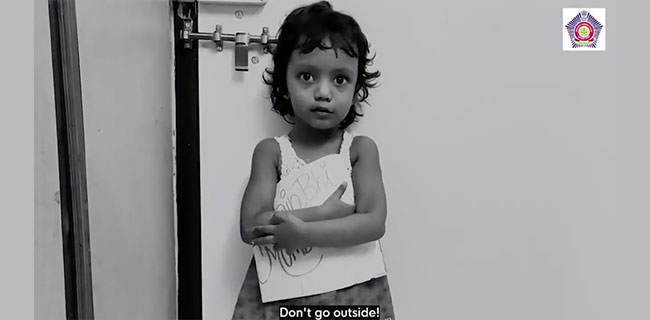
Brand Engagement is always relevant and more so during the lockdown. Brands are using different tricks for engaging with consumers. Some of them are relevant and impactful, few original and innovative. I believe if there is nothing to say, being silliest is a better option.
The car manufacturer shares tips on how to take care of the parked car. Banks deliver newspaper in your inbox. Antiseptic cream makes sanitisers. Porn site gives free access to premium content so that you stay at home! Soaps shouting about washing the virus and Apps are updating for smoother operations.
Brand engagement during lockdown is part of the strategic initiative in preparedness for the post-lockdown market. Naturally, every brand wants to be on the top of the consideration-set whenever markets open. So, they need to keep the brand connect alive through brand engagement. It is known that the brands engaging the consumers now are most likely to emerge as the front runner post-coved scene.
BRAND ENGAGEMENT
It was interesting to see Durex playing mindgames in its territory. The brand also suggested an innovative way to help out the audience like using it to cover the finger while pressing buttons in the lift.
On the other level, DOVE went ahead to celebrate the Beauty called Courage. It remains credible as the brand is operating within its pre-Covid coordinates defined by inner beauty.
Consider, ‘TAKE THE LOAD’ by Ariel, and it falls in place. The brand is continuously thinking of engaging consumer in different ways and situations. It is an attractive proposition, but I have a problem with it. The brand still addresses housework as a woman’s load. I will discuss this some other day.
Keeping the conversation going during such a crisis is a sensitive area. Some brands have learnt their lessons the hard way. The strategy and the message must remain incomplete internal and external sync. The brand can not have different visible standards or expectations across geographies, product lines and services, internal or external.
BRAND ENGAGEMENT – A TWO WAY STREET.
The brands must realise that ‘The consumer will treat you exactly the way you treat them during this period of crisis’. Remember, we live in an era of information democracy, and it is driving everyone crazy. Once the message is released in the public domain, you no longer are in control. If you are in the arena to commercially exploit the situation, your life will become miserable, sooner than later. At the same time, it is a beautiful space for brands with real purpose and empathy in engaging the audience.
BRAND ENGAGEMENT – PLAY WITH RELEVANCE.
During the crisis, sometimes it is best to remain silent. The well-informed consumer is aware of the situation. Brands are looking towards contactless delivery, but it still is no time for impact-less irrelevant engagement.
The consumer’s transactional deal is restricted to the brand delivering the best at a reasonable price. Or the brands are playfully engaging the consumer while sending a positive, relevant message of importance. Just like the various brands supported Social Distancing by playing around with their logo’s.
BRAND ENGAGEMENT – BE SIMPLE.
One of the compelling ways beyond talk play and intent is to act the intention. Let sharing of the news surrounding the Brand Act be amplification, instead of trying to send out a video in the social space. However, when brands move beyond transactional arena to show their soft touch treating consumers as part of the extended family, the equation shifts from being purely a stakeholder to an active partner. It required empathy, care, understanding and being sensitive to the ecosystem. The brand needs to understand the covert -overt needs and continuously re-defined expectations. It is a tough and risky territory to walk. The brands that see it as only a commercial leveraging opportunity, they fail to understand the double-edged dimensions and in effect do more wrong than the right to their image.
BRAND ENGAGEMENT – ACCEPTANCE COMES WITH RELEVANCE.
Such situations like coronavirus and the lockdown demands that the brands demonstrate care and empathy. However, there is an un-stated boundary between compassion and pity. The brand operating within the bandwidth of experience and tonality have higher chances to succeed.
Mumbai police use of citizen vigilance for Stay Home campaign makes sense. People relate to it, knowing that ultimately police can do that much only. They emerge as a partner- as a peer.
Nearer home, Surf team remains true to the thought Daag Aache Hai. And extends it with Daag Bhai Ghar par Rahenge. The brand extends engagement by sharing fun activities for home on Instagram.
Now, this was brilliant as it came well in the early phase when people were still thinking about how to manage work. It works for Sony It works as the scope remains restricted to helping the daily wage earners in the film and television industry. But what is the Kalyan Jewellers link?
When EMIRATES tells you to stay home and assures with positivity that we will fly soon, you like the approach and the tonality. They are, in fact, not making any new point.
https://youtu.be/IRoAQ3dmOUw
On the other side, when UBER uses a similar tone to thank you for not using them, it seems forced. It is the result of earlier experience and perception of the brand ethos, culture and expectations.
Vodafone used both their famous hugely loved mascots, the ZOOZOO and the PUG to deliver the message. The Pug communication still has something going for it, but the ZooZoo fails to impress.
ASIAN PAINTS keeps the tone of voice consistent in ‘Jab Ghar Mai Saab Ho Toh Ghar khilkhilata hai’, #stayhonestaysafe. It remains within known brand coordinates using a picture of everyday life. Similarly, TATA SKY talks about ‘Ghar Baite Kuch Seekhe’. It is an example of excellent connect with its known educative and activity-based channels.
BRAND ENGAGEMENT – CAN ALWAYS MOTIVATE.
And when there is nothing -nothing to say and the brand still wants to keep the conversation going. They fall back on positivity to keep people motivated, usually with a dose of singing and celebrities.
When you overstretch and try being arty like HUL. It snaps because of a hyper stretch. It fails to evoke similar emotions.
However, when Mahindra says,- Some wheels will keep moving, you relate to it. And the treatment makes you feel so much better.
BRAND ENGAGEMENT- AUDIENCE AWAIT ACTION.
Though travel is a bad word during the lockdown, I was looking forward to engaging relevant and sharply focussed communication from Samsonite. It had reoriented its coordinates when they made the earlier communications including the one during Kerala floods. It will be a waste of a marketing opportunity if Samsonite does not subtly engage the audience in this crisis.
……………………
BRAND ENGAGEMENT- LIGHTER MOMENTS.
On the side, the crisis also made room for some absurd but thoroughly enjoyable videos. The one that is my favourites features Shekhar Gupta and @HoeZaay. He tries explaining the concept of tomorrow in a Swami Nityanand style. Shekhar Gupta may not need new audiences – but this viral must have worked for him.
I doubt if there are any official public records for us Brand & Communications professionals which demonstrate a CXO’s dependency on their Chief Communications Officer (CCO) and PR/Earned Media Agency. There is a dearth (or complete absence, if I may say) of basic news reports and articles where a CXO has openly confirmed and announced his love or dependency for the CCO and the PR/Earned Media industry.
To achieve their business objectives, CXOs depend on CCO skills and PR/Earned Media Tools to the fullest. Much more than 50% of a Brand’s PR/Earned Media visibility is based on the CXO quotes. But then why this? Has anyone even asked the CXOs why they don’t say “I Do” publicly. Well, we all know the reasons, isn’t it?
Instead, let’s talk of something motivating and focus on why to strengthen and how to build public records.
Why Covid-19 disruption is an opportunity to strengthen CXO – CCO relationship:
:: Demand Creation, Sustenance & Rise in Corporate “Risks” attracting huge Management time. Management pushing for Proactive & Credible Communication
:: Fall of ATL/Advertising Effectiveness becoming steeper
:: Customers (B2C) are not the only TG; Govt, Employees, Investors, Community, Traders, Other Influencers need simultaneous promise delivery and perception management
:: Multiple TG need messaging seeped with Emotional Quotient (EQ). Earned Media offers formats, flexibility of time and cost effectiveness to create and build EQ
:: For real effectiveness, Messaging, its Frequency & creation of Innovative Target Audience Touchpoints have to be of extraordinary levels. Best efficiency possible only through PR & Earned Media.
:: To keep the business numbers chugging, CEOs have to depend on a lubricant that can be achieved only through the most cost-effective brand communication matrix of Earned, Owned and Shared Media Communications.
All the above are some of the many reasons why the CCO should be the GO-TO-DESK during the current disruptive times for the CXO.
How can this relationship be announced and made official:
Block 1- Demonstrate data/Build MiS:
:: If you think of it, CXOs process the KRAs given to them in terms of Data – which further gives way to the MiS matrix. Hence, any help or value addition towards his KRAs will also therefore be through the language of Data
:: A CCO needs thorough understanding of every single KRA of the CXO and translate that into data
:: This needs investment of time, discipline and most importantly, the knowledge of the Art & Science of showcasing CXO efforts in Data language
Block 2 – Documentation Touchpoints:
:: Media News Reports: Journalist fraternity need to start providing space for editorial writeups which establish the role of PR/Earned Media in CXO’s life. One can start with trade journals.
:: Education Institutes: Business & Media Schools should start publishing papers which highlight brand success stories using Earned Media tools and how it helped CXO objectives.
:: PRCAI & CCO Groups can authenticate: Industry body can do a lot in this. Periodic reports can be created and published on how PR Agencies and Clients worked together using PR & Earned Media.
It is a time of prepare, strengthen and announce the CXO-CCO love affair! And mind you, post Covid-19, this love affair should only get stronger and better.
If done well, it will be one of the best “PR needs PR” initiatives that I have been campaigning for since 2008.
Siddhartha Mukherjee is a senior marketing services research professional. He was until last year Business Head at Eikona and has spent a fair time in the PR industry. This column will appear every other Thursday.
The Punjab Police has collaborated with Lowe Lintas Mumbai and Mogaé Media and unveiled a campaign to motivate the force and displays their collective strength. With #MainBhiHarjeetSingh and #MainBhiPunjabPolice, the hashtags intend to evoke solidarity with the cops and express empathy by stepping into their shoes.
Sagar Kapoor
Talking about the campaign, Sagar Kapoor, CCO at Lowe Lintas, said: “The Punjab Police campaign had us shocked, in tears and inspired at the same time. Helmed by the story of Harjeet Singh, who lost his hand serving his nation and his force is at the heart of the idea. The idea further leaps to each and every police personnel saying “Main bhi Harjeet Singh. Main bhi Punjab Police.” The sentiment is so deep and wide that police forces from other parts of the country have also pledged the slogan. A slogan that promises the police force will keep fulfilling their service, no matter what comes in the way of their call of duty”.
Added Anaheeta Goenka, COO at Lowe Lintas: “As an agency network we have always supported the nation’s causes and created behavior change communication, imperative for society. This initiative began with supporting the Mumbai Police, inspiring and urging citizens to self-police themselves and their families. It was embraced and supported by celebrities and common people alike. The Punjab Police campaign with SI Harjeet Singh at the epicenter of it has given the initiative further momentum. A big thank to everyone who has supported the self-policing cause and has stayed indoors helping our nation control the spread of the virus. A big thank you to each and every frontline warrior, like SI Harjeet Singh who is a shining example of commitment to us all.”
Said Carol Goyal, Executive Director, Mogaé Media: “#MainBhiHarjeetSingh is a large-hearted digital initiative. It has got the entire Punjab Police force energised in a show of unprecedented solidarity. 80,000 policemen from Punjab Police donned Harjeet’s name on their badges sending out a strong signal that no one, but no one, can mess with the police who are here to protect us all. Lakhs in India and abroad emulated the policemen, holding placards in praise of Harjeet and the Punjab Police. We at Mogaé are privileged and honoured to have worked on this brave initiative”.
Asian Paints has released the second digital film under ‘Har Ghar Chup Chaap Se Kehta Hai’ capturing people’s love for their homes which has been rekindled during the lockdown.
Conceptualised by Ogilvy India, the film showcases individuals and families taking care of their homes in the current quarantine period. Upkeep of the house, an otherwise trying exercise, has now become a source of joy to family members. Children, grown men, even pets, everyone in the house is chipping in with their share of household chores. This relevant truth is beautifully captured to show how one’s relationship with one’s home, a relationship at the core of brand Asian Paints, is rekindled.
Voiced by Piyush Pandey and directed by Neha Kaul of Corcoise Films, this video will surely bring a smile on everyone’s face and remind them what their home has been to them; a place of security.
Speaking about this new ad, Amit Syngle, MD and CEO, Asian Paints: “Our second video is a very different take on the emotions associated with Homes, wherein the Home personification and its relationship with the people who live there comes to light in a very beautiful, interconnected way. The whole camaraderie between the home and the members, bring the joy in reliving those real moments which strongly define the emotional connect. Relationships rekindle the fun routines and some lively activities, combined with daily chores, bringing the social message of Stay Home Stay Safe alive.”
Added Sukesh Nayak, Chief Creative Officer, Ogilvy India: “Staying at home we found a new corner in our home which has become our favourite spot and we found places to clean that we never did before. We found new love for our homes and we decided to capture this love in our film.”
Sharing his thoughts on the film, Sam Balsara, Chairman and MD, Madison World said: “Asian Paints has done an amazing job of staying alive in the consumers’ mind, not by eulogizing their paint but empathizing with their consumers by highlighting to them the joys of doing household chores, staying at home; thereby making the most of the unfortunate circumstances that consumers find themselves in today. My compliments to Team Asian Paints and Ogilvy for the idea and producing not just one but two digital films from home. This move will earn Asian Paints tremendous goodwill of its customers which will benefit the Company for time to come. Asian Paints is not only the leader in Paints, but has behaved like one.”
In an attempt to smoothen the damage that the OOH sector continues to face in India under the coronavirus threat, Dentsu Aegis Network (DAN) India has embarked upon multiple initiatives to future proof the group along with working closely with other DAN markets from the network to further strengthen its capabilities.
As part of these initiatives, Milestone Brandcom, the out-of-home agency from the house of DAN India, will lead the programme to augment the agency’s OOH business by adopting new technology, media insights and best practices by working closely alongside the agencies in the network and getting the best practices from other markets. Nabendu Bhattacharyya, CEO & MD – Milestone Brandcom, will spearhead the initiative. In the coming period, Bhattacharyya will be alternating between the US and India offices to introduce the best practices and learnings to DAN India in addition to catalysing Milestone Brandcom’s OOH business capabilities in the market and provide connect to its Indian businesses. Bhattacharyya will continue to report into Anand Bhadkamkar, CEO, Dentsu Aegis Network India.
Anand Bhadkamkar
Speaking on the initiative, Bhadkamkar said: “The post-Covid world will summon a new era. It will demand new ways of working and thinking across businesses. Fresh strategies will have to be charted to improve business productivity. We will have to re-invent the way we work and bring in more resilience in our businesses to embrace the disruption in the market in a post COVID scenario. Therefore, to inculcate innovation, and introduce fresh learnings and perspectives into the business, Nabendu will drive this initiative. He will continue leading Milestone Brandcom, alternating between the US and India offices.”
Nabendu Bhattacharyya
Commenting on his new role, Bhattacharyya said, “US controls nearly 50 per cent of the world’s ad industry. So what better than to start there, import their technologies and ideas, and use their learnings to enhance Milestone Bandcom and DAN India brands. I strongly believe that Dentsu as a network will help in the growth of India’s advertising structure and Milestone Brandcom will strengthen its position as a flagship brand of DAN India. I am also convinced that the whole world will come out of these challenging times soon and large markets like the US will accelerate economic growth faster than ever.”
The Switzerland Tourism commercial, ‘Dream Now- Travel Later’, with the gorgeous visuals keeps the destination in mind. It is doing an excellent job of priming the consumer for a post-lockdown market. It plays subconsciously and keeps Switzerland as a destination in the consideration set, just in case you plan to travel. Priming is an art and a necessity now. It is like working a dry handpump.
Priming The Pump.
Have you ever run a dry handpump without check-valves? The only way to make it work is to prime it. Fill the channel inside with water that you have kept for this purpose. Once the air- resistance, which is the cause for the crisis on hand, is taken out, the pump starts working.
The current market is no different. The brands and marketers ( The person pumping) wants to pull the customers ( water) through the channels when the trapped experiences and expectations ( air) is creating resistance.
Priming the market is the only way out.
Unfortunately, the pumps and the resistance faced are not the same types. The product and services straddle a broad spectrum of luxury, good to have, and essential goods and hence need different pumps and resistance.
The consumer is numb. There has been a never expected, never dreamt sudden disruption in his or her life. The consumer has moved from shock, ambiguity, fear to acceptability and adaptability to the situation.
Thinking that the consumer is now comfortable with the new life-co-ordinates and behaviour is a mistake. The lockdown is extended, opened or slowly relaxed (a most likely scenario) will not matter, as the mental scape has been deeply scarred. The degree depends upon the consumer’s experience during the lockdown period.
The consumer is a human being with far higher intellect than traditionally considered. They make irrational decisions and act on impulse. However, they tend to rationalise and being logical in approach. Their reactional behaviour is entirely shaped by their nascent observation, experience and expectation.
This lockdown has given them a chance to learn to differentiate between the real and unreal essentials of life. Redefining luxury and social interdependency.
Life has been a pressure cooker on fire. When lockdown opens, the pressure will define the reactions. The consumer will choose between Fly, freeze or fight the trigger to buy when the mind remains clouded in uncertainties and constraints. The insecurities like a second wave, cure, vaccine, possibility of infection, job, family, responsibility and expectations will influence buying more than the price, purpose and placement or the accessibility, affordability and availability.
No one knows how the market will act out. Ambi Parameswaran, in his tweet, said ‘many typologies will emerge in the next 8 weeks in trying to make sense of the consumer behaviour’. It all depends upon the relevant axis you chose to segment. And I try it based on their expected behaviour based on the degree of disruption in their lives and expectations.
Revolt.
This customer subset, for the first time, has been exposed to their vulnerabilities during the lockdown. They were always questioning and against whatever was expected of them by law, state, society or even family and friends. They live with a big ‘I’ and don’t really appreciate this virus that seems to be most secular and democratic. It does not discriminate in the selection of the victim. These people will want to reclaim their lifestyle. They are currently not the most pressured by psychologically most touched and irritated by the situation.
Re-size.
This subset of customer has a flexible approach towards life, dreams and ambitions. They are in shock. They are law-abiding, cautious and logical in approach. They are not offended by the selfish behaviour demonstrated of others. The society as a whole has not matched their expectation. Most of them have in-fact stepped out in some ways and contributed in the fight against coronavirus.
They look at short term plans. They know they may need to re-size their experience, expectations, dreams and ambitions at some state and they don’t want to be ill-prepared. They will get into their cocoon a bit, but the right trigger will get them in the market. They will hyper indulge in essentials and good to have product and services.
Re-scale.
A bit different than re-size, the re-scale are worried about the future and long-term impact. This subset has experienced scarcity and distancing from extended families during the lockdown. They have, in some ways, realised the new product-service-need-life matrix and are comfortable to live within constraints. They will re-stock essentials even at a higher cost. If you check, they will have un-used masks and sanitizers in their homes. They are not the ‘I’ centric type. They have followed isolation and quarantine request, and that is their contribution to the fight against coronavirus.
Revive.
Customers mindset that says, this is the one and the only life and hence make the best out of it. If that includes being cautious and taking precautions, so be it. They are the early adopters any process-product-service post lockdown. They in-fact will be celebrating the win; having survived the first wave of coronavirus. And they are the one who will define market success.
Priming The Market.
Priming as a process is done before the pump delivers water. Similarly, priming of the market and the consumers preferably should be done before the market opens. It will get the marketer the first advantage of capturing the Revive and Re-Scale behaviour in the re-world still grappling with the situation.
The Re-size audience will wait, as they have always waited for the information and makes a logical delayed decision and actions. The Revolt is a transient behaviour. There is no need to do anything, just lifting the lockdown works with them. One can ignore them.
The Messy Unattended Pump.
Remember, if the brand is an essential product category, the consumers have tested variants and competition. If the brand was non-essential, they have most likely ignored your existence.
Let’s see in my family. I am primarily a Netflix user. However, during the lockdown, I have experienced Hot-star and Amazon Prime. My primary Netflix bias may not get affected as entertainment is content dominated than the platform.
My daughter, a Maggi Hot and Chilli sauce fan, found that it was nowhere available. She decreased consumption to make the bottle last long instead of shifting loyalties. For the sauce of Rs 105, we not only paid INR 299 for Big-Basket membership but added items to cross the INR 600 barrier. All because Big-Basket app while ordering showed Maggi Sauce, it was available. It is different, Big-Basket delivered all items but Maggi sauce and credited my wallet for the gap. Now, we may shift to D-Mart that stayed connected and open 24 hours servicing our area.
In in the absence of our regular brand of Ghee, we ended up testing Amul, Anik and Gowardhan. Think we will be back to Dinshaw’s– as none of them came close to it on experience. However, in Milk, we tested full cream milk from a local dairy selling it lose and Tetra-pack Milk from Amul. Here we are in two minds to shift or continue with Mother-dairy in Mumbai.
The customers have aligned to the alignment of necessity, essentials and replacements. The essentials will also see a big fight in the market place.
Trust & Dependability Still Important Priming Agent.
The customer in an extended lockdown has slowly realised the importance of things like social distancing, quality, service, hygiene, among other such factors. They are expected to continue to give due weightage to such factors. Hence, the brands must re-assure them at least in term of health aspects acr4oss manufacturing and delivery to quality aspect in product, functionality and service.
It is a negative eureka moment and feels so odd to hear an IVR customer service telling you that the representative number is switched off. All know it is a lockdown. The customer was just looking for assurance and a token for being in the queue for a future date service of his water cooler, whenever it will start. Such a negative takes a lot to future efforts to wipe the slate clean.
Compare that with your local AC mechanic, answering the phone and telling you, he will try to see what best he can do. You were just looking at that assurance and will not hold him guilty even if he was not able to do anything.
Or the large basket company telling you that all delivery slots are full. However, if you were to take an INR 299 membership, where the membership fee will be in the next three months, they can surely make that special delivery to you. Now, the company had a choice to say, we in this situation are disbanding the Loyalty – membership programme and will deliver on Fist-in-first-out basis. CMOs and CEOs will have a different take on this one. I would think that the second was a better choice. Suspend Loyalty and treat everyone equal right now.
Priming Tools.
Post lockdown or even now, the marketers must choose their SASHTRA and ASHTRA to fight the Mahabharat of the Markets. All these brands ( Market Yodha’s) and their Sarathi’s ( Brand custodian/ marketing/ agencies/ strategists) are sitting at the edge for this moment.
The brands, product and services that remained in connect and sync with the consumer, sailing in the same experience and empathising with them would know the topography a bit better. They will have a better chance to win than someone entering the dialogue after a gap.
Early advantage seekers will most likely go with sales and discounts to mop-up as much as early from the post-lockdown market. A good enough practice. Some brands have already started talking about pre-booking deals. You pay ‘X’ now and buy items worth ‘X+20-30%’ later. Few are banking on the loyal subscriber. There are going to be many versions of ‘lockdown discounts’ and ‘Freedom sale’.
Some brands will layer their communication with ‘Made in India’, ‘helping the country’, ‘anti-china’, ‘we are in it together’ and ‘the national pride’ etc. We will also hear about a percentage of sales going for migrant workers, and COVID-19 help will also be there. All this when being competitively priced with margin pressure. Such brands will survive but will always be under pressure.
However, the brands that will win will be the one focussing on enhanced quality, experience and service with a long-term perspective. It is better to re-evaluate the experience more than the pricing. And hence, communication that is a functional benefit oriented with some emotional payoff will work better. As for media, you want that instant build-up- so Newspaper definitely works best along with social media.
The Pre-Primed Pumps.
The brands that will outshine all others will be the brands that have during the lockdown demonstrated some integrated purpose. They are self-primed at this point in time. The audience most likely looks at them with pride and wants to be associated with them.
Remember- ‘Dream Now – Travel Later’ is as good as ‘Talk Now-Do Business Later’.
On occasion of World Hand Hygiene Day, Savlon Swasth India Mission reiterates the critical role of hand hygiene in infection prevention with its ‘Chain of Protection’ initiative.
In a fun and interactive social outreach, the initiative urges everyone to adhere to a hand hygiene routine to help build a chain of protection. Savlon Swasth India Mission’s ‘Chain of Protection’ is a community-driven inclusive approach towards encouraging good hand hygiene practices and help break the chain of infection.
Fritz Gonsalves, Group Creative Director and Jayesh Raut, Senior Creative Director at Ogilvy India, said, “Savlon Swasth India has always been about inculcating good hand hygiene habits. Right now, the most important thing to do is to make sure everyone around us including ourselves maintain good hand hygiene. As it is for the collective good of everyone. So, for World Hand Hyginee Day, that’s exactly what we did – Remind everyone that we are in this together and that together we can defeat the chain of infection.”
In an effort to raise awareness about the global impact of Covid-19, 22feet Tribal Worldwide, part of the DDB Mudra Group, has launched ‘Covid in Context’, a simple data tool that analyses the impact of the pandemic on a country in relation to its total population.
The company conducted a two-day product hack sprint to find unique, data-supported means to raise awareness about the ongoing coronavirus pandemic. The initiative brought together a diverse talent pool of developers, analysts, engineers, data scientists and human behaviour specialists within the organization to arrive at solutions using technology.
‘Covid in Context’ uses data science fundamentals of first order vs second order data, allowing users to go beyond the absolute numbers of cases by delving deeper and slicing the data in unique ways. The data is automatically updated in tandem with WHO updates.
Some key insights extracted from the tool:
In absolute numbers, the worst hit country is USA, but in context to their total population, Italy, Switzerland, Belgium, Spain are more infected than USA.
Infected on Tested per cent helps us understand extent of spread. Higher the percentage, higher the community spread.
France is one of the most affected countries with 15.50 per cent, UK follows with 14.09 per cent, US at 16.02 per cent and India at 3.87 per cent.
Recovered per cent helps us understand which country’s people and healthcare systems are fighting the virus better
Australia, South Korea and New Zealand are at around 87 per cent, Switzerland and Germany around 84 per cent, USA at 16.21 per cent and Sweden at 17.55 per cent.
Preetham Venkky
Said Preetham Venkky, President – 22feet Tribal Worldwide: “The product hack sprints are a way for our people to fight this invisible enemy. The brief was to pick a fundamental issue and what came to the fore was that information related to number of cases is used by countries and its people to make sense of the situation. The challenge that the tool aims to solve is to show varied and deeper perspectives on widely reported statistics by slicing the data in different ways. The tool can be used by media, policy makers and local communities to get an accurate and relevant perspective of the issue. I am extremely proud of our team who has built this tool rapidly and tirelessly for everyone to use.”
Mindshare has announced a major rejig of leadership roles in line with the agency’s efforts to stay adaptive, agile and innovative.
Harsh Deep Chhabra takes on the role of Senior Vice President, Mindshare Fulcrum with immediate effect. In his last five years in the company, Chhabra has played a key role in the growth of Team Fulcrum at Mindshare. He has also played a critical role in managing the strategic digital mandate.
As Mindshare re-orients its business around the pillars of “Acceleration”, “Outcomes” and a “Refreshed Neo”, there have been key changes in the leadership of its Content+ practice and Neo India as well, notes a communique.
Ajay Mehta moves to the role of Senior Vice President, Content+. In his new role, Mehta will take on national responsibilities for Entertainment & Sports (ESP), Branded Content, Music & IP Creation along with the Experiential Marketing practice. His responsibilities also include South Asia Content+ mandate for Unilever.
Nikhil Mayne has been designated Vice President, Content+. His responsibilities include developing the Social Media practice and driving the creation of Agile content that powers performance marketing. He will also drive the ESP and Branded Content practice for m/SIX India.
Samraat Kakkar, who has driven the digital practice for Mindshare North and East, will take on the role of Vice President, Neo India. Neo is an expert in Performance Marketing globally and partners Mindshare in driving integrated solutions for clients across Brand & Demand.
Speaking on the development, Amin Lakhani, COO, Mindshare South Asia said: “We at Mindshare strive to keep our clients ahead of the curve and our people agile and integrated. All these leaders have proven their abilities to deliver desired outcomes and beyond even in challenging situations. I am positive that the new structure will help us achieve maximum impact for our clients and create more value for our teams”
Added MA Parthasarathy, CEO, Mindshare South Asia: “As the industry is staring at unexpected times, it is imperative for us as an agency to be future-ready. We are delighted to have such experienced leaders within the agency, who are future-focused and skilled to deliver disruptive business thinking for our clients.”
The Covid-19 pandemic has caused shockwaves across the globe with major economies falling into a recession like no other in recent history.
As the advertising industry considers how to proceed, WARC, the global authority on marketing effectiveness, has released a comprehensive, evidenced-based report: The WARC Guide to Marketing in the COVID-19 Recession.
The guide includes learnings from past recessions, how the COVID-19 recession is different, lessons from China, key actions that brands can take now, and growth opportunities beyond the lockdown.
Said David Tiltman, VP Content, WARC: “A global recession is now highly likely, and the shape of the recovery is difficult to predict and will vary by sector. With many brands unable to distribute products and services, the usual advice to “keep advertising” may not apply in all cases, and marketers need to take a nuanced approach based on their brand’s situation.”
Added Lena Roland, Managing Editor, WARC Knowledge: “This WARC Guide to Marketing in a Recession pulls together the best thinking from across the industry on navigating the post-lockdown period. It presents advertisers, agencies and media owners with relevant frameworks, actionable ideas, and offers examples of how major marketers are already putting plans into practice.”
The five chapters covered in the WARC Guide to Marketing in the COVID-19 Recession are:
• The playbook for ‘normal’ recessions
A large body of research studies suggest that significantly reducing adspend in a recession has negative long-term impact on brands in terms of sales, market share, growth and return on investment. Companies that maintained investment recovered more quickly.
WARC has identified five marketing lessons from previous recessions:
(1) In a recession, media costs decline. (2) Defend your share of voice – cutting ad spend risks damaging market share. (3) Investing in adspend brings long-term advantage. (4) Decline in share can be hard to reverse. (5) “Going dark” beyond six months can weaken brands.
• Recession 2020: What we know so far
The COVID-19 recession is the first pandemic-driven downturn of the modern era. It is a healthcare crisis, leading to a severe economic slump. That also makes the shape of the recovery hard to predict, as consequences of the lockdown become apparent and there is risk of further outbreaks.
Sir Martin Sorrell predicts a “reverse square root” recession – a sharp downturn, a partial bounceback then a plateau.
Cuts in media spend have been immediate and sharp. According to the latest Advertising Association/WARC Expenditure Report, the COVID-19 outbreak will wipe more than £4bn from the total UK ad spend for the current year, across all channels.
The 2020 downturn is set to be a demand and supply-side shock, caused first by lockdown and then by critical value chain components breaking down, particularly in China, leading to disruption in product and service delivery.
In a recent interview with WARC, Sir Martin Sorrell, Executive Chairman, S4 Capital, said: “You can’t say to a client spend your way through this. If you don’t have distribution, what’s the point?”
In a recent GlobalWebindex survey across 17 markets, 83% of consumers say they have delayed a purchase. But the impact of recession varies by brand and category.
In a new paper, exclusive for WARC, Les Binet, Group Head of Effectiveness, adam&eveDDB, said: “Different businesses face very different problems, and those problems will change as the crisis proceeds. There is no one-size-fits-all solution. Your strategy should be tailored to your business, and it should evolve as your crisis unfolds.”
• Recession 2020: Actions to take now
As lockdown measures are lifted and the recession takes hold, WARC offers key actions to help brands rebound. They vary depending on a company’s resources, and if operating in a boom or bust category. Brands should:
(1) Review their lockdown playbook. (2) Keep advertising if they can. (3) If a brand has to reduce adspend, use other levers to remain visible. (4) Maintain creative where possible. (5) Tailor the approach to brand-building and activation. (6) Kill or cut back on ‘dwarf’ brands. (7) Look for signs of new habit formation. (8) Audit e-commerce capability. (9) Build strategic alliances. (10) Review pricing but try to avoid discounting.
• Early lessons from China
As lockdown is lifted, Chinese consumers remain cautious and media habits are changing again, meaning marketers should retain a degree of flexibility in their media plans.
According to Publicis Groupe China, online video, social, and news content will be key during normalization. For outdoor ads, the rebound will be primarily in commuting routes, residential areas, and elevator areas.
Brands are also starting to reconfigure digital initiatives around e-commerce. For example, Friso China registered new customers into its CRM program through e-commerce incentives (discount coupons).
Restoring consumer confidence is proving a key challenge in China – and many brands are finding that packaging innovations can help resolve this. Meituan, an online-to-offline service launched contactless shields that protect customers from infection when eating.
The travel sector, one of the hardest hit by the first wave of the pandemic, should prioritise domestic demand based on the experience in China and North Asia.
The crisis has broadened the role of the big online platforms, such as Chinese retail giant JD; and China’s wide-ranging apps and digital services, which played an important role in the lockdown, are now doing so in the normalisation period, but data privacy is increasingly a concern.
• Opportunities for future growth
While the return will be gradual and tentative, and the playbook will vary by region and sector, downturns are an opportunity to initiate and accelerate change. WARC highlights opportunities to help brands on the road to recovery:
1) Supporting small and local businesses is a powerful strategy: SMEs will be among the hardest hit. Consumers may support initiatives that help rebuild local business and communities.
2) Finance brands can go beyond communications to support hard-hit consumers: According to Google, online searches for “financial help” recently grew 203% in just one week, as unemployment jumps.
3) Consumer goods brands can play with pack size to meet consumer needs: For brands seeking to defend market share from private-label, adding value through formats, innovation or value-on pack is going to be critical.
4) Develop a ‘close-to-home’ strategy: People will be eager to leave their homes, but the potential of a further outbreak – combined with economic hardship – means many will prepare their homes as a safe place of sanctuary and safety. Trend forecasting company WGSN (WARC’s sister brand) predicts home health and hygiene will be a key investment category.
5) Close-to-home means food stockpiling habits may persist: Conagra, the CPG company, says increased trial of frozen food during the lockdown offers a long-term opportunity for the category. Food companies may benefit from range extension and new product development in frozen and long-life products.
6) The ‘health economy’ will create new opportunities: The pandemic may be the catalyst for radical and lasting transformation of how health and wellness is experienced and delivered. Brands in categories outside health and wellness may be affected too, and should review opportunities to form partnerships that can reassure or help health-focused consumers.
7) COVID-19 is accelerating the need for digital transformation: Many of the trends caused or accelerated by the COVID-19 require the rewiring of companies around data and digital services. At a time of significant consumer change, there is an opportunity for CMOs to play a leading role in interpreting those changes and acting as ‘superconnectors’ between internal functions.
Added Jodi Harris, Global VP for Marketing, Culture and Capabilities, Anheuser-Busch InBev: “Marketing is swiftly moving beyond branding and communications to providing business solutions that address people’s needs… We’re taking on a new leadership role, connecting multiple disciplines within the organization to accelerate programs that make a difference in our communities and people’s lives.”

 Brand Engagement is always relevant and more so during the lockdown. Brands are using different tricks for engaging with consumers. Some of them are relevant and impactful, few original and innovative. I believe if there is nothing to say, being silliest is a better option.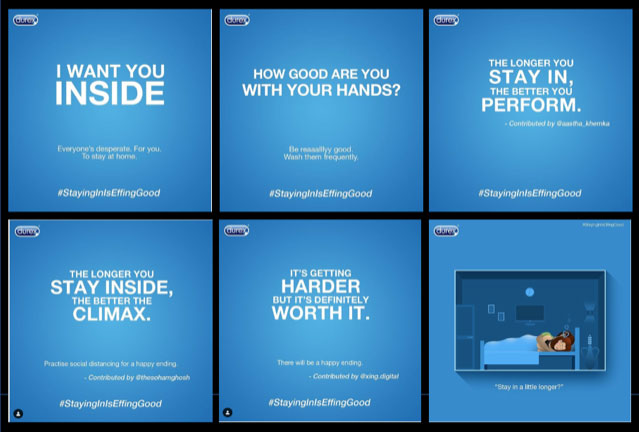
 By Siddhartha Mukherjee




 Harsh Deep Chhabra takes on the role of Senior Vice President, Mindshare Fulcrum with immediate effect. In his last five years in the company, Chhabra has played a key role in the growth of Team Fulcrum at Mindshare. He has also played a critical role in managing the strategic digital mandate.
 Ajay Mehta moves to the role of Senior Vice President, Content+. In his new role, Mehta will take on national responsibilities for Entertainment & Sports (ESP), Branded Content, Music & IP Creation along with the Experiential Marketing practice. His responsibilities also include South Asia Content+ mandate for Unilever.