Category: ADVERTISING

  • Chrome DM launches Interconnexion for broadcasters and distribution service providers

    By A Correspondent


    Chrome Data Analytics and Media has launched Chrome Interconnexion, for broadcasters and distribution service providers. Chrome Interconnexion is an unprecedented, exclusive database of distribution interconnections across urban India. It is an online application which has been designed to depict feed tracking for each headend, from the parent headend till the last headend.


    Speaking at the launch, Pankaj Krishna, Founder and CEO, Chrome DM said, “The objective of offering such a comprehensive platform to broadcasters is to ensure Transparent Deals in the Broadcaster-MSO Ecosystem. With Chrome Interconnexion, broadcasters will be able to track source feed of Fluctuations and take prompt corrective action. ”


    In broadcast distribution (Distribution of a Channel from a Service Provider to Consumer) there are Multi System Operators like Den, Hathway, Siti Cable etc and Local Cable Operators. As a Standard operation procedure an MSO provides same feed (line up of channels) to a lot of local cable operators across various areas of operations.  For example, a Den in Kanpur might be providing its feed to multiple smaller players, who would provide the same feed to viewers.


  • Flipkart Fashion asserts its uniqueness in campaign by Lowe Lintas Bangalore

    By A Correspondent


    Leading online e-commerce playerFlipkart seeks to assist shoppers on all issues related to fashion. By launching Flipkart Fashion, it seeks to establish Flipkart as a destination for “affordable trendy fashion” by landing the proposition of being a one-stop solution to all fashion related confusions. Through Flipkart Fashion, the online player is providing a method to the madness of spotting the right trend by making trends – handpicked by top fashion experts, accessible to its consumers.


    To communicate this new offering, Flipkart has unveiled a high decibel integrated marketing campaign across India. The marketing campaign would span the online and offline platforms and reach out to a cross section of the populace in various regional languages. The communication has been flagged off by the launch of two video films on both the online and offline platforms.


    Conceptualised by Lowe Lintas Bangalore, the films promote Flipkart as the one stop shop for all needs around fashion. The films have been devised based on the insight that even though fashion as a category has scale and accessibility on Flipkart, it is still not a go-to platform for trendy fashion in the minds of consumers. Flipkart Fashion aims to change this perception and position itself as a trendy yet affordable destination for its consumers.


    Commenting on the marketing objective, Shoumyan Biswas – Head, Marketing, Commerce Platform, Flipkart said, “Flipkart is the market leader when it comes to fashion amongst e-commerce portals. Being a market leader, it is our responsibility to grow penetration of fashion across all consumer segments and need states. Also, fashion being a profitable segment with high growth, it is one of our top priorities. Our scale and depth in this category have helped us decode some key consumer truths. One of the biggest consumer aspirations is the desire to be “trendy”. We realized that this desire often goes hand in hand with “confusion” of finding out what is “in trend”. Basis this knowledge, we created a campaign around the proposition of “Being Trendy made Easy” by curating trendy selection by top fashion experts and offering them at affordable price points.”


    The films highlight the confusions related to trends surrounding fashion and how Flipkart Fashion is an assured solution that one can rely on. Be it about the ever-changing fashion trends to conflicting advices on trends and having to choose between too many trends…there are many confusions that confound and disorient the consumer. But with Flipkart Fashion that has over 100 stylists highlight emerging trends on the platform, users are to find only the best of the latest fashion. The films sign off with the line that ‘If it’s trendy, it’s on Flipkart’, which establishes the point that Flipkart Fashion offers users with only the latest trends.


    Highlighting the creative idea behind the films, Rajesh Ramaswamy, Executive Director, Lowe Lintas Bangalore said, “Fashion is something so relative, that it’s near impossible to wrap your head around it. The confusion about ever changing trends and the fashion world in general is something that everyone experiences. And yet, we are all conscious about what we wear and also about all the judgement that will be passed by our peers in the case we get it wrong. In the film, we have captured this very confusion and fear and provided a solution for it. With over 100 top stylists picking the latest trends for you, Flipkart fashion clears all confusion and lets you simply choose.”


  • MEC India to handle media duties for Vistaprint

    By A Correspondent


    Mukti Kumaran

    MEC India, a leading media agency, has been awarded with the media duties for Vistaprint. The account will be handled by MEC’s Mumbai branch.


    Commenting on this, Mukti Kumaran, General Manager – West, MEC India said, “We are excited about extending our footprint in the e-commerce space. Online printing is an exciting category and is poised to take off in a big way in India. We look forward to a mutually fulfilling partnership”


    Bharath Sastry

    Speaking on bringing MEC India onboard as a media partner, Bharath Sastry, CMO, Vistaprint said, “Vistaprint.in offers a wide selection of products and designs which can be customized, with a very high focus on quality and customer service. With MEC’s proven track record on e-commerce brands, we are assured that they will create relevant campaigns that will strengthen our business in India. We look forward to a mutually rewarding partnership.”


  • Big benefits for brands from VR & AR: WARC


    By A Correspondent


    Developments in Virtual Reality (VR) and Augmented Reality (AR) will offer viable ways for brands to engage emotionally with consumers in 2017, according to Warc, the global marketing intelligence service.


    VR, which immerses consumers in a 360-degree digital environment, most commonly experienced via a headset, and AR, the integration of the real-world environment with computer-generated digital information, have been identified in Warc’s Toolkit 2017, produced in association with Deloitte Digital, as key marketing trends which marketers will be looking to in the coming year.


    David Tiltman, Warc’s Head of Content, says, “VR and AR are not new technologies – but 2016 saw them really emerge as marketing platforms. A lot of money is now going towards VR in particular as brands seek fresh ways to engage consumers. As the advertising marketplace becomes more cluttered and many people opt out of receiving marketing messages, brand experiences that can cut through are increasingly valuable.”


    Jason Warnes, Digital Marketing Partner of Deloitte Digital adds, “Disruptive digital technologies, such as VR and AR, are being used to define, develop and rapidly deploy new experiences to improve the customer journey. Despite a limited adaptation of some of these technologies, they should be seen as new opportunities to interact with customers and understand more about their behaviours and preferences.”


    The value of VR and AR is predicted to hit $150bn by 2020. As VR and AR grow hand-in-hand to create mixed-reality experiences for consumers by creating immersive personalised content, key insights identified where VR and AR are expected to impact the marketing industry in 2017 are:


    1. Retail and travel brands have been early adopters of VR:

    Virtual reality could revolutionise the e-commerce sector, leading to a decrease in product returns, and it has significant potential in the travel, hospitality, design, education, engineering and healthcare industries. In the travel sector, the technology gives would-be travellers a taste of their possible destinations, hotel facilities and rooms. Whilst shopping could become one of VR’s top applications, allowing connected consumers to experience a full retail environment from their own home.


    2. VR can be more than a showroom; it is a vehicle for storytelling and high-end experiences:

    Two factors have driven VR into the mainstream: more devices have arrived on the market and the prevalence of smartphones puts a high-power display into a large proportion of the global population. As the technology develops, forward-thinking brands are sharing immersive experiences with customers that provide a sensory overload and block out all distractions from TV, websites, and apps.


    3. Early research confirms VR’s potential for emotional engagement:

    A study by ad tech firm YuMe and research firm Nielsen using neuroscience techniques found that VR elicited 27% higher emotional engagement than in a 2D environment and 17% higher emotional engagement than a 360-degree video on a flat screen. Additionally, VR viewers were emotionally engaged 34% longer than when they viewed the same content in 2D and 16% longer than when they watched it in 360-degree video on a flat screen.


    4. VR adds an extra dimension to brand tie-ups with celebrities or influencers:

    Brands can leverage virtual reality to engage with consumers as well as test and explore new business models. In June 2016, Absolut Vodka unveiled a mobile app that used VR to successfully drive its mission of delivering unique nightlife experiences.


    5. Many brands have reconsidered AR in the wake of Pokémon GO:

    The phenomenal rise of Pokémon GO was heralded as a tipping point for AR. Launched in July 2016, Pokémon GO’s downloads reached 50 million installations before the end of the month. Looking ahead, marketers face two opportunities around AR: First, piggyback on AR properties that are popular with their audience, like Pokémon Go, as more AR-based games and applications emerge. Second, formulate bespoke, branded experiences. Fashion and beauty firms, for example, can let people digitally ‘try on’ clothes and cosmetics.


    6. AR augments the product trial process:

    Beauty group L’Oréal, has been exploring a number of technologies to offer greater utility and personalisation. Perhaps its most popular foray into this space to date is Makeup Genius, a mobile app that turns smartphone cameras into virtual mirrors enabling consumers to digitally ‘apply’ L’Oréal Paris products scanned in a store. The app has been downloaded more than 16 million times.


    7. AR offers greater scope for consumers to engage with campaigns:

    AR via mobile devices is likely to be significant for many marketers because it offers great scope for how, when and where consumers can engage with campaigns, branded collateral, packaging and product. It also opens the door to technology such as visual search. AR also relies on existing mobile behaviours that users are comfortable with, such as using the camera.


    8. Virtual ethnography offers a new insight tool:

    VR has significant potential as a research tool, particularly in the field of ethnography. Simplot, an Australian food manufacturer, combined VR with ethnography to inform product development and communications. The research approach adopted was to place 360-degree VR cameras in consumers’ kitchens; key stakeholders could then ‘walk into’ their customers’ homes and observe their preparation and interaction with food, just using a simple overlay on their smartphones.


    Virtual and Augmented Reality are one of six key trends featured in Warc’s Toolkit 2017. The annual report, produced in association with Deloitte Digital, brings together the best of Warc’s content over the past year – the latest ideas, research and examples.


  • EyetexDazller takes emotional route to connect with its consumers

    By A Correspondent


    Cosmetic brand EyetexDazller has unveiled its latest digital campaign conceptualized by SoCheersInfotech. EyetexDazller has consciously steered away from doing an advertisement which focuses on their products or colorsand have chosen to go with an emotional connect.


    Released to coincide with the wedding season, the TVC starts off with a mother helping her daughter get dressed for her big day. A beautiful bond shared between a mother and daughter is showcased with the mother finding it extremely difficult to accept that it’s time to bid her goodbye. Enter the bridegroom who walks in to comfort the anxious mother and promises to take care of her daughter, no matter what.


    The groom sits down and kisses her hand and that’s when we realise that the bride is visually disabled. But does that stop her from looking beautiful and having the most beautiful day of her life with the man who loves her for what she is? No. Because everyone deserves a happy ending.


    “Around 68 per cent of women in India are non-experimentative with make-up. The bold & glamorous ads that make-up brands usually do intimidate the general massy people who find it difficult to feel as glamorous as the celebrities or models used by brands. We’ve seen women fall in that trap of buying make-up just for its aesthetic value & we thought it’s time to take a different approach. Real women wear make-up at important occasions in their life – dates, interviews, family weddings, etc. and we chose to highlight one of the most important days of a girl’s life – her wedding day. A day everyone, young and old, will relate to,” said Mehul Gupta, CoFounder, SoCheersInfotech.


    He further added that the idea behind choosing the a visually disabled girl is to pilot away from conventional brides. Disabled people have normal lives too and this ad just goes on to show that.


    The campaign was written by JitendraHirawat, directed by Mannish Madhavand produced by Imaginarium Media.


  • Looking at marketing through a new lens: Dana Anderson, CMO, Mondelez


    What do you see as innovation?

    I find innovation fun and challenging and, personally, I enjoy it. When I think about some of my most favourite things that I want to do, they’re all around transitioning into new ways of working. That can be uncomfortable but the pay-off is so rewarding – so often innovation is a part of that. It’s about growth, stretching, excitement and fun. I don’t have bad feelings about change – it’s a necessary part of moving forward and just living. It’s important to brand communication because people need to be engaged and entranced; they want to interact with you differently.

    The pace of change is our marketplace in terms of channels and what people get turned on by requires us to think ahead in a fearless manner about what to do and the digitisation of everything. So not only do we experience mobile and social media but, as marketers, we need to learn how to do it and to do it well. Sometimes that involves turning your own view of the world upside down. In the past year, we’ve spent a lot of time here embracing Ehrenberg Bass and Byron Sharp’s Laws of Growth and that’s undoing everything we learned in school and looking at marketing through a new lens. We changed our strategic tools, media guidelines, how we do comms planning and how we brief agencies. That has created a new thing of its own: our Freedom to Create presentation has been delivered to agencies and town halls everywhere so everyone knows what we are looking for. Change can mean more work but it makes you feel like you’re on the fresh end of things and that can be enlivening for a group.


    Can you share a recent example of innovation within the Mondelez brand portfolio?

    We’re just launching a new chocolate bar that merges Oreo with Milka chocolate. Already, even at this early stage, people are crazy for it. Mashing up those two products and marrying what US consumers refer to as ‘European chocolate’ with Oreo, a brand they have loved forever – things like that are examples of product innovation


    How have you innovated in your relationships with agencies and media owners?

    It’s primary to our conversation and to our annual plans, particularly for new partnerships. When we are goal-setting at the beginning of the year, we have found that if we can see an intersection with what we tell our partners we are doing and what our partners tell us they are trying to accomplish, we are going to enjoy greater success. When we’re aligned we can make more progress. Two years ago, we worked with Facebook on creativity in social media – this was an intersection we shared.

    We also ask our partners what we can help them with and look for mutual benefit. Sometimes it’s great to just tell each other what we’re thinking about. It’s becoming much more critical to the selection of partners because once you begin to work with people who are innovating you look for it in other places. You can certainly feel it if you have a partner who’s not innovating.


    How is Mondelēz innovating in terms of its company structure and culture?

    We are re-engaging with our marketers. It’s a whole new way of working that affects culture and adopting things that we believe in. The work that we’re doing on content monetisation means that we want to be out there and trying new things. We want people to be proud to be here. Wellbeing is a big part of our growth plan: a couple of members in my group put together a presentation about how brands are marketing in the wellbeing space and it was fascinating; they’d identified eight big trends. They delivered that presentation internally to the finance, legal and IT teams because they wanted to know more about it. Those teams might not be marketing these products but they are still kept informed.


    What are the benefits of making non-marketers stakeholders like that?

    They get a view into a world they don’t participate in too closely. For them, it’s an enjoyable immersion – it helps them just as it helps us when they teach us about IT. That helps our world as it informs the decisions that we make and helps us act more holistically.


    Which companies have a good approach to innovation that link to clear business outcomes?

    DDB’s recent offering to McDonald’s. I don’t know the particulars of the offering except that it was custom-built with compensation on a different level. That’s a hats off.

    Also, two campaigns that I have seen recently at awards shows: one is for GoPro that is using word-of-mouth and social media to try to move from extreme sports to everyday usage. The second is U By Kotex launching a pop-up – a whole store about tampons. They had singers, they sold T-shirts with tampons all over them, and you could get your hair done there. People were lining up to go in. One girl said that she wished all public bathrooms were like that. Their purpose was to open a conversation about a product and a topic that isn’t usually treated like a desirable, beautiful thing and they monetised the whole thing. That’s innovative thinking.


    Is it harder to innovate with products like that, in low-interest categories?

    It doesn’t matter because it’s boundary and constraint that causes creativity to flourish. The book A Beautiful Constraint features some of the best creative and ideas that have come out of situations where you would have thought they had nothing going for them.


    What are Mondelez’s criteria for selecting innovation partners?

    I don’t know if there is just one criterion because we work with so many different types of people. When we work with startups, everyone walks away smarter and with an enhanced view of the world: they can’t believe how much information we have and we can’t believe how scrappy they are! Jim Stengel’s new book, Centurions and Startups:

    How They Can Thrive by Learning from Each Other, shows that bigger companies are going to need startups because actually that mixture creates sparks that don’t come any other way. Jim has interviewed a couple of our folks that have participated in some of our work with startups specialising in mobile or retail futures. When working with partners, you certainly look for chemistry and competency but it’s a turn-on for someone to have a fresh approach when you’re in a pitch situation. Most people get to the same level of understanding when it comes to strategies because it’s a process of going through what you’re giving them. But sometimes someone zooms way ahead because they have a way of working or a process of taking apart a problem. When you see that in action it’s pretty enthralling and magnetic.

    We try to create new engagement models rather than waiting to be reactive. You don’t criticise someone else for not stepping up if you don’t do it yourself! We developed a way of working through Fly Fearless. We piloted it and

    now have been working it out for smaller brands and it has meant we have been able to reduce the amount of time [spent working with creative agencies on campaigns] from 52 weeks to 20 weeks. Everyone is around the table at the same time and there are ground rules such as having a strategy before you start. What happens in the session is developed and run by a troika of the creative partner at the agency, a strategic partner on our side or from the agency and brand leaders. Together, they determine what they’re going to do in the session, whether it’s bringing in external stakeholders or whatever to deliver. So [Greek chocolate brand] Lacta is known for being all about love so they invited two guests to their sessions: one was a marriage counsellor and the other directed soap operas.

    All parties enjoy it more and agency partners prefer it because work doesn’t get revised 20 times. You can also bring in people who have engaged with us before, such as Google and Facebook, and we can all work together to financial advantage. That’s a form of innovation that anyone can take on. We’re going into our third year now – we did a year of pilots around the world and now we’re rolling it out and training people and showing them how to do it so they can be self-sufficient


    Can you please share an example of how a Mondelez brand has benefitted from working alongside a startup?

    We worked with [community-based traffic and navigation app] Waze and [Mondelez-owned chewing gum brand] Stride years ago on using geo-targeting to show where you could buy Stride. Unbelievably, we saw an increase in sales! What’s more, the outcome was what they learned: they felt innovative and like fearless marketers. They felt they didn’t necessarily need the rules that they had been taught because they had a whole new level of creative partners to work with.


    Where in the world is a future hotbed of innovation?

    It’s everywhere. We work across developing and emerging markets and I’m forever humbled by what I see. You think that developed markets are going to have more but sometimes the things that you see in awards shows – you’ve already seen this in the Warc Innovation Awards – don’t limit themselves. Brave people are brave people. But there’s a difference between brave people who talk about things happening and brave people who are actually doing it so we get to experience their work.

    At the 2016 Warc Innovation Awards, an app from Vodafone in Turkey designed to curtail domestic violence won the Grand Prix. Do you think innovation and purpose are closer together than they ever have been?

    I really do – more people are interested in purpose. We have a one day session for brands called Storyteller where you work out what your brand’s purpose is so we can then work out strategy. This is part of global marketing. We’ve nicknamed it ‘the luggage tag’ – people can look at it and know exactly what it is, from product to purpose. The visuals really help to clearly communicate to everyone what a product is as well articulating its benefits and values.


     

    At the 2016 Warc Innovation Awards, an app from Vodafone in Turkey designed to curtail domestic violence won the Grand Prix. Do you think innovation and purpose are closer together than they ever have been?

    I really do – more people are interested in purpose. We have a one day session for brands called Storyteller where you work out what your brand’s purpose is so we can then work out strategy. This is part of global marketing. We’ve nicknamed it ‘the luggage tag’ – people can look at it and know exactly what it is, from product to purpose. The visuals really help to clearly communicate to everyone what a product is as well articulating its benefits and values.
     

  • DHFL urges customers to own their dream home

    By A Correspondent


    Leading housing finance company Dewan Housing Finance Corporation Limited (DHFL) will be launching its latest TV campaign which is an extension of the earlier ‘Ghar Jaisa Loan’ Campaign on January 14. Featuring brand ambassador Shah Rukh Khan, the new campaign comprises TVCs which will be on air across leading channels and is directed by Nitesh Tiwari and created by Sapient Nitro.


    Said Sevantika Bhandari, Senior VP and Head Marketing at DHFL: “Housing is a basic human need and home buying is an important long term life decision. So with this new campaign, we are trying to build conviction among our segment for owning a home. Shah Rukh Khan with his universal appeal connects well with the audience urging to them to take their first step towards home ownership thereby complementing our vision to transform the lives of Indian households by enabling access to home ownership.”


    Said KV Sridhar: “The new ad campaign has been brilliantly written, acted and directed to address the dilemma faced by a consumer with regards to identifying the right time to purchase his/her own home. The campaign further complements the previous campaigns launched by the company in the last two years. Shah Rukh Khan has immensely contributed in transforming the brand by creating further awareness and making it relatable to the common man who looks to partner or avail a home loan from a company he/she can trust.”


    Added Nitesh Tiwari: “I have been associated with DHFL from the launch of the Ghar Jaisa Loan Campaign. DHFL understands the customer and has captured the emotional moments in the life of people when they actually consider buying a house. Shah Rukh Khan is portrayed as an approachable and friendly person in this campaign. We have conceptualised the campaign with great detail basis the indepth insights gathered from the brand over the years. Taking this route has worked for the campaign as people can relate to him as a friend and as an advisor for helping them take the home buying  decision.”


  • Motivator launches digital campaign for Mangaaoo in Mumbai

    By A Correspondent


    GroupM media agency Motivator has launched the first phase of the ‘Mangaaoo Dil Se’ digital campaign for food-tech startup Mangaaoo. The ‘campaign is aimed towards highlighting the sentiments behind food, and how Mangaaoo understands them better than anybody else.


    Commenting on the success of the campaign’s first phase,Akash Shetty, CEO A D Founder of Mangaaoo, said: “It is exciting to see that our brand is getting quick recognition in an extremely cluttered digital space, and we would like to thank the entire Motivator team for a splendid first phase. The idea ‘Dil Se’ crafted by our Brand Mentor &Strategic Advisor MrParag More highlighted the real sentiment behind food as an experience was an interesting take, and it instantly struck the right chord with the target group.”


    Speaking about the campaign Parag More, Brand Mentor and Strategic Advisor of Mangaaoo said, “The Idea is to create Mangaaoo Dil Se a food anthem of India”. The objective to shed light on the most important aspect about the food experience has been brought out effectively by Motivator through their innovative campaign. The idea has been received well by our consumers. We couldn’t have asked for a better start, and we look forward to a much bigger response to our second phase.”


    Commenting on the success of the first phase of the campaign, Trishul Bhumkar, General Manager, Motivator West said, “In continuation of our approach to work with entrepreneurs in nascent stages, we have partnered with Mangaaoo.Mangaaoo solves a unique problem for food lovers and that fuels the traction. Being a new brand in the food tech was not an impediment but a fresh offering. Backed with close collaboration with our specialist performance and technology units the current initiative has already surpassed the success measures. We intend to deploy deeperconsumer insights married with data & technology in the 2nd stage of the campaign.”


  • Indus Vox Media celebrates journey of the LGBT community in new series

    By A Correspondent


    Digital audio content creator Indus Vox Media has launched a new show titled ‘Keeping it Queer’ to celebrate the life and journeys of the Indian LGBTQ community. They have invited Harrish Iyer, known for being a strong spokesperson for LGBTQ rights and child abuse survivors in India, as the first guest.


    Hosted by comedian Navin Noronha, this show welcomes members of the LGBTQ community who are out and proud. Guests on the show discuss everything from their first love, the quirks of their sexuality to the prejudice they face and how their lives evolved as queer individuals, in the context of India’s misplaced morality and the constitutional battle against Section 377.


    Some of the other guests include gay rights advocate Vivek Patil, bi-sexual activist Sonal Giani, filmmaker Sridhar Rangayan and transgender rights activist Urmi Jadhav among many others.

  • Grey Group strengthens its Singapore and APAC leadership teams with new hires

    By A Correspondent


    Grey Group has unveiled a set of triple hires in a move to bolster its leadership core in Asia, with a special focus on Grey Group Singapore. The trio will play an instrumental role in deepening Grey Group Singapore’s creative offerings and creative processes, as well as drive the ongoing digital transformation of the company, across the region. The senior appointments demonstrate Grey’s commitment to design a path for repositioning and expanding its services, in order to focus on growth as well as meet clients’ needs.
     

    MånsTesch comes on board in the newly created role of Chief Strategy Officer for Grey Group Asia Pacific in order to lead the strategy teams and set the strategic direction across the region and to oversee Grey’s continued immersion into the areas of innovation, mobile and social.


    MarthinusStrydom has been appointed to the role of Global Creative Leader, Team GSK, Grey Group Singapore.  He will work closely with Ali Shabaz (Chief Creative Officer, Grey Group, South East Asia) to set the overall creative direction for Grey’s GSK operations. In line with the agency’s reputation for creative excellence, he will be responsible for fostering an even-deeper culture of creativity and accelerate Team GSK’s digital transformation. Over the span of his much-lauded career, Marthinus’ work has been recognized at the D&AD, Webby, Cannes, One Show, Effies, and has been featured on the Gunn Report and other prominent industry publications.


    The two appointments follow that of key senior hire, Neil Cotton, who has joined in the dual role ofGlobal Strategy Director for GSK and Chief Strategy Officer (CSO) for Grey Group Singapore.His career has seen him collaborate with many exciting brands such as Coca Cola, Johnson & Johnson, Heineken, Audi, IBM, and Nokia, amongst others.


    On the hiring for Grey Group Singapore, Nirvik Singh, Chairman & CEO, Grey Group Asia Pacific, Middle East, & Africa said: “In order to enhance Grey’s core leadership team, we continue to hire world-class talents in Neil Cotton and MarthinusStrydom. They have deep knowledge and proven track records in their specific areas of expertise and their roles are directed towards delivering our very best for our clients.”


  • Paisabazaar.com highlights credit report in latest campaign

    By A Correspondent


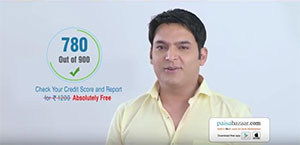
    Paisabazaar.com has launched a campaign around its ‘Free Credit Report’ feature. Said Naveen Kukreja, CEO and co-founder, Paisabazaar.com: “Ignorance around Credit Score and the relevance it holds in the lending process often leads people to approaching wrong banks and financial institutions for loans. Not only are the loan applications rejected, but their credit score worsens further. An individual’s Credit Score not only determines whether his loan application will be approved or not, but also decides the pricing of the loan. We, at Paisabazaar.com, want to drive home the point that every individual should be aware of his credit score and constantly strive to improve it. Even if one doesn’t require a loan right now, doesn’t mean he will never have a lending need. Medical emergencies or future needs like buying a house, child’s education and marriage force people to look for loans. A poor credit score in times like these can lead to a crisis.”


    The free Credit Score feature is a part ofPaisabazaar.com’s consumer awareness programme that has been built in line with its brand promise to make lending easier for India.


    “Being the biggest disburser of unsecured loans and credit cards in India, it is extremely important to us that customers, who choose our platform, are able to meet their lending needs. The free credit score feature has empowered our customers to lend betterand take steps to build their score over time for future needs,” Kukreja added.


    Sai Narayan, Group VP and Head of Marketing, Paisabazaar.com, said, “One of the biggest ailments in the Indian financial market is the lack of awareness around Credit Score. The key messaging around our campaign was born from this problem statement – Your chances of getting any type of loan depends on your Credit Score. On Paisabazaar.com, finding out your Credit Score is easy, instantaneous and free.”


    The campaign will include a TVC with actor-anchor and Paisabazaar.com brand advocate Kapil Sharma would be aired across various channels.


  • Bang in the Middle unveils brand identity for Healthians.com

    By A Correspondent


    Co founded by Deepak Sahni and Anuj Mittal, Healthians.com is among the biggest health test @ home service. Healthians employs state-of-the-art 300 touchpoints technology for assuring quality collection and testing across its tightly controlled network of labs and hundreds of full-time phlebotomists.


    The company was incubated by Healthstart in November 2014, followed by a seed round investment in 2015 by YouWeCan, the investment arm of an iconic survivor, champion and cricket legend Yuvraj Singh who is the face of Healthians. Healthians has been awarded Indian E-retail Awards’15 and Leader’s Awards’15 in Healthcare.


    Bang in the Middle has created the new identity for Healthians along with the consumer appeal. The new logo uses the universal symbol of medical diagnostic care, the stethoscope. The shape of heart builds in the care and trust that the brand represents. The brand’s promise of accuracy in test results is also captured as a part of the identity.


    Said Sahni:  “Healthians is a forward looking diagnostic brand, we have invested in medical technologies that help in home collection, reduce pain in blood test and deliver accurate results at better than the market prices. For us the new identity is our commitment to better diagnostic test experience and more accurate test results.”


    Added Mittal:  “We wanted the identity to clearly spell out what we do, and yet stand out from the individual path labs. Our approach to name was to take the overall heath stance. By adding the Stethoscope and the promise of accuracy, we are building a meaningful promise to our consumers. Our relationship with Yuvraj allows us to link our brand story with his to motivate consumers to get themselves tested and stay fit.”


    Said Manoj Deb, ECD, Bang in the Middle: “Healthians gave us a challenging task to define the identity. We had to build the identity with values of care, expertise and accuracy. We used a bold typeface to depict confidence and a universally known symbol of health care to build our identity.”