Category: ADVERTISING

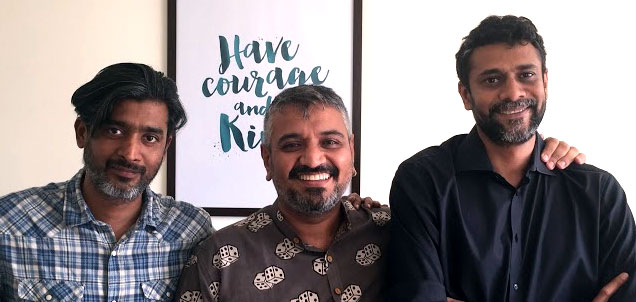
  • Sundar Swamy, Kaushik Roy in IAA global leadership team

    By A Correspondent


    IAA India President Srinivasan (Sundar) Swamy and APAC head (and former President) Kaushik Roy are part of the global body’s leadership for 2016-18. The International Advertising Association (IAA) elected its team for the coming two years during its annual Board of Directors meeting.


    “Felix Tătaru at 42 is the youngest IAA Chairman in our history,” commented Michael Lee, IAA Managing Director, adding:  “We have an ambitious agenda for the next two years and our exciting mission continues today”


    Said Tataru: “We are very excited to assemble our leadership at such an exciting and challenging time in our industry. The IAA, representing all areas of  marketing communications – advertisers, agencies, media and educators is committed to inspire the industry and society. Everyone in our industry is empowered to contribute in their own way and the IAA looks forward to harnessing the resources and energy of our members around the world”


    Among the current industry issues for the IAA include the continued importance of best practices and integrity; the defense of unwarranted bans and interference with brands and advertising and the development of talent within our industry


    The following is the list of IAA Officers for 2016-2018:


    Felix Tătaru 

    Chairman and World President,

    GMP Group, Romania


    Faris Abouhamad

    Immediate Past Chairman and World President,

    CEO, InterOne Resonance, UAE


    Srinivasan Swamy

    Senior Vice President,

    CMD, RK SWAMY BBDO Pvt Ltd, India


    Diane Slade 

    General Secretary,

    Head of Advertising Edith Cowan University,Perth, Western Australia


    Venanzio Camarra

    Treasurer,

    Managing Partner and Chief Consultant of Studio Aldabra<, Italy


    Carla Michelotti

    Vice President Corporate Members and Government Affairs,

    President, Carla Michelotti LLC, USA


    Kaushik Roy

    Vice President Area Director Asia Pacific,

    President – Brand Strategy & Marketing Communication, Reliance Industries Ltd, India


    Tom Brookbanks

    Vice President Area Director USA/Canada,

    Senior Vice President, Starcom Mediavest, USA


    Kyra Roest

    Vice President Are Director Europe

    Business & People connector, /UM’GE:BUN/, Netherlands


    Saad El Zein

    Vice President Area Director Middle East Africa

    Saad El Zein Company, UAE


    Michael Lee

    Managing Director IAA, USA


  • Kunal Shah leads IAMAI CEO’s trip to China

    By A Correspondent


    Kunal Shah, Founder & CEO, FreeCharge and Chairman of the Internet and Mobile Association of India (IAMAI) would lead 20 CEO’s for a week-long trip to China, beginning June 24.


    Members of the team include: J Murugavel, Founder & CEO, Bharat Matrimony; Amarjit Batra, CEO, OLX India; Pawan Gadia, CEO Retail & Online, FernsnPetals; Ms Neelu Singh, CEO Ezeego1; George Antony, MD, UAE Exchange; Dippak Khurana, Founder & CEO, Vserv & Vmax; Nitin Gupta, Co-founder & CEO      PayU India; Ankur Singla, Founder & CEO, Helpchat, Vivek Pani Co-founder & CTO, Reverie; JRK Rao, Founder & MD, Rage Communications; Badri Sanjeevi, CEO, Mauj Mobile; Manish Chopra, Co-founder & CEO, Zovi; Sahil Chalana, Founder, College Dunia; amongst others.


    The focus of the week-long trip is to invite the Chinese companies to set up in India; invest in Indian start-ups; gain Ideas for new businesses and exchange insights for scaling-up.


    The delegation will meet officials from Alibaba, Baidu, Ctrip, Cheetah Mobile; Xiaomi in Beijing and Shanghai. The team would also meet investors like Ant Financials and Start up Street during the week-long trip.


    Speaking about the delegation, Dr. Subho Ray President, IAMAI, said, “Scale and scalability is one of the most important things to learn in China.  Apart from key meetings, the delegation will also visit large internet and ecommerce companies to get first hand feel of scalability.”


  • Kantar partners with Facebook to expand advertising measurement service

    By A Correspondent


    Kantar Worldpanel has formed a global partnership with Facebook that brings Facebook mobile ad exposure data into Kantar Worldpanel’s Consumer Mix Model (CMM) service. The enhanced CMM tool combines Facebook’s mobile ad exposure data (in addition to desktop) with Kantar Worldpanel’s continuous consumer packaged goods (CPG) purchase data to provide brands with an accurate assessment of the effectiveness of their cross-media advertising campaigns.


    The advertising landscape has witnessed rapid change in recent years as brands increasingly turn to digital formats. In April Facebook announced that its advertising revenue had grown by 57 percent to $5.2 billion in the first quarter of 2016 alone, with advertisers drawn to its increasingly large user base.


    The tool allows brands and advertisers to understand the real impact of individual advertising campaigns on actual sales and the contribution Facebook and other media have on their return on investment.This in turn will help them to optimise their media planning and ultimately improve the efficiency of their media investment.


    Josep Montserrat, chief executive of Kantar Worldpanel, comments: “The partnership allows our experts to build a solid understanding of how advertising works and the role that Facebook plays in a wider campaign context.  Working with Facebook will allow us to inspire even better decisions to optimise advertising budgets and maximise advertisers’ return on investment.”


    Patrick Harris, director of Global Agency Development at Facebook, said: “We believe that strong partnerships with our agency partners are key to providing advertisers with the tools they need to measure true business value on Facebook.  We are excited to help inform Kantar Worldpanel’s Consumer Mix Model solution by bringing in our mobile ad exposure data in a privacy-safe way.”


    Kantar Worldpanel’s continuous CPG purchase panels are already widely used by the advertising community worldwide to understand the effect of cross-media advertising.  Its measures take into account in-store promotions and consumer loyalty to determine the full picture behind consumer purchase behaviour.


    Kantar Worldpanel’s new service is now available in the UK, France, Spain, Portugal, Brazil, India, South Korea and Taiwan, with additional Asia Pacific and Latin American countries to follow throughout 2016.


  • Discussing Content with Spike Jonze and Shane Smith at Cannes 2016

    By A Correspondent


    ‘Content is King’ is one of the over used lines in the last few years. But what content does the youth want to see is something that everyone is figuring out. To try and find more about it, Vice hosted a discussion on ‘Making Content We Care About’ with Shane Smith, Founder and CEO, Vice and Spike Jonze, Co-President, Viceland, Vice. The session focused on the importance of making content that young people care about and was moderated by Joel Stein, a well-known journalist from Time magazine.


    A video made by Vice was aired before the conversation began. The video dealt with issues that today’s youth are concerned about, from LGBT issues to adventure sports. ‘Quirky’ was the best way to describe the discussion. Stein started the conversation by asking Jonze on how it feels to see so many mobile phones focused at you instead of people. Though Jonze ducked the question and blamed jet lag as the reason that he cannot think anything right then, it was Smith’s mocking reply about how technology is the future and he feels good about it, cracked up the audience.


    The conversation was to an extent dominated by the old school media versus the new school media debate. With the former being afraid to make content which did not follow traditional rules while the latter almost broke all the rules. “I think we are not scared of making something that we feel strongly about is because we do not have the fear of getting fired. So, we make things which we believe in,” said Academy Award winner Jonze. Smith added, “What we do is, we just say make it. Just go out and do it. If it is bad we will fix it or not make it and if it is good we will make it.” The key point here is that most of these new age content makers are not afraid to experiment and make new content. They have embraced failure as a part of the journey and not a hindrance to it.


    They also discussed about the transition of Vice. Stein felt that it has become more serious. Which both men agreed to and said that it is a part of their growing up as people and also the organisation getting expanded. So, what is it that appeals to the youth? They have a different view about almost everything and they are opinionated. “There has to be some purpose and meaning to the content they watch. It just cannot be another reality or talent show,” said Smith.


    Meanwhile, on the awards front, India has received seven shortlists in the Film category. Indian agencies have bagged 23 metals so far, one of which is a Grand Prix and with four Golds. Guess just a day before we get the final picture.


  • The Ogilvy Way on Digital


    It’s the numero uno creative agency in the country. And it was among the earliest big agencies to go digital. Even as it started this transition over a decade ago, Ogilvy India is still perceived as an agency tied to the more traditional areas of television, print and outdoor. For this discussion, Vikram Menon, President and Country Head, OgilvyOne Worldwide India and Neo@Ogilvy; Kunal Jeswani, Chief Executive Officer, Ogilvy India, and Rajiv Rao, National Creative Director,Ogilvy India got together to speak with Pradyuman Maheshwari about Ogilvy India’s digital outlook…


    Ogilvy has been in digital for many years, but it is perceived as a traditional television campaign agency. Why?

    Kunal Jeswani (KJ): Because it is the best advertising agency in India, and possibly in Asia too. When you want to build something else within that kind of a unit, it takes a lot of effort, and years, for it to shine.

    Rajiv Rao (RR): I think the shadow advertising agencies cast, is very large. If you are an independent agency, and into digital, people say: ‘Oh! Ogilvy also has digital’.

    Vikram Menon (VM): The sheer size of this agency and the work it delivers overshadows everything, from an advertising standpoint. So it becomes far more difficult for a unit — regardless of what the unit is — to stand out.


    Are you happy with the way things are?

    VM: Absolutely. As a part of Ogilvy, you have resources and talent you can always rely on. We are 500 people; I don’t think there are many agencies of that size anywhere in the country.


    Of all the large agencies, you got into digital fairly early. You acquired a digital agency many years ago, but the perception, that you are essentially not a digital agency, continues…

    KJ: Ogilvy One was one of the first agencies in India to start taking digital seriously. We started making a transition from being a direct one-to-one agency, to a digital agency almost 12 or 13 years ago. Now, three things could have happened at the time. Either the advertising agencies Ogilvy and Mather- could have started declining, in which case we would have seen Ogilvy One shine a lot more than it does now. Or Ogilvy One would have been scrapped, or – as it has happened — advertising has continued to hold its own, and [Ogilvy has been] the best agency in the country for the last 12 years. Ogilvy One has been built up, gradually, as the largest digital agency in the country, but in terms of perception, it is still hard to break out the ‘we-are-an-advertising-agency-first’ mode. People need to see that right next to the advertising agency, sits this big, shiny, fantastic digital agency. We churn out 250 to 300 fantastic films a year, and you see it a lot more because it is on TV. Television is difficult to outshine. But anyone who has worked with Ogilvy One and seen the capabilities we have, will know it is great. [We] have done fabulously in [awards events like] the D&A Echos globally. We are listed eighth on Warc, and are the only Indian agency in the Top 50 I think. I think we were a little ahead of our time. The demand for digital work, and client spends started only five or six years ago.


    Rajiv, Ogilvy has been a creative-led agency. Are you looking at digital as a part of the thing or you do stuff television and it is kind of shoveled in to digital?


    RR: The approach to what we do is the same, whether it is digital or advertising. We look at every brief and try to make something as interesting and exciting for digital as we would for advertising. There is a lot of work we have done that you do not see on television. Television is the most visible medium, so that is another reason you do not see a lot of digital works, which are less in-your-face. Most of the time we create work for television first, and then adapt it to digital.


    I was there at the Kyoorius Creative awards judging, the fact of the matter is while digital was there, print and radio, there were a 100-plus entries which entered but only four both categories which were shortlisted. Clearly, I think the focus is coming towards digital in a bigger way than the others.

    KJ: In terms of spends, yes. If  I asked a client five years ago, where their spends were, they’d have television, outdoor, print, radio and then digital. Today, digital is right after television. But it differs from client to client. We have clients even now coming to us and saying: “Where is my Digital First work? I want to see it.”


    Only an agency like Ogilvy can convince clients that they need to use digital and it is a better way to communicate something. Are you all doing that?

    KJ: I don’t think we need to. Every one of our clients is pushing us for fabulous digital work.

    VM: We have passed that point where we have to convince people that digital is a necessity. Earlier, it used to be a tick box. But now it is integral to the campaign in itself, and measured on several different parameters. So there is no need to convince people.


    What about digital-only clients?

    VM: I don’t think there are too many clients like that. It may be an Ogilvy One only client rather than an Ogilvy One plus advertising client, but they also have their advertising agencies, and a lot of cases where you see digital leading the campaign. So the idea is first cracked and then we decide how it will work on mobile, social and all other platforms. And then we may do television also.


    When a client is getting advertising work done for television, is separate thought going into digital, or is most of it the same?

    RR: About 50 per cent of work is outside of the main campaign. Yes, we do a lot of it.

    KJ: If you are doing a large ATL campaign, the campaign should have a digital face as well. It does not need to be the same thing, but it needs digital integration. There are times when you are silent on television. Most clients cannot afford to be on television throughout the year but you can afford to be on digital. You have your whole campaign amplification, idea amplification piece on it and then when you are off television, you do a digital-only campaign.


    Rajiv, would you say the agency has changed over the years given the fact that it is now more digitally-active than, say, five years ago?

    RR: Not just the agency, but even the environment across the industry. People are thinking of ideas and not films, about ideas that would go social and viral. It is a conscious decision which comes to people naturally.


    The essence of this conversation is to see how Ogilvy has changed. So what are the kinds of services that you have on offer at Ogilvy One?

    VM: We offer things across the spectrum. There’s just consulting at one end of the spectrum (which we do for a few clients like Aditya Birla), where we design programmes and then hand it off to the agency to execute it. From there all the way across is social media, in terms of what your presence should be across social channels, building websites, building your own media, the content that you are putting up there etc. For Rajasthan tourism, for example, we have done some hundred pieces of content for their website to make sure people keep coming back. Then there are things like social care, where we manage all the online complaints of Vodafone. Today it is very difficult to define digital as a space, but we have got a lot of offerings in that space, with full teams working on it.


    As digital gets mainstreamed into the agency, will the entire agency be seen as a digital agency also? And will all agencies eventually be viewed that way?

    KJ: Will Ogilvy be seen as a digital agency? The answer is no. I think the market will shift very fast, with all agencies, including Ogilvy, being able to do and deliver digital content and campaigns across the agency. Exactly the way we do a print ad, television or radio spot and outdoor. The entire agency will be able to churn out digital campaigns and video content and all other content seamlessly. At the same time, digital is going to get more fragmented and more specialist. You are going to need deeper e-commerce specialisation, performance-marketing specialisation, digital production and asset management-specialisation, data analytics specialisation linked to all the content and such, and all of that is what we, at Ogilvy, are going to be known for. I think that is where it is going to move. You need the digital content, campaign done; you do not need a specialised digital agency, every agency in the country will be able to do it soon.


    Many years ago, a similar thing happened with big, creative agencies. Media agencies were de-merged and became independent. In the last few years, there has been a growing realisation that it makes sense to have full-service agencies. Given this background – that is the advantages and disadvantages of having media separated — do you think the digital part of business should be integrated with the creative?

    VM: We are doing that, actually. We do have digital media, in a set-up called Neo, and it has been around for some time. But as of now, we are investing quite significantly in it. It has trebled in size in the last one-and-a-half years. We brought a new head, and we have been driving performance. We’ve got great models and tools for that, so you will see a lot more use from that.


    In the past, media agencies have broken away from creative agencies. Do you think it is better to have a separate digital thing?

    KJ: There was a time when you had one agency. Then it split, and media and creative were separated. Then came digital. You had digital agencies and you had digital media agencies. Every client is going to a separate media agency and a separate digital media agency. Then you had the digital media agencies splitting into three. Mainstream digital media agencies do all your buying and planning across channels, and you have specialist search agencies and specialist performance agencies. Now, most clients want one agency that does everything. Soon client will start asking, ‘Do I really need a digital agency to do all this stuff?’ Not really. They need specialist capability. So you will see more and more specialist capabilities inside the digital agencies separate, and you will see the basic capability delivered by integrated agencies like Ogilvy.


    Rajiv, how do you look at performance and..

    RR: (laughs) I don’t. But I agree with Kunal. I think there is a digital agency and there is an advertising agency and, I think at least for some time, it should be one unit. We are creating ideas which have to be adapted or transmitted into digital and vice versa, so it should be one unit. And yes, there are specialist parts of the digital thing which can be a separate entity. As Kunal said, the clients also want to go to one place and find all the digital solutions.


    If you had to make a pitch to clients to show how different you are from earlier, and that digital is very much part of your offerings, what would it be?

    VM: I would just like to position ourselves as a modern agency, in terms of the skills we bring to the table in delivering campaigns. I would stick to something as simple as that. Underneath all that, you have specialist skills that go towards making what I call a modern agency. It becomes complex to explain.

    KJ: Let us look at why anyone comes to Ogilvy today. Any client, why do they call us? What would your perception be?


    Piyush (Pandey) and Rajiv… (Everyone laughs)

    KJ: Perfect! What do Piyush and Rajiv stand for? They stand for a fantastic creative product. That is why anybody comes to us for. They come to us for a fantastic creative product. I will be completely stupid to try and do something different with that, because it is not necessary. This agency is built on great story telling and fantastic creative. The only job Vikram and I need to do with Rajiv’s partnership  and everybody else we have here is make sure that the great story telling, that fantastic creative spreads across every single channel that we have.


    And, is that happening?

    KJ: Yes, it is. We were already discussing that it is much more difficult for people to remember great digital campaigns because in India television campaigns come to you very easily as we are exposed to it.


    Once upon a time, most digital campaigns used to be Gabbar Singh and Rajnikanth

    VM: That was 10 years ago.

    KJ: At heart, we are going to be a fantastic creative agency which delivers great storytelling across every single platform. But the bit Vikram was talking about, about being able to do a degree of modern marketing, also means we need to get more tech-savvy in the way we approach advertising. The data backbone, the technology backbone of the agency and the ability to deliver on digital. From the delivery point of view, one is the story and the second is being able to give the client confidence that we can build his mobile applications, websites and manage his social platforms. So, at heart we will always be a creative agency. I just need to build enough backbone to ensure clients also understand that these guys also have the technology, data and delivery chops.


    Rajiv, are you looking at re-tooling your team for the new order, or is it just as it comes?

    RR: The way it is right now, I don’t see the need to. Everybody across the agency — whether it is advertising or digital – is thinking in the same manner, and whether they are thinking about film or editing or anything else, the approach is very similar. When you have a brief on an exciting thing, most teams are thinking [in multiple ways], unless they are asked to think only film or TV. I really don’t think I need to make any changes.

    KJ: At the same time in terms of messaging, everybody in the company understands we need to be fantastic. It is not a choice. We have training in place. We have done something called Digital Dojo, a three-day workshop for everybody. Right now, it is for our senior key managers, but it will distill down. Next month, we are doing an intensive digital planning workshop [about] the way we approach digital as a company.


    Is it for everybody?

    VM: The dojo was for creative; the digital and data-planning framework is going to infiltrate the entire organisation. So we are doing a two-day workshop next week for everybody again.

    KJ: Every week there is a global webinar on a different aspect of social done by the best people in the world. It is done from New York and it is available to all of us. Everyone accesses it.

    VM: Some of the sessions are for clients too.


    The thing has to come from top down.

    KJ: At the same time, our employees are not in school. I cannot take a ruler and hit people on their wrists and say, ‘you have to attend 10 sessions in the month’. We are not that kind of company. We are a creative company and at the end of the day we will make training accessible to everybody. Rajiv, Piyush, Vikram and I will send the message to everybody that this is important for them; they need to be thinking in these spaces and it is important for the company, and the rest of it is up to the employee.


    This story first appeared in dna of brands on June 13
     

  • @Cannes2016: Of Misfits and Madmen at Cannes Lions

    By A Correspondent


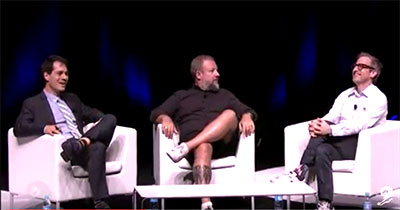
    “99% of advertising is bad work,” said Sam Ball, Creative Director , M&C Saatchi as he started the session ‘Misfits and Madmen’  hosted by M&C Saatchi, adding: “A bunch of like minded people in a room is the worst thing in the world for creativity but that is generally how advertising agencies like to operate.” But that is what happens in majority advertising agency. Most of the times, productivity is given more importance than creativity.
     

    Ball noticed that when a group of people work, everyone goes for the happy medium, the dissenters are shut down. The solution suggested by him is ‘Diversity of thought’. “Diversity of thought is bigger than people, we have to inject it in to clients, our processes and inside people,” he said. He gave some examples of diversity of thought from other creative industry which included the structure of the Pixar building, which was built to encourage people to collaborate and not be confined to their own space.


    The creative director conducted an experiment where he got 10 people, who would have never have thought of working in the advertising agency. He put them in the creative department and gave all of them the same creative brief. The purpose was to see how people from different background will come up with different ideas. The ‘misfits’ ranged from data manager to investment banker to cage fighter and even a poet. And, during the exercise different creative people will come and talk to them.


    The brief given to them was: How do we make a newly brought Converse more appealing to young men and how do we find a way to make them look the way they want quicker. Before showing some of the ideas that the people came up with, he showed a video that captured some of the moments from the experiment as well as a few interviews of the misfit that he took.


    He showcased some of the works that the misfits presented. Ball started getting emails from the misfits after the experiment was over. Most of them thanked him for the opportunity and some of them were ready to look at new career options. “That blew me away. 10 random people who never thought of working on the advertising industry, three of them asked for a job,” Ball said. And, the takeaways that from this experiment for Ball was as follows:

    :: Be open to ideas of those who know much less than you because they may really know much more.

    :: The future belongs to the agencies that inject diversity of thought in to their people and their process

    :: Your most extraordinary ideas are not in you, they are all around you.


  • @Cannes2016: Breaking norms

    By A Correspondent


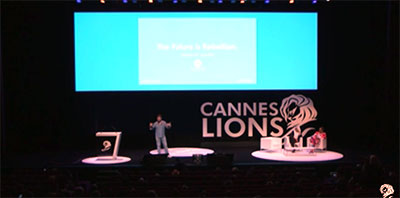
    “Creativity is the greatest rebellion in existence.” This is what brands can learn from ‘the rebels’ in their industry. The rebels are the rebel heroes of the internet who are refusing to join the norm and capturing our imagination as a result. Most brands seek to fit in with the norms of social channels, rather than challenge them. To discuss about the rebels and rebellion, DigitasLBi hosted a session with the theme ‘The Future is Rebellion’. The speakers were Ari Seth Cohen, Founder, Advanced Style,Amani Al-Khatahtbeh, Founder of the blog Muslim Girl and Chris Clarke, Chief Creative Officer International DigitasLBi.
     

    Clarke praised the emergence of social media due to the content it provides us but also pointed out the homogeneity of content that it is leading to. “We, as an organisation, think that it is really important to look at unusual places for ideas, unusual talent to collaborate with. It is always a problem if you start following the same pattern and thinking,” he said. According to Clarke, we all should try harder and look deeper to bring more unusual perspectives to our work and challenge clients to be different. “Our job is to create differentiation for brands and yet often we are following rather than leading,” said Clarke.


    When Khatahtbeh took the stage, she made the audience do a little exercise, since she noticed that most of them were on their phones. She asked them to open their favourite internet browser and then go to Google images and type ‘Muslim Women’. She referred to a representative search result. “It is a very bleak picture. It is an entire page of faceless women hidden behind veils with only their eyes showing. It is a very one dimensional image of Muslim women. These are not only there in the internet but in our media as well,” said the blogger. This is what inspired her to create her blog when she was 17-years-old.


    “I could not find any issues that are particularly relevant to Muslim women, especially young woman like me who grew up in the post 9/11 era,” she continued. The blog started creating feminist theories around women in their community and took a self-analysing path to find out what was it like to be a Muslim woman in this era. She spoke about the just finished web series they did for Teen Vogue called ‘Ask a Muslim girl’. The web series will deal with the misconceptions about Muslim women. She concluded by saying that they have now found a voice that is being heard globally.


    Advanced Style is a website that focuses on fashion for elderly people. Cohen was fascinated by his grandmother and that is what led him to start Advanced Style. “Women with great style and spirit who challenge the notion that you decline and give up as you grow older,” said Cohen about his love for old people. His grandmother introduced him to photography, culture and old films. For Cohen, “I really had this idea of aging at a very young age. As you get older you become wiser and interesting. When I was eight, I made my first book of drawing which was a book of older women like my grandmother,” that was the beginning of his inspiration.


    Cohen did not understand this whole idea of marketing about anti-aging. He wanted to show the pictures of the women he collected, who aged gracefully and were truly inspirational. That is why he started interviewing these women and putting them in his blog and this project went viral. “Younger women started writing to me that they no longer fear ageing,” he said. His work has been appreciated globally for starting a movement in the fashion industry.


  • @Cannes2016: Looking at the future of Hollywood

    By A Correspondent


    There is no doubt that Hollywood tales have mastered the art of storytelling. But does that need transformation? What with players like Amazon and Netflix paving a new way of watching series and films, as well as the way they are produced, consumed and shared. Social media has and is creating stars overnight and films are being watched on screens of all sizes. The connection between Hollywood and Madison Avenue, Moguls and Mad Men, has been in existence for decades, as some of the greatest ads of all time were made by Hollywood biggies. But what does the future look like for this bridge between entertainment and advertising?

     

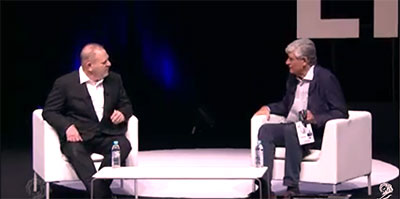
    And to try and predict the future of Hollywood and inspiring audiences beyond the big screen, Maurice Lévy, Chairman and CEO of Publicis Groupe was joined by Harvey Weinstein, Hollywood film for the discussion ‘Beyond the Big Screen – The Future of Storytelling in Hollywood’. Publicis and Weinstein have been associated with one another for a long time and that is why the Academy Award-winning producer joked by asking why he had to sign an exclusive contract with the organisation to book this slot. Weinstein’s journey as a producer was shown through a short video.


    The conversation started with how can Hollywood and advertising work in coordination. “It has to be subtle and nuanced, it should not be in your face,” said Weinstein about how brands and movies can work together. He also added, giving example of Project Runway, which has been associated with L’Oreal for a long time and the brand gives very interesting challenges to the contestants, so this is how a brand works in a TV show.


    And, when discussing about transformations and change take place, how can the topic of ‘Digital’ be far. Digital transformation has definitely, in the last few years, changed the way content is viewed. From television sets to computer screens and now to mobile phones, the viewing pattern has also evolved. Weinstein said, “People watching movies on mobile are a turn off for me. But I know I am not going to win because that is the future. I think movies are going to take a stage where the Netflxes and Hulu and Amazon are. Even Google and Apple would not be far behind and they will enter the content business soon.”


    Weinstein shared his experiences of working in Hollywood and many other personal encounters. He spoke about the movies that are lined up for them. Weinstein acquired the rights of ‘The boys in the boat’ and since it is set in the 1930s, a lot of detailing in terms of clothes has to be done. So, Tommy Hilfiger has agreed to work on the costumes, citing this as an example, Weinstein said “There is a way of working together.”


  • Borders between media & creative are getting blurred


    Mindshare India is on a roll. The GroupM agency network notched up over 176 awards last year, and this year, the agency’s Unilever team in Mumbai bagged a Grand Prix Glass Lion at Cannes for creating India’s first transgender pop group, the Six Pack Band, in partnership with tea brand Brooke Bond Red Label. Started last year, the Glass Lion honours creative work that highlights some significant cultural or gender issue. Hindustan Unilever’s Brooke Bond Red Label partnered with Mindshare Mumbai and Y Films on a campaign that would draw attention to — and generate debate around — transgenders, by creating a band unlike any other. In an exclusive interview, Prasanth Kumar, CEO of South Asia at Mindshare took questions from Pradyuman Maheshwari and Anuka Roy, about the Grand Prix win and the agency’s relationship with long-time partner HUL.


    This must be the first-ever Grand Prix where a home team, which worked on a winning campaign, wasn’t these to collect a Lion. How come all of you were in Mumbai,not enjoying the salubrious climes of Cannes?

    First of all, we are very excited and delighted that we could win a Grand Prix for the work we have done. We were planning to be there, but some things came up, and we decided to celebrate the award from India. Ours is a large network, and some of our colleagues are there. If everything goes well, next year a couple of us will surely go to Cannes.


    HUL believes in our ideas and solutions

    Winning the Grand Prix at Cannes is not just special for Mindshare Fulcrum, a unit of Mindshare India, but also for partner Hindustan Unilever (HUL). Amin Lakhani, Head, Team Fulcrum, Mindshare talks to Anuka Roy about the 20-year relationship Mindshare has with HUL, and what this win means to both of them


    Talk to us about the bond that Mindshare Fulcrum shares with Hindustan Lever (HUL)…
    It’s a journey both Unilever and Mindshare have co-created. We celebrated our 20-year anniversary last year. And after the celebrations, there could not have been a better gift from Mindshare for Unilever than a Grand Prix for the work we have done together. I am sure this will go a long way in increasing the amount of work we do, and belief in the work that Mindshare does.


    How did the Glass Lion-winning campaign come about?

    We initiated this entire brand-centric content solutions conversation. It is a matter of great happiness that one of the great ideas went on to win a Grand Prix at Cannes. It has reached the pinnacle of all work we have done through the years. What makes it more special is that we are the first media agency to win a Grand Prix in the Glass Lions.


    The success here is indicative of the creative powerhouse that is Mindshare. But how much of that does a client like Hindustan Lever value over better media rates or cheaper GRPs?

    When clients put down money, they deserve to get the best value. Given Unilever’s scale and size, and our relationship with them, it is critical that they get the best value out of it, and there can be no compromise on that. I do not think that because we seek great value, we do not see creativity. They don’t either, because Unilever also believes in the ideas and solutions that we bring to the table.


    Talk to us about the sentiments of the team that worked on this.

    They are ecstatic. I think many of my team members have not slept since they got to know [about the win]. Ad this is not only the Fulcrum teams in Mumbai, but our Unilever media team is also celebrating. The brand teams and our content partners at Y Films, are also celebrating with us. Not only these teams, but the entire Mindshare fraternity across the country, whether it is in Delhi or in the Bangalore office, everybody is joining us in the celebrations because it is a matter of great pride. As we call it in our system, the ‘purple pride’….


    Though there is no bar on anyone from sending in an entry for the Lions, typically entering the Glass Lions is the preserve of a creative agency, right?

    From what I’ve been told, the Glass Lions are about the creative work that gets picked up. We believe that every work and stakeholder in the ecosystem can be creative and do the right things needed for the brand. A lot of understanding of the brand, the market and consumer, [provides the] right perspective. Then, it is about being creative, by putting the right treatment of what communication to use, what platform to adopt, which is what every team gets into. That is how we look at this category as well. Today, it is also important that brands get integrated treatment and they are able to get the right insights, creativity and technology to use. Therefore, all this enablement should provide the right solutions for the brand.


    While one might say it’s the clients’ business that is the best thing for any agency, what does the Grand Prix for the Glass Lion mean for you as CEO of Mindshare South Asia?

    It means a lot to me. We were told that this is the first time ever that a media agency is winning a Grand Prix for a Glass Lion. We need to be lot more creative and innovative to break the clutter. This means so much to us that it encourages and motivates us [to opt for] the new things and the new innovations and product frameworks that we are putting out; our content is a separate focus where our content team is working on getting some newer products, partnerships and a better ecosystem in place, so that we are able to bring more and more precise solutions, and also bring in some clutter-breaking creativity. It also reassures us that some of the actions we have taken have started resulting in recognition for the work that we do.


    Please talk us through your relationship, as an agency, with Hindustan Unilever…

    We just completed 20 years of our relationship last year. It almost feels like an anniversary gift, and God has been kind to both of us. A lot of things have gone into the relationship: Shaping brands for two decades, launching new brands, inventing new practices that are born off more challenges. In this space, we do not feel tired even when we challenge each other, because we feel and believe that when we debate and are able to be radical, which encourages us to get precise solutions for the brands. We are happy that Unilever has also grown from strength to strength in terms of recognising our work, and also being a part of us as we feel a part of them. [Over the years] the leadership has changed, and new people have come in, but we have only grown from strength to strength. We celebrate this relationship as one of the best that we have.


    Specifically on this campaign, what was the brief and how did it come about?

    This is primarily a content initiative, and many of the ideas got discussed, co-created and stumbled upon. That is how winning ideas get formed; they develop from A to B to C, and then the teams debate on it. It then gets co-created with clients, such as us and the Y Films team. It is not a single campaign; it is an ongoing one, and we have a sixth video coming out. It is more about creating a particular cause and a platform for it, so that the associated brand is able to leverage that platform.


    Media awards are being won by creative agencies and creative awards like yours are being won by a media agency. Your comments.

    The borders are getting blurred. New technology, a way of looking at solutions, insights-driven and creativity-driven solutions are all getting into a more exciting space. What’s more, people are trying to break our records for what we did earlier, which is very encouraging because we have just won at Cannes and we cannot be complacent. We need to look at how to keep innovating.


    Media agencies are typically retained for media planning and buying. How much is creativity a focus area at Mindshare India?

    I don’t think a media agency does only planning and buying today. Our focus on data, content and digital has been so intense that our products have also evolved over the years. And being the leaders in the market by far, we also take the responsibility of shaping the practice and the market to a certain ‘right way’ of looking at solutions for brands. We have a very large content team, headed by Deven, while Ajay Mehta is content head of Fulcrum and works with Deven and Navin. Ideas can come from the media, message, and content, or from anywhere. We deal with it in every form. Some use media to understand consumers, their tastes and what they like and dislike. All of these allow the creator to understand things better and get a little closer to magical idea of creativity, which can help the brand more.


    Hindustan Unilever has some of the best creative shops working for it. So why did it get this campaign created by Mindshare and not a creative agency?

    It’s not about why they didn’t go with someone else. We had the content, and the content team’s purpose was to come up with different ideas. This magical idea happened and that’s how we got the job. We believed in the capability of doing it and had our own partners, Y Films, and came together to create a story. We are happy we won a Grand Prix for that. We’re also happy that the client supported and encouraged us so much that we able to come up with some great work.


    Last year has been good for Mindshare – the Emvies, Media Abby, the Grand Prix and various others. And we have the Emvies coming up soon.

    We have got to win the Emvies and make sure we fight for that. Last year, we won some 176 awards as well as ‘Agency of the Year’ across platforms, besides ‘Digital Agency of the Year’ and ‘Global Agency of the Year’ too. We began this year with a bang, with ‘Festival Agency of the Year’. We topped the Abbys by far and won the IDMA digital awards. And, now we have a Grand Prix. We are not going to get tired, but we are hungry: Every day and every award makes us hungrier. Every good work makes us hungrier to do better.


    Indian media agencies, including Mindshare, typically don’t do well at the Media Lions at Cannes. Why?

    Better understanding and better creativity and ability to get the brand reciprocate on better ideas, is required. It is a global platform. We see lots of work from different part of the world, and the best of the best ideas win over there. But making the shortlist is equal to a great award. However, if you have not done well as a country, it is because we need to focus on how others look at you. Many a times, learnings from others gives us more clarity on what we should do. We are happy that we have been able to make the country proud. We take it as an opportunity to learn and be better the next time.


    Many critics say that ’cause’ campaigns are done more to generate buzz and free publicity. And of course awards. Your views?

    This happened 13 months ago and was not created for Cannes. It was done for the brand. We will continue to do it, with the sixth song coming out soon. It is also true that for some of the band members, it has changed their lives. This band has made them more acceptable. It is not easy to start with an idea like this. We do not want to do it for the sake of it. Our philosophy and that of our clients is that we believe in it, and we would treat [transgenders] with the same dignity as any other celeb. That is what Y Films also did, and hats off to them for managing that. That is what we believe in, and would continue to do.


    This interview first appeared in dna of brands on June 27.


  • FSSAI & ASCI partner to curb menace of misleading ads

    By A Correspondent


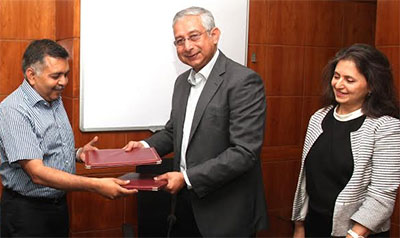
    With the momentum shifting towards supporting co-regulation in advertising, the Food Safety and Standards Authority of India (FSSAI) has signed an MoU partnering with the Advertising Standard Council of India (ASCI). Addressing the cases of misleading advertisements in the Food and Beverage sector (F&B), ASCI will comprehensively monitor these advertisements across various media. ASCI has been given a suo moto monitoring mandate by FSSAI to process complaints against misleading F&B advertisements. MoU also requires ASCI to report to FSSAI non-compliance of ASCI’s decisions for further action as required per provisions of FSSAI Act. FSSAI received cases of misleading advertisement through Gama Portal. Out of 21 cases received till date, FSSAI disposed 06 cases and remaining cases are in different stages of scrutiny/disposal.
     

    FSSAI will also redirect complaints against misleading F&B advertisements to ASCI, which will be reviewed using ASCI’s code and guidelines. The review will include violation of the FSSAct and Regulations related to advertisements making misleading, unsubstantiated or false claims.


    This partnership will put in place a mechanism to monitor misleading advertisements and will lead towards streamlining advertisements effectively through structured guidelines and appropriate action.


    Sh. Pawan Agarwal, CEO, FSSAI added “FSSAI has taken a serious view of misleading advertisements related to Food and to effectively handle the same have entered into MoU with ASCI which shall provide paradigm shift towards handling such scenario and shall also bring transparency and accountability with stakeholders participation”.


    Benoy Roychowdhury, ASCI Chairman added, “We are delighted that ASCI’s self -regulatory process on advertising content is getting recognition from various government bodies and the partnership with FSSAI will augment our efforts in curtailing misleading advertisements. F&B products are consumed on a daily basis impacting the health and well-being of millions of consumers. Reining in misleading advertisements for this important sector would be a key priority for ASCI.”


  • 4th edition of Kyoorius Design Awards 2016 announced

    By A Correspondent


    The fourth edition of the Kyoorius Design Awards, held in association with D&AD, has been declared open for entries from Monday 27th June 2016. Kyoorius has called for entries from across India across a total of 10 categories and 56 sub-categories.


    The fourth edition of the Kyoorius Design Awards, brings to fore the brightest talents and best works in the field of design. Across multiple categories, the Awards cover the world of design from branding, editorial, product, and spacial design to writing for design. Not only do they celebrate design, but every year the Awards dig out undiscovered gems, new studios and designers – talent just waiting to be recognised.


    The awards can be entered by any company or individual – it’s not restricted to design studios or advertising agencies. Kyoorius will promote the awards across corporate, Design Houses, Event companies, Brand Consultants etc.


    The awards will open for entry on 27th June 2016 and close on 29th July 2016. Submission of physical entries for the awards will then remain open for a week.


    Kyoorius, for the first time ever, introduced the concept of Open Jury – the jury sessions are open to the industry people to watch, learn, check and benefit from the discussions and display of entries.


    The Jury session will be held from 2nd September to 4th September May in Mumbai at Ecole Intuit Lab.


    In coordination with D&AD, the jury will be a mix of International (West and East) and local jurors. Like every year, the awards will uphold the zero-tolerance policy for scam ads. Gabor Schreier, Executive Creative Director, Saffron Brand Consultants will head the jury.


    Rajesh Kejriwal

    Rajesh Kejriwal, Founder & CEO of Kyoorius, commented, “Awards are primarily to inspire and motivate the industry achievers. At Kyoorius Design Awards, the name does not matter – merit does. We know that designers are a terribly undervalued kind; and we are out to prove them all wrong. Because we love you more. I am also happy with the response that we have always got for having a transparent open jury process and we shall continue to do so. I personally feel that many studios/agencies have done brilliant work in the last year and hence I am expecting a lot more participation of more agencies.”


    The Kyoorius Design Awards show will be held on Saturday October 1 2016 at Designyatra held this year at Fairmont Hotel, Jaipur. The awards show will be attended by well over 1250 professionals. The Kyoorius Creative Awards are presented by ZEE TV.


  • On a musical note with Bipin Pandit

    By Anuka Roy


    He is a man of many parts.  The Advertising Club COO Bipin Pandit dons multiple hats. It has been 27 years that he is performing on stage. He juggled the role of a compere, at times a mimicry artist and on many occasions both. But singing is something he has been passionate about from his childhood. And then he heads the operations of an ever-active Advertising Club.


    Pandit reminisces how as a young boy he would be invited to sing at his neighbour’s parties or his cousins coaxing him to sing for them. “Singing has been with me since my childhood. It is something which I am very passionate about.” Despite a full-time day job he manages to find time not only to sing but perform professionally as well, we wonder, how? “I have always believed in one thing, whatever is close to your heart you will always find time for that,” says the Mohd Rafi fan. He says even after a hard day’s work in office, the musical performances he gives, rejuvenate him to work even harder the next day.


    It was in 2006, Pandit founded his own group Khumaar which performs Hindi songs of yesteryears sung by stalwarts. The idea of the group came to him when he was performing with others. Pandit wanted to do something bigger and better than the shows he performed in and that is when he decided to form Khumaar. “I thought let me do a show where I will choose the audience, songs, singers and musicians and I will be in total control of the situation and give a product which people will like,” he says.


    The idea of the musical night was to invite all music lovers from the advertising, marketing, media, PR and communications fraternity and engage and entertain them with quality entertainment that will provide them the much needed relaxation from their punishing schedules. On the occasion of Khumaar’s tenth anniversary, the show has been open to all and response has been good so far.


    This year a special segment will be devoted to Khumaar Ki khoj whereby a young artist/talent will be identified and offered to perform. Pandit says in the past also he found out talented who have now become stars in their own right and it makes him very happy.


    Khumaar has tied up with a NGO ‘Light of Life’ founded by Villy Doctor. The NGO has been working in getting school dropouts to be reinstated, imparting skills to students to make them self-reliant, giving free medical treatment to the needy and making life of the old and aged people better.  The musical show will take place on July 2 at the ManikSabhagraha Auditorium in Mumbai.