Category: ADVERTISING

  • Ad Strat: Making ‘Her Ghar’ a reality

    Campaign Name – SBI Home Loan ‘Birthday Gift’


    Client: State Bank of India


    Brief: SBI understands the significance of owning a home and the importance it plays in one’s life. The TVC tries to capture this emotion, wherein the husband gift’s a house to his wife on her birthday while the son gifts a self-illustrated painting of the family with their ‘own’ home. The emotional gratification of owning your ‘own’ home executed in a manner that is simple yet endearing. The call to action is compelled by reduced interest rates, lower EMIs and longer tenor from India’s largest home loan provider – SBI.


    The Execution:  The advertisement should have a strong emotional peg that holds the viewer, while the reduced interest rates and other tangible benefits appeal to the rational. Tag the special home loans for women ‘Her Ghar’ to create awareness for it.


    Creative Idea: The emotional gratification of owning your ‘own’ home executed in a manner that is simple yet endearing. The call to action is compelled by reduced interest rates, lower EMIs and longer tenor from India’s largest home loan provider – SBI.


    Credits:

    Creative Agency -  R K SWAMY BBDO

    Agency Heads – Sangeetha N – President (West) & ECD;  Shailen Sohoni – COO, Mumbai

    Creative Director – Mukesh Anand

    Copywriter – Mukesh Anand, Vikrant Dange

    Art Director – Tapas Pal, Sagar Shriyan

    Illustrator – Chandrakant Dhuri

    Agency Film Dept: Manoj Nair, Laxman Singh

    Client Servicing Team – Atul Dube / Lennon Andrades

    Director – Muni Agarwal

    Production House – Anonymous films


  • Everest unveils new commercial for Catch

    By a correspondent


    The DS group has launched a new communication campaign for its Catch range of table-top sprinklers. The communication has been developed and executed by Everest Brand Solutions.


    Vidya Balan, the brand ambassador for Catch will feature in this communication.


    O.P. Khanduja, Associate Business Head, Dharampal Satyapal Limited (Foods Division) said: “Catch Sprinklers have been a trend setting and innovative range of products since its launch more than two decades back. In keeping with its image the campaign is a clutter breaking one and brings out the element of individuality that Catch sprinklers stands for. This will surely convey the special characteristics of Catch Sprinklers to the consumers and will certainly help in strengthening the brand further.”


    The film starts off by showing Vidya surprised to see everyone in the town look exactly like her. Towards the end the film reveals that every individual is different and so are their preferences for taste and Catch Sprinklers lets them add a personal touch to their food.


  • Neeraj Roy is guest at IAA webinar on March 5

    By a correspondent


    Neeraj Roy

    Neeraj Roy, Managing Director and CEO of Hungama Digital Media Entertainment Pvt. Ltd. will be the guest at the International Advertising Association (IAA) India Chapter’s next webinar series. The webinar is scheduled to take place on March 5, 2014 at 3 pm. (*Disclosure: MxMIndia is media partner of the IAA India Chapter webinar series)


    Srinivasan Swamy

    Srinivasan K. Swamy, President, IAA India Chapter & Vice President, Development Asia/Pacific region of IAA said, “This webinar series has had both Indian and global industry stalwarts share their insights from the digital domain. This will add more dimension to India’s online endeavours.”


    Abhishek Karnani, Director, Free Press Journal and Manish Advani, Head – Marketing and Public Relations, Mahindra Special Services Group, are co-chairing the IAA Webinar series.


    Abhishek Karnani

    “We have had some great speakers in IAA Webinar Series and Neeraj Roy our upcoming speaker, is the King of Digital. I am confident that the participants could learn how to become digital experts from this session”, said Advani.


    The hangout will be broadcast live on the YouTube channel - www.youtube.com/iaaindiachapter  on 5th March, 3pm IST.


  • Havas bags 50-crore worth Yepme.com media biz

    By a correspondent


    Sandeep Sharma
    Sandeep Sharma

    Online fashion brand Yepme.com has awarded its integrated media AOR to Havas Media Group India. The account is estimated to be upwards of INR 50 crores annually.


    Sandeep Sharma, Co-Founder, Yepme.com said, “Havas Media had a keen understanding of our audience and business. They have specialist divisions like Mobext to handle the mobile advertising which is so very critical to us. Besides all this, the sheer passion of the team made us choose them as our media partners.”


    Anita Nayyar

    Anita Nayyar, CEO, Havas Media Group, India and South Asia explained, “We have just completed a successful year and Yepme.com has added another feather to our cap. It is a young and growing company and we gave them a differentiated and targeted approach to deliver the core message. We are extremely delighted to work with their forward thinking team.”


  • Magicbricks.com turns to RK Swamy BBDO for creative support

    By a correspondent


    Advertising agency RK Swamy BBDO has bagged the creative mandate for Magicbricks.com – the property portal from The Times Group. The win comes on the back of a hotly contested multi-agency pitch that was spread over a period of two months.


    Speaking about the win, Sunil Kukreti, Senior Partner, R K Swamy BBDO, said, “This is an interesting category with a huge canvas available for creativity. We will make the most of this opportunity by creating interesting clutter-breaking work for Magicbricks.”


    Magicbricks.com is India’s number one property portal with a host of specially developed features and tools to aid the users in taking the right decision; making it the most comprehensive platform in the category.


  • OMD, Group M, McDonald’s get Gunn salute for 2013

    By a correspondent


    The Gunn Report for Media, the global evaluation of media creativity launched in 2004, has released its new report recently. It has combined winners’ lists from the world’s most important award contests to establish the only global ‘league tables’ for the communications industry.


    According to the report, OMD retained the Agency Network of the Year title by scoring 367 points. It was followed by Starcom in the second place with 326 points and Mindshare at third with 319 points.


    In the Holding Company of the Year category, Group M was first with a total of 876 points. In second position was Omnicom Media Group with 751 points while Publicis Groupe was placed third with 617 points.


    Where the Advertiser of the Year category was concerned, McDonald’s took the first spot with 83 points as a result of their campaigns winning awards across 22 different festivals all over the world. Coca Cola was second with 79 points and Samsung was third at 49 points.


    As for the country-wise performance, the United States came on top this year with 302 points, 98 ahead of the United Kingdom’s score of 254. India followed in third place with 241 points.


    “The context in which marketing is taking place is changing dramatically.  Advertisers are fighting against an increasingly competitive and tough business environment where ROI is vital. They are also faced to customers, who are very unpredictable, expect to be surprised and entertained, and are more and more influenced by their friends and networks. They want to participate, share and collaborate as never before. Because of technology, the means of production and the channels of distribution have been turned over to the masses,” said Isabelle Musnik, editor of The Gunn Report for Media.


    Adding further she said, “Contact has become as critical to the success of a marketing campaign as content. The right media connections can make or break a campaign, or even a brand, and change behaviour as a result. Media innovation and creativity are more than ever, key to brand success.”


    Similar to the methodology used previously, this year’s scoring system assigned each agency and campaign 3 to 5 points for a Best in Show award / Grand Prix, 2 to 3 for a winner or gold, or 1 to 2 for a silver or bronze. Campaigns could also receive points for awards in different categories (i.e. Best Use of Sponsorship, Best Use of TV, etc.). Every show in the Report features all of the media: TV, cinema, radio, magazines, newspapers, outdoor, special events/stunts, internet, mixed media and sponsorship. Some have special categories on target audiences such as youth, young adults, all adults, men and women.  Single media festivals are excluded.  Too few of these reward media creativity and efficiency, and their inclusion would have unbalanced the scoring system in respect of some countries and agencies.


  • 12 Indian entries shortlisted for 2014 APAC Effies

    By a correspondent


    The APAC Effie Awards has announced a total of 99 finalists for the 2014 edition. The outcome was a result of two rounds of intense judging by the jury consisting of industry professionals and senior level executives from agencies and clients across the region.


    The Jury for 2014 is led by Connie Chan as the 2014 Judging and Awards Chairman, and four Heads of Jury, namely i) Ajay Kakar, Chief Marketing Officer – Financial Services, Aditya Birla Group, ii) Ben Lightfoot, CEO, McCann Worldgroup Singapore, iii) Nicky Lim, Regional Director, ASEAN, Geometry Global, and iv) Pully Chau, Advertising and Effie veteran.


    The finalists span across 25 single market and multi-market categories and represent works from agencies from 16 countries, with China, Australia and New Zealand being the top 3 countries with the highest number of finalist entries.


    Winners will be announced at the Awards Gala taking place on April 3, 2014 at The Conrad Centennial, Singapore. Special awards – Agency of the Year Award and Agency Network of the Year Award will also be presented at the awards gala.


    APAC Effie Awards 2014 – Finalists

  • Festivals legitimise consumption: Ambi Parameswaran


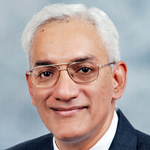
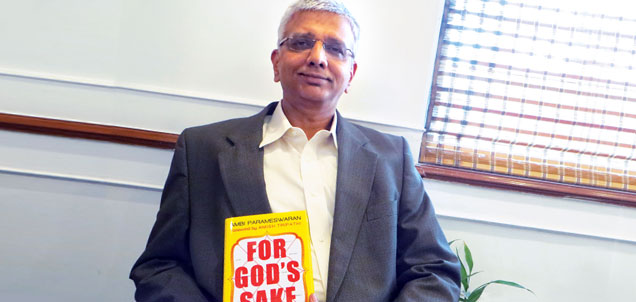
    In the world of advertising and brand management in India, Melarkode Ganesan Parameswaran needs no introduction. Or perhaps he does. For, the engineer from IIT Madras, MBA from IIM Kolkata and PhD from Mumbai University has been known in the industry as MG Parameswaran, and to friends and colleagues: Ambi. An author of six books – all serious brand- or case study-based, Mr Parameswaran completed his doctoral thesis in 2012 and did what many degree-holders aspire to do, but never get down to: convert the thesis into a bestselling book.


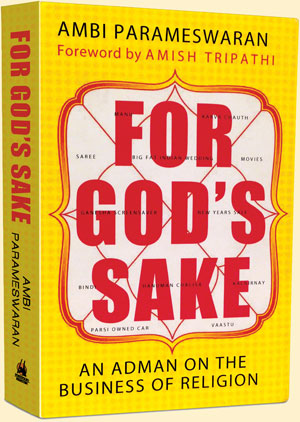
    With For God’s Sake, Mr Parameswaran, now Advisor at DraftFCB Ulka (until recently CEO and Executive Director with the agency), has managed to strike a heady mix of an easy-to-read tome mixed with some heavy duty business fundamentals.


    After the book’s launch in Mumbai on Tuesday, Mr Parameswaran took time off to take a few questions.


    Your book is based on your PhD thesis. While it’s critical for one to choose a topic that’s unique, surely religion was, to use an oft-used phrase in your business, much out-of-the-box. How and why religion or religiosity, as you call it?

    When you select a topic for PhD, you have to pick topics that are relatively new. I wanted to work on brands and castes, whether different brands have a caste typology. That was too out of whack, so my guide asked me to look at something on which there was at least some work happening in the academic world outside. I started looking again and found that religiosity was an area which was interesting and no real work had happened in India.


    India has become an increasingly intolerant nation. It’s tough questioning or raising issues about religious customs and traditions. Did that impact your discourse?

    Well when I started out I was wondering if Indian consumers would be open to talking about religious practices and beliefs. But the qualitative phase gave me enough confidence that we as Indians are quite open to talking about religion. In the US the religion question is not even asked in their Census. In India we are now digging even towards getting caste names. So it was not a problem getting consumers to talk.


    And was it easy rejigging your PhD thesis into a book?

    Well, it was a bit of a task. In fact except for the broad theoretical strokes I had to pretty much write afresh for the book. Fortunately, I had collected enough material for my PhD, so I had to go back to all those articles, books and monographs and look at them from a lay person and not an academic researcher. While the PhD took five years, writing the book took around five months, extra.


    Your book cover says ‘An adman on the business of religion’? While business could be defined variously, do you find that religion has become a business?

    Religion is very much woven into a lot of businesses in India. That was the theme of the book. I have intentionally stayed away from the hot topic of religion as business. There are some books that deal with that topic. Not mine.


    In the book you write about how Ramayana and Mahabharata on Doordarshan were turning points for the boom in religiosity, but there were also films like ‘Jai Santoshi Maa’ and Shirdi Sai Baba that propelled a great following for both gods. How much of the current surge in religious following would you attribute to the media? And print too, with coverage to film folk walking to Siddhivinayak…

    I think religion got into centrestage with Ramayana and DD. It has occupied centrestage ever since. In fact the first public sector enterprise to be named after a religious icon was Maruti Udyog. I feel as we Indians are experiencing a bit of prosperity, we are using our religious practices to buy an insurance for its longevity. The same is true with people walking to SiddhiVinayak or to Sabari Mala.


    As an adman who has been working with growing brands and also watching successes and failures, is there a great ‘brand success story’ of any religion or religious movement in the last decade or two?

    Not that I can think of. The last of the big religions belong to the Abrahamic era. However among the younger religions, Sikhism is named as the biggest by a recent Time survey.


    Akshay Trittiya is one festival that’s come up from nowhere? Valentine’s Day has become a ‘shubh muhurat’ for weddings. Do you see opportunities for many more such since marketers would want to cash in on occasions to fuel consumption/purchase?

    Absolutely. We will see the rise of more such festivals around us. In a sense, these festivals are legitimising consumption and making it perfectly okay. So more occasions the better, as a marketing man would say.


    Any religious god, custom, belief you – as an adman – think is pretty cool from a branding point of view?

    The rise of Shiva is cool. The way Hanuman and Ganesh got reincarnated as Bal Hanuman and Bal Ganesh are both great ideas.


    A personal question: are you religious and superstitious yourself?

    I am religious in the sense I do believe there is a GOD or a collective consciousness that keeps us going. I don’t think I am very superstitious at all. It is possible to be religious and not superstitious.


    And did you acquire any belief or superstition while researching the thesis/book?

    Not at all. But I lost faith in the quick fix Vaastu consultants.


    Lastly: while you’ve been known as Ambi, on paper and officially it’s always been M G Parmeswaran. But now it’s Ambi Parmeswaran? Numerological reasons? Or just better branding in a B2C world?

    Given the fact that “For God’s Sake” is aimed at the casual reader, my publisher wanted me to use a more reader friendly name, hence Ambi Parameswaran. My academic publishing continues happens under my formal name, M G Parameswaran.


    BOOK EXCERPT
    The Mystery of the Missing Bindi


    It was September 1994. Our agency DraftFCBUlka (then Ulka Advertising) had just completed a new advertising film for the soap brand Santoor. The new creative was set in an aerobics studio and featured the Santoor woman exercising to some lively music. The ad, which was being shot by the veteran ad film director PrahladKakkar, was going to be a breakthrough. All of us in the agency believed that it would work in the marketplace to resurrect the brand that had hit a plateau after seeing great growth for a few years. We had in fact bet the agency’s reputation on this ad with our long-term client Wipro. But I was very worried. I suddenly remembered that right through the film the Santoor woman was not shown sporting a bindi. In the story, she was a mother and her kid enters the scene with a loud ‘mummy’ squeal much to the surprise of onlookers. How could we have missed out on the bindi, I wondered. First thing next morning I called our film manager Monia Pinto and asked her if we could ‘rotoscope’ a bindi on the model PriyaKakkar’s forehead (rotoscopy is a technique whereby you insert a digital image into a real-life moving picture; it was relatively new and very expensive in the mid 1990s; the Hollywood film Who Framed Roger Rabbit had used this to great effect). Monia, the liberal that she is, pooh-poohed my worry. As did many of my other colleagues. The film was presented to the client, aired on television and became a landmark film in the history of brand Santoor. The Santoor woman, sans bindi, went on to play cricket, teach hula hoop to her kid and even made film stars dance to her tune over the next decade, helping make Santoor the third largest soap brand in the country. But the bindi thought stayed with me. The bindi is a part of Hindu culture and even has a strong tantric underpinning. Both men and women wear the bindi or bindu, which means drop or globule. It is supposed to be the sacred symbol of the universe, depicted as a dot or the zero. Applied between the eyebrows, it is purported to be the position of the sixth chakra, a place which is also the exit point of kundalini energy. Tantric literature abounds with explanations on the red bindu (symbolizing fire/blood) and white bindu (symbolizing semen). Married women also wear red vermilion or sindoor in the parting of their hair, which is first applied there by their husband on their wedding day, during the sindoordana ceremony. Only married women are allowed to wear the sindoor, according to Hindu custom. Interestingly, though Islam does not have a bindi or sindoor custom, most Muslim women in Bangladesh sport a bindi. Even in Pakistan, Muslim women at times wear designer bindis, quite ignoring the Hindu symbolism of the bindi.


    Not too many people know all this socio-cultural background to the humble bindi. And the Indian advertising industry is populated by young men and women from upper-middle-class families. Most of them are what are called EMTs (or English Medium Types). The scenario is changing rapidly now with an increasing number of HMTs (Hindi Medium Types) joining the tribe, but the EMT orientation remains.These EMTs were told, in the early days of their training, to ensure that advertising did not hurt anyone’s sentiment, least of all the Indian woman’s. So all ads that showed married women had to show them with a mangalsutra and a bindi! (Professor Julien Cayla of the University of New South Wales discovered that Indian Muslim women, whom she has studied extensively, were almost immune to this religious symbolism in most Indian television advertising.) My curiosity was piqued and I wanted to see if Indian advertising had evolved from the ‘bindi–mangalsutra’ trap. Accessing advertising archive services, my colleagues and I managed to extract around a hundred television commercials for packaged consumer goods (soaps, toothpastes, shampoos, tea, etc.) from 1987, 1997 and 2007. We wanted to see whether the portrayal of Indian women had changed in the three decades under study. Using content analysis techniques, we analysed the ads across several dimensions such as role portrayed by women (spouse, mother, working woman, celebrity) and occupation and setting (home, workplace, shopping, etc.). In addition to these specific well documented international metrics, we also added a few of our own Indian metrics. These were the dress worn by the woman (sari, other Indian apparel, western apparel) and the presence or absence of the bindi and other religious symbols (mangalsutra).


    From almost 75 per cent of women in ads in 1997 sporting a bindi, it was down to less than 30 per cent in 2007. (The next time you watch television, do check if you can spot an ad that shows a woman sporting a sari, a mangalsutra and a bindi. And reflect if these symbols trigger something in your mind. What do you think is the woman’s education level? What social class do you think she belongs to? What is her age? What would her outlook to innovative products and services be? What kind of mother would she be? As a wife, what would her big worries be?) We then turned our gaze towards print advertising. When Femina celebrated its fiftieth birthday a few years ago, we took the opportunity to revisit our hypothesis of the missing bindi. Our researchers spent several days at the Femina archives pulling out ads that portrayed women. We pulled out ten ads per year in a random but systematic process and in the end got to look at almost 500 ads that featured a picture of a woman over the five-decade period. These 500 ads were subjected to the same analysis as the television ads. We found that as against 3 per cent of ads portraying working women in the 1960s, the number had increased to 16 per cent in the new millennium. Once again, the sari and bindi stood out in our analysis. While 55 per cent of women shown in the ads from the 1960s were draped in a sari, the number was down to 9 per cent five decades later. What about the bindi? The dot had almost vanished-from 45 per cent to 5 per cent in the same period.


    Excerpted from ‘For God’s Sake’ by Ambi Parameswaran.

    Published with the permission of the author

    Portfolio Penguin,

    Pages 258, Rs 499 (hardback)


  • Punit Goenka, Nitin Paranjpe, Punit Goenka, Shah Rukh Khan, others win honours at IAA Leadership Awards

    By Correspondent


    Nitin Paranjpe, who was until last recently CEO and Managing Director of Hindustan Unilever and is now President (Homecare) at parent Unilever, was awarded CEO of the Year at the much-anticipated second edition of the IAA Leadership Awards held at Grand Hyatt in Mumbai on Saturday.


    Zee MD and CEO Punit Goenka was named Media Person of the Year and Shashi Sinha, CEO of IPG Mediabrands was Media Agency Head of the Year. R Balki of Lowe Lintas was Creative Agency Head of the Year. Ramesh Narayan was presented with the Hall of Fame award while Dr Gulab Kothari and Arnab Goswami were Editor and News Anchor of the Year respectively. Uttar Pradesh governor, B L Joshi presented the awards.


    The event witnessed the presence of the who’s who of the Marketing, Advertising and Media industry as they competed against each other to win the coveted awards.


    The very successful awards night saw winners emerge from across 21 categories:

    Speaking on the occasion Srinivasan Swamy, President IAA India and VP-development, IAA Asia Pacific, and chairman, RK Swamy BBDO said, “While management is about doing things right, leadership is about doing the right things; Today I would like to extend my heartfelt congratulations to all the winners who have outdone themselves this year as well as every nominee for showing what leadership means. I am glad to see another successful year at the event this year and look forward to many more years to come.”


    This year’s edition of the IAA Leadership Awards was presented by general entertainment channel Colors. Speaking about this initiative, Raj Nayak, CEO, Colors, said: “To recognize, encourage and celebrate excellence in leadership – that is what we have done at the IAA, a vibrant association which I have had the opportunity to lead. I would like to thank IAA for giving us the honour to be associated with this event, and congratulate the winners for their outstanding contribution towards the growth of the industry. We look forward to growing this association with the IAA year-on-year and applaud the hardwork of individuals on this national platform.”


    The awards presentation was followed by a celebratory party hosted by Mr Nayak and the Colors team.


    IAA Leadership Awards

    Categories

    Winners

    CEO of The Year Nitin Paranjpe, Hindustan Unilever
    Media Person of The Year Punit Goenka, Zee Network
    News Anchor of the Year Arnab Goswami, Times Now
    Editor of the Year Dr. Gulab Kothari, Rajasthan Patrika
    Hall of Fame Ramesh Narayan
    Brand Ambassador OF The Year: Male Shah Rukh Khan
    Brand Ambassador OF The Year: Female Priyanka Chopra
    Media Agency Head of the Year Shashi Sinha, IPG Mediabrands
    Creative Agency Head of the Year R. Balkrishnan, Lowe Lintas & Partners
    Marketer of the Year: Banking Kartik Jain, HDFC Bank
    Marketer of the Year: Insurance Sanjay Tripathy, HDFC Standard Life Insurance
    Marketer of the Year: Auto: 2 Wheeler Anil Dua, Hero Moto Corp
    Marketer of the Year: Auto Passenger Vehicles Rakesh Srivastava, Hyundai Motor India
    Marketer of the Year: Mobile Services Shashi Shankar, Idea
    Marketer of the Year: Mobile Devices Shubhodip Pal, Micromax
    Marketer of the Year: FMCG: Personal Care, Laundry and Toiletries Arun Srinivas, Hindustan Unilever
    Marketer of the Year: FMCG: Foods & Beverages Rajesh V.L., ITC Limited Foods Division
    Marketer of the Year: FMCG: Consumer Durables Sandeep Tiwari, Samsung India Electronics
    Marketer of the Year: Home Improvement Kumar Pillay, Ultratech Cement
    Marketer of the Year: Household Products Sonali Dhawan, Proctor & Gamble
    Marketer of the Year: Ecommerce Ravi Vora, Flipkart.com
  • MSL wins 6 new clients for strategic & integrated comms

    By A Correspondent


    MSLGroup, the Publicis Groupe’s flagship strategic communications and engagement company, has announces acquisition of six new clients across a range of industries, which includes, Tata Motors, Changi Airport Group (CAG), Monster Energy Drink, Videocon D2H, Sobha Developers, and Kinetic Group, for strategic brand communications and integrated engagement campaigns.


    Jaideep Shergill

    Said Jaideep Shergill, CEO of the firm in India, “The industry is evolving and clients are looking for strategic and integrated communications that will differentiate them in the marketplace. We are pleased to partner well-known and established players like these.”


  • Maxus is RECMA’s ‘Most Dominant Agency’ for fourth consecutive year

    By A Correspondent


    Maxus India has retained the title of the most “dominant” agency profile for the fourth year in a row as per the RECMA 2013 report. Maxus was the only agency to be rated as “dominant” as per the ratings. The RECMA report is the Qualitative Assessment for 2013 for all leading media agencies in India, basis two parameters – Vitality & Structure. This is the highest level of ratings awarded by RECMA, for the agency that demonstrates a balance between the two parameters.


    Kartik Sharma

    Speaking on the new RECMA Ratings, Kartik Sharma, Managing Director, Maxus India said, “2013 has been an exciting year for us. We won 17 new businesses, worth over Rs 600 crores. We made substantial investments to strengthen our offering across core media, digital, branded content and activation. This is also reflected in the number of industry awards the agency won during the year.” He added, “From a people point of view, the new RECMA ratings are an indicator of the 10/10 vision that drives us to delight our clients and customers. We are governed by Passion, Agility, Collaboration and an Entrepreneurial spirit (PACE), a mission statement that drives us to deliver the very best and meet challenges head on.”


    2013 has been an exciting year for Maxus in India. New business wins include Tata Global Beverages, Unitech, Nestle India, Kotak Mahindra, Redbus.in, Ruchi Soya and Musafir.com to name a few. They also retained the media duties for L’Oreal in India.


  • Saina Nehwal roped in to endorse Iodex UltraGel

    By a correspondent


    Pain relief expert Iodex has launched a new variant, UltraGel that vouches to provide effective relief from pain-related symptoms. To further drive its popularity, Iodex has signed up badminton player Saina Nehwal as the new brand ambassador for Iodex UltraGel.


    In the new TVC that has been conceptualised by Leo Burnett, a badminton player at an international tournament is seen fighting severe muscular pain to stand strong on the ground, her smashes making the country proud as she wins the match and stands victorious. But instead of tasting her victory, she sits back to bury her face in a towel, trying to hide her pain. When she lifts her face, it is covered by a mask with a huge smile as she carries on interacting with the media and her fans. The smiling mask continues to hide her pain from the world. But Saina decides to unmask herself by curing the pain and reaches into her kit bag. The TVC ends with Saina accompanied by hundreds of women throwing away their mask and saying “Iodex UltraGel apnao, dil se muskurao”


    Talking about the new campaign, Amit Nandwani, ECD- LeoBurnett said, “Women putting up a brave face in day-to-day life to hide pain is a human truth that connects with everyone. Iodex Ultra Gel, with its unique formulation, aspires to put an end to their silent suffering. We needed to drive home the point in an emotional, yet hard hitting manner. I think the device of a smiling mask does it really well as it’s not just visually stark and cut through, but also makes for a refreshing piece of communication in the category.