Category: ADVERTISING

  • Anil Thakraney: Gh***a Alag Chhe!

    By Anil Thakraney


    I cannot claim ownership of the headline to this article, though wish I could. This is the crisp and to-the-point response from my tapori pal from Colaba, when asked of his views on Bigg Boss Season 6, which (mercifully) ended last week. Yes, it was that bad.


    Now, I am aware the show is targeted at the low brow audiences, but that’s no excuse for packing in ultra dull people inside the madhouse. This season’s collection was an all-time low, a group of completely uninteresting and unappealing participants. My guess is the producer and the channel suspected this to be the case along the way, and in a desperate last act, dispatched the totally lunatic Imam Siddiqui to this horrible party, to salvage some viewership. In fact, had it not been for this loon, the show would have been a complete disaster.


    If the team desires a continued, healthy run of this Big Brother clone, they need to make one big change for the future. They need to be very picky in their choice of housemates, as the viewing junta gets stuck with these sods for months together. I think there should be only one yardstick in the selection process: Either the person is highly engaging or he/she is fabulous to look at. Or is a really funny individual. Anyone who does not pass this criteria must be kicked out of the reckoning immediately.


    The complete flop show that was the ‘Grand Finale’ aired last weekend told me another thing: Mr Salman Khan is the real Bigg Boss of this show. Although I have no proof of this, I strongly suspect it’s the hunk, more than the voters, who decides the eliminations and the choice of the winner. The absolute power vested in the man means there’s no one from the team who has the guts to blow the whistle when things aren’t working. The finale was such a grand bore, it was a real challenge just to stay in. Yes, Salman Khan brings in his charisma to the proceedings, but his role should be restricted to anchoring it.


    Finally, to return to my tapori pal’s cutting-edge feedback, the ‘Alag Chhe’ promise was a blatant lie. It was back to street fights, juvenile tasks and a bunch of failed TV actors. If they had at least called it ‘Same Chhe’, my tapori friend might have been a tad kinder in his analysis.


    ***


    PS: Fantastic marketing innovation for an air conditioner brand. Very smart way to get the public enthused, and the media excited. Millions of dollars of free publicity using a simple device: Big Nose. Superb!


    [youtube width=”400″ height=”220″]http://www.youtube.com/watch?v=ElmEcfPEw2Y[/youtube]


    Anil Thakraney is a senior journalist and commentator. He is also Editor-at-Large, MxMIndia. The views expressed here are his own


  • India TV and MxMIndia announce self-defence workshops for women in media agencies

    By A Correspondent


    Much as the government is working on tough laws to act as a deterrent on excesses against women, after the gangrape of a 23-year-old last month, doubts have been raised about the safety for women working till late.


    Given that the media often requires working at odd hours and the fact that women constitute a sizeable ratio amongst employees in the sector across the country, MxMIndia spoke with several women in media (on- and off-the-record) for a two-part article on MxMIndia.com (here and here). Our conclusion was that there is an urgent need for an aggressive and ongoing exercise to get women trained in self-defence.


    MxMIndia then conceived a special initiative for media companies so that women can be better equipped in case of an eventuality.


    As a first step, India TV and MxMIndia have got together for Self-Defence Workshops for women in media agencies in Mumbai, Delhi NCR and Bengaluru. The workshops start this week and will conclude by the month-end.

    The workshops are being facilitated by media activations firm Pure Media. For details: Alok Kapuria (Telephone: 9892832681)


  • Raising the underarm deodorant issue

    By A Correspondent


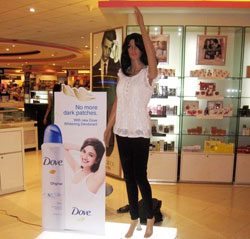
    Retail-media network Aurora Comms, or ‘A Comms’, used in-store mannequins to address the particular problem of underarm exposure among Indian women, in Hindustan Unilever’s campaign targeting upwardly affluent females for Dove’s ‘whitening deodorant’ promotion.


    For the campaign, a mannequin was set up in the women’s western wear sections of Central Stores and Shoppers Stop locations across the country. This is on a podium and the mannequin wears a white top with one arm raised. To highlight the ‘no more dark patches’ communication of the deo, this podium is lit up and a cut-out of the product and model placed next to it.


    On the same floor as the mannequin setup, the women’s trial rooms are branded with the promotion too, and the doors and mirrors carry the same visuals as the one next to the mannequin.


  • Debrief: Volkswagen Polo: Humanising tech

    By Anil Thakraney


    The Volkswagen India guys are notorious for their, well, let’s just say, offbeat advertising. Remember speaking newspapers? They have continued with this tradition in the new commercial for Polo, though this time it’s more cute than corny.


    A mother picks up her son from school in her, yes, Volkswagen Polo. She tells the child that tonight he’ll have to do his homework by himself, as mom and dad are going out. Else, god will punish the child. When the kid expresses cynicism about god having spare time for naughty bachchas, the dad’s voice, sounding like god, booms on the phone, through the car’s Bluetooth device. The child is naturally amazed.


    Cool, I like this one. Mainly because they have done something which none of the other car ads have done so far. Which is to humanise a technical feature, in this case the Bluetooth option. So much better than the cold technical spiel car ads usually dole out. Also, the treatment is warm, this TVC will get noticed. I have just one small issue with the ad: Parents joining forces to make a total fool out of their little one? Urmm… am not so sure. But then, this is Volkswagen. We have to expect something offbeat, as I said at the start.


    Now I am worried about the possibility of god’s voice booming through my morning newspaper. Not that, dear Volkswagen, not that. I might just get a heart attack.


    Rating: (On a scale of 1-5): 3. Focussed ad, cute treatment.


  • Anil Thakraney: Boring Golden Globes

    By Anil Thakraney


    The movie awards season is underway, and for the next month or so we shall be overloaded with the TV versions, both national and international. I shall review the assorted Bollywood award dramas along the way, but must say the start to the season has been less than exciting.


    As always, the Golden Globes opened the awards jamboree, and I was all set for some fun, wit and glory on VH1. Thing is, Hollywood award nights are usually crisp and sans all the natak that happens with Bollywood awards, so one expects to focus mainly on the winners and their winning performances. And some funnies from the show hosts. The Golden Globes did not disappoint on that count, and thank god their stars don’t perform raunchy item numbers on stage. It was a well-conceived show, so then why am I cribbing?


    Well, it’s got to do with the winners and their monotonous acceptance speech. Ten years ago, the trophy holders would go on and on and on, and make a billion viewers across the globe cringe with disgust. This prompted the organisers to get smart, and they came up with the idea of playing elevator music when the award acceptance speech time was up. Some die hard winners continued to ramble regardless, and so they started the practice of raising the music levels to blank out the extra verbosity. But clearly, Hollywood stars still haven’t learnt the virtue of a quick, snappy ‘Thank you everyone.’ They are still rambling and rambling like hell.


    The big problem (and thankfully this doesn’t happen with desi stars) is the desperate need to thank members of the family. Mother, father, husband, wife, sister, cousin, Moti, the dog, everyone. These incestuous greetings have nothing to do with the world at large, but that doesn’t discourage the winners. Ideally, we faithful viewers should be rewarded with a quick insight from the winning performance, a funny anecdote from the shoot or stuff we’ll otherwise never get to know. That would also make the show entertaining.


    I think time has come for Hollywood award show organisers to clamp down hard on family homilies. They should play Himesh Reshammiya’s scintillating nasal songs the moment a winner begins belting out the tiresome thank-you laundry list. 🙂


    PS: Haha. Found this ancient ad in my archives. This is America in the good ol’ fifties. In just sixty years, the world has turned upside down. If an organisation dares to release such an ad today, the brand manager and the ad agency staffers would get lynched under pointy stiletto heels. But have the mindsets really changed? That’s the moot question.


  • Mudit Trivedi joins TBWA\India as Client Services Director in Delhi

    By A Correspondent


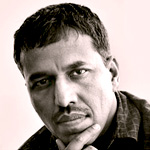
    Mudit Trivedi

    TBWA\India has further strengthened its Delhi operation by bringing on board Mudit Trivedi as Client Services Director.


    Mr Trivedi has worked on various categories and brands such as L’Oreal, Pond’s, Reliance Life Insurance, BIG Pictures, BIG Cinemas, ICC Cricket World Cup 2011 and IPL. He has also worked on campaigns that have received recognition at Cannes Lions and a number of other well-known international awards.


    A post-graduate in Mass Communications, Trivedi has been in advertising for nearly a decade. Trivedi joins TBWA from JWT Delhi where he was overseeing the Horlicks brand. He has also worked with Ogilvy and McCann.


    Commenting on his decision to join TBWA, Trivedi said, “I am absolutely delighted to be part of one of the most exciting and energetic networks in the world. I have always admired the philosophy of Disruption and Media Arts that is proven to deliver outstanding strategies and breathtaking creative for clients in India and all over the world.”


    Nirmalya Sen, Managing Director, TBWA\India said, “Mudit is a great combination of experience and youth. His exposure to integrated communication across big brands will make him a great asset for our clients in Delhi.”


    Subho Sengupta, Executive Vice President and Head of TBWA’s Delhi operations, added, “Mudit has rich experience and knowledge of Indian and global brands alike. This will be invaluable as he comes on board. His energy and passion is infectious and I am sure this will further accelerate our drive to create outstanding work for our clients.”


  • AdStrat: Rupa Frontline – Sabse Aage

    Manish Bhatt, Founder Director, Scarecrow Communications


    Name of the Campaign/Ad: Raho duniya se ek kadam aage.


    The Brief: Indifference towards voting has been an unresolved issue in India and the election statistics over the years prove the same. Taking forward the former tagline of Frontline – Sabse Aage (Ahead of everyone), the agency had to give the brand positioning a new dimension, which would not just serve as a brand message per se, but throw light on a larger social cause.


    Research insights: Says Manish Bhatt, Founder Director, Scarecrow Communications, “Apathy towards voting has been a chronic problem. If you look at India’s election statistics post independence, almost half of the country never turns out to vote. We saw a poignant issue, which Frontline as a brand could associate with and give a new dimension to its communication.”


    The thought process behind the creative: Earlier, Sabse Aage was the positioning of Frontline. While the previous films used humour as the plank, with this film the idea is to bring the positioning to life and give the Frontline man a definitive personality. The new tagline – ‘Raho duniya se ek kadam aage’ (Stay one step ahead of the world) – takes the brand thought one step further and the TVC positively tackles ways to boost the voting percentage and promote the turnout in elections in the country.


    Media vehicles chosen: TVC-led.


    Key issues kept in mind while executing the ad: One thing kept in mind while executing was to keep the action very real. Exaggeration helps in humour, but not in courage. An intensive search was done to choose the right locations and camera angles to stage the intense drama.


    Besides, sound was a critical and tough part of the film. Both the composer and singer, Piyush Mishra, have done a fantastic job of weaving together the grunge (necessary to the drama) and the quintessential melody of the song, seamlessly.


    [youtube width=”400″ height=”220″]http://www.youtube.com/watch?v=_suXQBGAH0I[/youtube]

    What is the differentiating factor about the ad: The soundtrack of the TVC is crafted from the originally composed Bengali patriotic song ‘Ekla Cholo Re’ (If no one responds to your call, then go your own way alone) written by Rabindranath Tagore (legendary Indian poet, writer and composer who was the first non-European winner of the Nobel Prize in Literature and also the composer of the Indian National Anthem – Jana Gana Mana) in 1905.


    The thought behind the song was to press the listener to continue one’s journey alone, even if there is no one to support. The soundtrack of the TVC has been recomposed by Rooshin Dalal and the film has been directed by Gajraj Rao from Code Red Films. The new version is sung by Piyush Mishra.


    Client comment: Mukesh Agarwal, Director Rupa, said, “Frontline is our flagship brand, and we were very keen to take its communication a step further. The story not only helps us reinforce the core brand thought but, for the first time, also helps us connect with the society and give out a meaningful message.”


    – Tuhina Anand


  • Havas pushes integration, digital strategy into media

    By A Correspondent


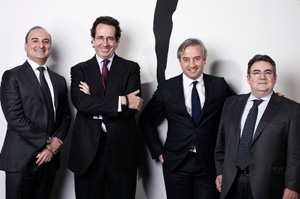
    (L-R) Michel Sibony, Alfonso Rodes, Dominique Delport and Jordi Ustrell

    Havas has announced another step forward with its integration strategy, simplifying its brands and structure.


    The newly created ‘Havas Media Group’ will include all of Havas’s media agencies, consisting of Havas Media (operating in 126 markets, India included), within which its media brand MPG and its digital brand Media Contacts, also in India, will be fully incorporated and rebranded, and Arena Media (operating in 13 markets). The rebrand is supported by a new simplified structure that places its digital expertise and content marketing at the core of its operations. This move brings the media side of the business in line with the structure of Havas’s creative division, Havas Creative Group (composed of the Havas Worldwide global network and Arnold Worldwide micro-network).


    Alfonso Rodes, Havas Media Group’s CEO, commented, “The explosion of digital media means that no one can afford to deliver a siloed approach to communications. This new media model integrates our digital expertise “at the core” of our organisation, promoting greater agility between all our teams and disciplines. It’s a simple yet progressive move that enables us to harness the digital transformation that has hit all types of media. By reorganising our teams, changing the lines of reporting and investing in building company-wide digital fluency, we put ourselves in a unique position in the industry. Our scale and simplicity allows us to present clients with a shared vision that meets consumer demand for more meaningful connections.”


    The new media organisation allows Havas to continue its strategy to be the first major communications holding company to invest in establishing digital excellence at the centre of all its agencies around the world. The new structure will place its specialised units such as Artemis (the group’s global data management network), Mobext (mobile network), Socialyse (social media), and Affiperf (Havas’s global trading desk) so that they are more accessible to the teams from both Havas Media Group and Havas Creative Group.


    On the content marketing side, Havas Sports & Entertainment will support this structure with its 36 international offices, India included. To support this move the Havas Media brand will be relaunched on January 24 with a new identity to reflect the tighter, more integrated organisational structure.


    To manage this new organisation the group has formed a new executive committee managed by Mr Rodes. Dominique Delport, CEO of Havas Media France, is appointed as Global Managing Director Havas Media Group. Reporting to Mr Rodes, he will be in charge of the commercial activity for all countries and all brands, strategy, new business, digital integration and intelligence. Michel Sibony, “Global Head of Middle Office”, will manage all global planning and buying operations as well as the group’s digital and specialist offers. Jordi Ustrell, “Global Head of Back Office”, will oversee the global support services such as IT, HR, legal and finance


    Mr Sibony said, “We need to guarantee our clients more consistency in every market and more speed in the delivery of this change to provide greater effectiveness and more efficiency when leveraging the new technological given by data management and technological platforms.”


    Mr Delport explained, “Our clients need change and innovation more than ever because beyond media, digital affects any business with great opportunities but also potential disruption. Understanding the relationship between brands and consumers, especially for the growing digital generation, is essential. Our aim is to form a new company that lies at the intersection of the traditional international holding groups and the new style of innovative, digital companies. It’s an exciting challenge for our clients and our teams.”


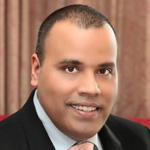
    Vishnu Mohan

    Vishnu Mohan, CEO, Havas Media, Asia Pacific, added, “This rebranding couldn’t have been initiated at a better time from the Asia Pacific perspective. Clients in the region are looking for simplicity in agency structures and an integrated offering. The objective of our current rebranding is aligned to that expectation. The simplification of brands within our group furthers our aspiration of being the most agile and integrated agency group with digital at its core”.


    Commenting on the development, Anita Nayyar, CEO, Havas Media India, observed, “Media is today an evolving ecosystem where only change is constant. Digital is fluid across every platform from traditional to new age, so the concept of ‘digital at core’ is vital. It is not ‘only’ specialization but the dynamics of integration and knowledge synergies that will exploit it to advantage. Brands are asking for integrated communications to differentiate themselves; they need responsive and analytical services. In India, digital is a reality or aspiration for every Indian. Our integrated service offerings of media, outdoor, digital and mobile with the new platform will be better leveraged to the benefit and delight of our customers.”


  • PR industry needs honest answers: Olivier Fleurot, CEO, MSLGroup


    By Johnson Napier


    While a sluggish outlook has dampened growth prospects across industries the world over, it’s a different story for the communications space. Or so it seems for the India market, which has been demonstrating decent growth year-on-year. Part of the success that the communications industry in India is witnessing could be attributed to the phenomenal performance of some of its prominent players. Like MSL India, which had a fantastic 2012 growth story to boast of.


    In India for the MSLGroup’s Board Meeting and to unveil the second edition of its industry report titled ‘Public Relations in India: Inside the Industry’s Mind and the 2013 Outlook’, MxMIndia spoke to Olivier Fleurot, CEO of MSLGroup, to gather his views on how far the PR industry has arrived in India, and what is it about the Indian communications market that makes the world sit up and take notice.


    Apart from India, China and other hot and emerging markets is where the action will come from, going forward, asserts Mr Fleurot. Excerpts:


    We’d like to begin with your observations on the trends that the PR industry in India and across Asia threw out, post the release of your outlook report in 2012. What were the ground realities you came across through the course of last year on the growth front?

    It is very clear that the PR industry in Asia is developing very fast. It is probably less mature than the Western Europe or US markets and therefore has a great potential for growth. Because we have acquired certain properties and have big ambitions for India and China we were of the view that we should be taking the lead in terms of organising a debate and finding honest answers on what is the road ahead for the future growth of this industry. That is the reason we launched our first executive report last year and have done it again this year. It is a contribution to the debate process and a way to show that we think we can be a thought leader in this industry.


    What was different about the way the Indian communications market grew in 2012 versus the other evolved markets?

    In India, what we managed to do is get a lot of western companies here as now we are very confident of our operations. As you’d know, foreign investment is very important for India and what we did for the country on that front is a good thing, so we think. As for Asia, I would say that it is the region in the world where the growth in our global industry is the highest. And I think it is going to be like that for several years because unfortunately in other markets like Europe the economy is not dynamic enough; we expect it to be flat for some more time. But clearly Asia is going to be the major driver of growth for our industry and we are very happy that we invested in this region a few years ago.


    Everyone seems to be hopping onto the digital bandwagon. What is going to be your strategy for growth for 2013?

    We are the clear No 1 in China and I can say the same thing about India as well. For us, digital was one of the key sectors where you saw us do a lot of initiatives in that space. Gaurav Mishra has been leading the digital and social media space for us in the whole of Asia. We are looking at acquisition opportunities across the region. Also we would be looking at other countries outside China and India to see if there is a potential for growth.


    Are you looking at emerging markets as an avenue for expansion going forward?

    Countries that are really opening up include Vietnam Indonesia, Latin America etc. We are always monitoring markets for potential acquisition possibilities wherever they be. These markets have to important in terms of the skills and experience. After all this is also the business of people so we need to keep looking out for new talent especially when dealing with new businesses and sectors. The best are those that have created their own company; they are more entrepreneurial and if they are ready to join it is always a fantastic experience. They need not necessarily be big companies but skills and talent is something that we are looking at.


    Are you satisfied with the growth story of MSL India in 2012? How does it compare to the growth story in your other important markets?

    Overall in Asia, our organic growth has been about 30 per cent which is way higher than the global industry figure of 5 per cent. A few countries have reported low numbers on account of low marketing and communication spending. For 2013, I am looking at a global growth of 5 per cent knowing that Europe will still be flattish and also Germany whose GDP grew by just 0.5 per cent given that it is the largest economy in Europe…also the industries are more mature in these countries. Actually, I am a bit optimistic about the US market as well given the fact that the elections are over and new budgets being approved etc. I think we can be surprised about the US market in 2013.


    Do you see opportunities arising out of upcoming or unexplored sectors going forward?

    We see huge opportunity in the energy sector given all talk about renewable energy etc. So we expect certain number of clients coming in there. Also, healthcare is also a priority for lot of clients across markets. The fact is that many industries are witnessing profound transformation these days. Also because of the growing use of social media and web most media are struggling to find a new business model or to promote their activity as where there were 3-4 channels, today that number is 100 or so…Also, Financial Services is another sector that needs some help going by what happened in 2012. So there are plenty of opportunities that exist.


    What are the takeaways that the industry can take a cue from the second executive report you’ve launched yesterday?

    The industry here in India should agree that there is a lot of potential and that it needs to come together and debate what are the best practices, how to raise the game, etc. There is need for the industry to see how it can offer value-added services, be more innovative etc as it is no longer about media impression anymore. It is much more complex than that especially on the web. So it is about measurement, being able to analyze data… basically see how we can develop a more sophisticated industry.


    What about talent? What is the way forward on that front?

    The fact that the industry is growing by 20 per cent we need to find the right talent. We need to work on our own image and on the image of the industry. We have to ensure that we attract the right young talent pool to our industry.


    What would be your core objective going forward?

    The aim going forward is to be a clear leader while also trying to be at the forefront by way of participation, debates etc in this industry.


    On Tuesday, January 22: Read extracts from the PR industry report – Public Relations in India: Inside the Industry’s Mind and the 2013 Outlook

     

  • Anil Thakraney: We need an Oprah in India

    By Anil Thakraney


    Why do top celebs like speaking to Oprah? Especially so when they desire to come clean on their sins? One obvious reason is the penetration of her show. You are assured of reaching millions of people at one go, so it’s a big bang for the buck. There are also nasty rumours going around in the case of the Lance Armstrong interview, suggesting that Oprah’s company and the TV channel paid major bucks to the cycling champ to ‘confess’ on their show. I suspect this is loose talk from Oprah’s envious rivals, so this reasoning is best left ignored.


    The other reason why Oprah gets preferred is that she’s a wonderful television interviewer. She brings in a healthy combination of curiosity and compassion to the interview. So, even as she fires tough questions, her eyes seem to suggest she does feel a tad sorry for the celebrity, for the trauma he/she is going through. This makes Oprah’s guests comfortable, and that’s critical for a good interview. Another good thing about Oprah is that she’s non-judgmental, she leaves that part of the deal to her audiences. This, again, is another reason why she’s favoured by celebs; the last thing a troubled soul wants is to be judged by the interviewer. And there’s a lesson in this for our aggressive, judgmental, in-your-face TV anchors and interviewers. Sadly, we don’t have a single TV person out here in Oprah’s league.


    About her much publicized two-part interview with Lance Armstrong, which the entire world watched, I have to say the disgraced champ blew an opportunity to win a little public sympathy. Even though he freely pleaded guilty to the doping charges, his mannerism and his body language told us the man isn’t really sorry for what he’s done, and it was also clear this TV interview was an exercise in currying favour with the anti-doping authorities, a desperate last ditch attempt at winning another chance to get back to the races. The key word he used is ‘flawed’. This means he’s still not taking responsibility for his actions, Armstrong seems to suggest there’s something wrong in his genetic make-up. Ergo, the cheatfest wasn’t deliberate. Complete nonsense, I say. Only the really gullible will fall for this crappy DNA logic.


    But full marks to Ms Winfrey for a good job done. In a way I feel bad for our desi celebs. Even when they decide to come clean, there’s not a single TV host they can go to without feeling edgy and nervy.


    ***


    PS: Disruptive advertising at its best. That too from a direct television brand. Also, super use of movie star Charlie Sheen. A good example of how to be crazy in advertising while remaining focused on the product/service on offer.


    [youtube width=”400″ height=”220″]http://www.youtube.com/watch?v=k2ZYIdmdx14[/youtube]


  • Debrief: Coke: Crazy nahin kiya re!

    By Anil Thakraney


    Coke has extended the ‘open happiness’ idea. The latest TVC features ‘crazy’ things people do to bring joy to strangers. Apparently the situations are based on real incidents filed by Coke drinkers. This not a new thought, Maggi noodles has been doing the real stories gig for some time, and Coke has made the same error Maggi made in the treatment, but we’ll come to that soon.


    The ad features a collage of so-called crazy actions. A young cyclist high fives a middle-aged gent who’s extending his hand to hail an auto-rickshaw. One kindly soul gifts a Coke bottle to a security guard. A kid leaves a bottle for a tired Santa. And so on. I like the jingle, it’s quite catchy. This is a good thought because it opens up opportunities for thinking offbeat situations, and it should work in India because we folks usually ignore strangers. Nobody even exchanges smiles on the streets in this stuck-up nation, so people will find the idea novel.


    Yes, all fine and dandy. The problem is this: Situations featured aren’t really crazy. They might just make you smile on the first exposure but from thereon they do nothing to you. I think Coke should go all-out on the crazy quotient; they need to think of wild and charming incidents. And there’s no need for multiple situations, they should tell us one cool story/incident at a time. This will make the communication stronger.


    And if Coke isn’t able to get hold of exciting stuff from the janata, the creative team should cook it up. Viewers don’t care about the modus operandi, they look for entertainment. Maggi ads suffered from the same problem because they weren’t able to obtain fantastic Maggi moments. I think this can be handled in both the cases very easily.


    So go crazy full-on, dear Coke. You are onto a good thing, don’t mess it up by relying on dull real stories.


    [youtube width=”400″ height=”220″]http://www.youtube.com/watch?v=jyEWtpYtpv4[/youtube]

    Rating: (On a scale of 1-5): 2.5 Idea has potential, needs to get wings.


  • Citizen Dentsu relaunched

    By A Correspondent


    Dentsu Communications has announced the relaunch of Citizen Dentsu, a specialized division for social and development sector communication. Recognizing the power of specialization, Citizen Dentsu has been formed as a division of Dentsu Communications to address the unique requirements of the social and development sector, with the support and resource bank of Dentsu Global.


    A release from the company said that the ambition will be to build Citizen Dentsu as a ‘Centre of Knowledge’ with specialised skill sets and strategic capabilities that would address the specific sectoral requirements and focus on building currency for causes, and thereby deliver value-added communication solutions for social clients.


    Rohit Ohri

    Rohit Ohri, Executive Chairman, Dentsu India Group, said, “Citizen Dentsu will focus on developing communication for social issues. Social sector communication is unique, in that it has to touch a multiplicity of target audiences and advocacy groups and, therefore, demands unconventional communication devices and unique interactive community media. Our investment is going to be on ‘innovations’, so as to create currency for social issues. I’m delighted to have Rajendra Singh on board to lead this new initiative.”


    Arijit Ray

    Arijit Ray, CEO of Dentsu Communications, added, “Social and development sector communication demands talent with a human touch and passion for ‘making a difference’. Therefore, our endeavour has been to put together a team with the right mix of cross-category and cultural learning and passion for social marketing. I am sure Rajendra and his team will strive towards building and crafting simple and breakthrough solutions that will add value to various community groups and stakeholders’


    Rajendra Singh has recently joined Citizen Dentsu as Senior Vice President. His last tenure was with JWT, where he worked for 10 years. Apart from a set of mainstream clients, Mr Singh headed JWT’s social communications division called Thompson Social for five years. He has worked on a multitude of social programmes, from issues like HIV/Aids, polio, child health and safe motherhood, health and hygiene to causes such as environment, education, food safety & drug usage, safe water and ozone layer, for clients like Unicef, World Bank, Nike Foundation and various ministries, as well as political advertising. He said, “We believe we need to break the mould of traditional advertising and leverage the power of ‘innovation’ for social communication, by employing technology as much as possible. That’s the only way to beat the din and build strong currency for a cause. This is going to be the Citizen Dentsu differential.”