
Category: HARD KNOCKS

Anil Thakraney’s view on adland, medialand and more

  • Anil Thakraney: Dual ad play during cricket matches?

    By Anil Thakraney


    I have always wondered what goes through the minds of viewers when they are subjected to commercials that feature cricketers during a live match coverage, when those boys are doing miserably on the field. For instance, ads featuring Sachin Tendulkar are constantly on air, even as there’s hectic talk of his immediate retirement from one day cricket.


    I don’t have research material to prove this, and maybe the time has come for a study on this subject, but I strongly suspect television viewers get mighty irritated, even repulsed, more so in the Indian context, where the average cricket fan is likely to be deliriously passionate about the game. As he gets busy swearing at the player, one can imagine the vocabulary when the commercial featuring the same player projecting him as a hero comes on the air. Clearly, this isn’t healthy for the brand in question, as the player negativity is sure to rub off on the former. And even if that sounds a bit extreme, annoyed viewers are highly likely to zap or mute such adverts. Which means not just money down the tube for the advertiser, there’s also danger of damage to brand imagery.


    And this is a risk advertisers knowing take when they hire sportspersons. As against movie stars, where the only risk is if the actor gets involved in an adverse publicity situation, like Saif Ali Khan did very recently. But that’s a rare occurrence, with cricketers it’s a constant gamble.


    Which then makes me think: Should marketers have a dual ad campaign on the ready during cricket tournaments? One campaign featuring the cricketer and the other based on a different creative route. So that during a cricket match if the player is found performing really badly, or is woefully out of form, the advertiser can switch to the commercial that doesn’t feature him.


    [youtube width=”400″ height=”200″]http://www.youtube.com/watch?v=9Xa7cYMD-Dc[/youtube]

    I wonder if broadcasters can technically make this happen without too many logistical issues. I actually think it shouldn’t be a problem.


    The only question which then remains is this: Does this justify additional spend on creative work? I think it does. Better to spend a bit more on cost of production than have the brand being sweared at during each commercial break.


    * * *


    PS: Fallon has re-created Queen’s ‘Bohemian Rhapsody’ for Cosmopolitan, a Las Vegas luxury resort and casino. Mostly in spoken words. Simple idea and very cool!


  • Anil Thakraney: The Oscar Bore-fest

    By Anil Thakraney


    A few random observations on THE most watched TV show on Mother Earth, the 2012 Academy Awards, which was telecast live on Star Movies.


    Our pride and joy, AR Rahman’s gig was a ‘blink and miss’. The maestro should take offence and refuse further participation. So should Mr and Mrs Anil Ambani, who were probably seated in the last row.


    Some of the presenters seem to have been inspired by the trashy stuff that goes on during desi award shows. The inane, idiotic, incessant chatter on stage. Which young SRK has become an expert at. While I am happy that India is impacting the world, events like the Oscars must ensure award presenters are barred from aping our unfunny jokers.


    But what they SHOULD have learnt from us, they haven’t. The Oscars was a bore- fest; much too long drawn out with too many categories being awarded, and with too much self back-slapping. I almost dozed off mid way through. Pity that the show which honours the world of entertainment must be so yawny. Sizzling dance performances from the Hollywood hotties would have broken the ennui. Penelope Cruz and Natalie Portman were in the house. Some ‘Sheila Ki Jawaani’ action from them would have been nice.


    Every single nominated individual was in the house (except Woody Allen, who’s apparently outgrown the Oscars). This means there was no awards leak. Compare this to Indian movie award events, where only the winners turn up. If we ever hope to reach anywhere close to where the Oscars is in terms of prestige, the first thing we need to do is plug the bloody leaks.


    Host Billy Crystal’s humour has all dried up with age. He looked liked a stoned, embalmed Egyptian mummy. Or, maybe he was ordered by the organizers not to cause the slightest offence. Poor man. Guess when it comes to fragile egos, Hollywood stars are no better than ours.


    However, one must say what did save the show a little bit, which was otherwise headed for disaster, was Angelina Jolie showing off her long shapely right leg. Total paisa vasool.


    ———————————————————————————————–


    [youtube width=”400″ height=”200″]http://www.youtube.com/watch?v=mhAg0COnqds[/youtube]

    PS: Outside the Oscars auditorium, Sacha Baron Cohen dropped Kim Jong IL’s ‘ashes’ on the anchor. The notorious comedian, who was banned from appearance on the stage, made a surprise entry on the red carpet and created a scene. Good fun. He should have been on the stage. He was sorely missed.


  • Anil Thakraney: Media ODed on the Gujarat riots

    By Anil Thakraney


    The whole of this week the media has been going ballistic on the 10th anniversary of the Gujarat riots. Almost as if each media brand competed with another on who can paint a gorier picture. As a result, a whole lot of skeletons tumbled out of ‘secular’ India’s cupboard and many unhealed wounds got exposed all over again. We have to wonder if this carpet coverage of the riots was such a good idea after all.


    I suppose the greatest human tragedy of all time must be the one that happened after the nation’s partition. A million people died and many more were displaced. But because there was no media madness at the time, that catastrophe has been pretty much wiped off from our collective memory. In fact, even the Bombay riots of 1992/93 don’t get much attention any more, again because there was no media madness at the time. This has allowed people to get on with their lives. As a generation changes, the Mumbai riots will also be a closed chapter.


    But the Gujarat riots happened in full glare of the media, so there is plenty of pictorial and written matter to fall back on. And this is where I think our media needed to exercise restraint. Because while the intentions may have been noble, nothing good can come from re-exposing deep injuries.


    So we re-lived the rapes, the burnings, the lootings, the killings… we were given a ball-by-ball replay and not just highlights, to use a cricketing metaphor. For the sake of the nation, I sincerely hope that the negative emotions didn’t get re-ignited all over again. All those affected have tried to pick up the pieces, and are attempting to re-build their lives. As far as the process of criminal justice goes, that’s already in the courts. Which is why I failed to understand the media’s desperation to re-live 2002.


    [youtube width=”400″ height=”200″]http://www.youtube.com/watch?v=fDpwoRlPiKk[/youtube]

    Bottom-line: The Indian media, particularly the news channels, learnt some hard lessons post the 26/11 goof ups, on how terror attacks need to be covered. It’s time some amount of introspection is also done on how anniversaries of riots and terror need to be remembered.


    ***


    PS: Yes, not all stars appear on the screen. A touching and extraordinary idea from Diet Coke. This is one international commercial that can so easily be replicated for Bollywood. What are they waiting for?


  • Anil Thakraney: News for sale

    By Anil Thakraney


    Very recently, a publisher friend called to seek advice. And his question threw me off-balance. Because not only was the query alarming, I frankly had no ready answers. So I copped out, and left it all to his judgment. The question: “A few assembly election candidates have approached us, asking for favourable coverage. They are offering large sums of money in return. What should I do?”


    Since I knew that this particular friend was bleeding and needed some funding desperately, I simply replied with: “Man, it’s really up to you. If you are here to uphold the high standards of journalism, ask them to go fly a kite. But if you rationalize the situation in your mind, and conclude that if you refuse the offer and your rivals would lap it up, then you will be the only loser. In which case, go for it!”


    Quite honestly, I have no idea what the publisher eventually did. But speaking from a larger perspective, it’s becoming increasingly clear that paid news is here, and it’s here to stay. There was a time when elections would excite only the political class, as that would mean big moolah gains for the winners. These days, along with them, a section of the media feels ecstatic. For the same reasons.


    Corruption in the media isn’t really new. In the past, some journalists would accept alarm clocks and booze bottles from financial companies, and then write sweet words about their public issues. Now, of course, you can get your private party pics flashed in the Page 3 pages if you are ready to pick up the tab. We’ve learnt to live with these malpractices. But newspapers, magazines and TV channels accepting money to write good things about political candidates changes the goal posts. It’s clearly harmful to the nation’s future.


    So is there a way out of this mess? I am afraid not. During the 2009 general elections, a few cheating media brands got exposed. Maybe we’ll hear of more culprits after the recent assembly elections in some parts ofIndia. But soon everything will be forgotten. And it will be business as usual.


    [youtube width=”400″ height=”200″]http://www.youtube.com/watch?v=jjYxE2VD7VE[/youtube]

    Yes, it pays to be in the media biz in modern times. If you won’t get support from advertisers, you can always tap into alternative revenue sources.


    Jai Hind!


    * * *


    PS: The context of the Fiat 500 Abarth ad is different, but this commercial is the kind of stuff Tata Nano ought to have done. A car you can take inside your home. Super positioning for a little gaadi. So much better than pitching it as the broke bugger’s vehicle.


  • Anil Thakraney: Full service agencies must return

    By Anil Thakraney


    In my interview with Lodestar’s Shashi Sinha, we discussed how the advent of media buying global conglomerates has killed the media planner. Here’s a link to the interview, in case you missed it: http://www.mxmindia.com/2012/03/the-media-planner-has-become-a-zombie-shashi-sinha/


    What gives me heart is that Shashi believes integration is the best way to work, and that he will re-start that structure in Interface. Good luck to him. That discussion also brought back memories of my days in advertising. When the client servicing, the creative team and the media planner would work under one roof and operate as one unit. And how that bonding facilitated many opportunities to conceptualize and execute cool media innovations for clients. Having quit the ad world a long time ago, I personally cannot even imagine working in an ad agency where there’s no media planner I can discuss ideas with. And nag her into making my crazy creatives come to life in the media. I shall go to the extreme and say that I consider the cutting off of the media function to be like an amputation, the loss of a limb.


    In fact, so connected were we with the media planners back in my days as a young account exec at O&M (then called OBM), I vividly recall that one evening when the then fiery media chief, Rhoda Mehta, threw me out of her department, accusing me of spending too much time with the girls in the media. Yes, in those days the media department was packed with members of the fairer sex, and I must also confess it wasn’t just work that attracted many of us lads to that pretty department. So, Rhoda wasn’t exactly over-reacting, heheh.


    On a serious note, it’s obvious that one of the reasons the industry produces such few media innovations is the break-down of the full service ad agency. A way has to be found to reverse things, and bring people back under a single roof. I am not sure how that can happen in these days of independent media buying outfits, and, therefore, we must all keenly observe how Shashi goes about things at Interface.


    Like it happens in Karan Johar’s weepy flicks, the broken family must re-unite for the greater good.


    * * *


    PS: Blast from the past! One cannot even imagine that a marketer would run such an advert in these times of militant feminism. The brand would get skewered on the streets. And what if this ad appeared on March 8, International Women’s Day?


    The brand manager won’t live to tell his version of the story, haha.


  • Anil Thakraney: Sex and the city, anyone?

    By Anil Thakraney


    Ekta Kapoor’s legendary saas bahu TV shows are officially dead. Both Tulsi mata and Parvati bhabhi over-stayed their visit to our living rooms, and that’s generally agreed upon. Further proof is Ekta’s increased attention to the movie business… the soap queen perhaps realizes that her sort of forever weeping, forever sacrificing, sati savitri naari is dead. And that’s a good thing; massive audience fatigue had set in on the format.


    However, after watching some of the new prime time daily soaps, I observed that the senior woman/younger woman face/off isn’t really over. Sure, the producers are attempting to feature the ‘modern’ woman and the plots now include remarriage, late marriage, young girl/old man, wife beater husband, and so on. But almost always, lurking in a dark corner, is an older woman who’s ready to give our young protagonist some serious stress. We haven’t really eschewed kitchen politics, in that sense.


    And I suppose the reason is this: Production companies, and more importantly the entertainment channels, are playing a safe game. There is a formula that’s worked in the past, and while they are ready to experiment with new ideas, there seems to be a reluctance to totally deviate from the tried and tested stuff. Too much money rides on television programming, there are also sponsors to worry out, and so it makes sense to be cautious. Fair enough, I understand where they are coming from.


    However, I do believe time has come for a ‘Sex and the City’ sort of a show. This could be exclusively targeted at the upmarket urban women (they are the ones with money power), a segment that really has nothing tailored for it on the massy entertainment channels. It’s a badly starved segment. In any case, high living, blind dating, promiscuity, binge boozing… all of that (and more) goes on in the metro towns. So why not capitalize on it?


    Yup, it’s a slot waiting to be filled; it’s a great programming opportunity. And the first mover will have the big advantage. Marketers of premium brands would be very interested in such a show. A chance for them to exclusively reach the hip, loaded, urban woman.


    [youtube width=”400″ height=”200″]http://www.youtube.com/watch?v=7kKAq6lHgeY[/youtube]

    So people, ready for some sex and sleaze in our living rooms. Any takers?


    * * *


    PS: Fabulous, fabulous media innovation fromIsrael. To create awareness on the problems faced by those suffering from Alzheimer’s disease. Hats off to the creators.


    Brilliant stuff.


  • Anil Thakraney: Good FM, pathetic ads!

    By Anil Thakraney


    Okay, so I have ‘upgraded’ to 94.3 Radio One and have chucked all my CDs into the Arabian Sea. Spending time in the car, despite Mumbai’s horrendous traffic conditions, has become fun once again. And I must say the RJs don’t ramble much, and the music collection is superb. A good mix of new stuff and retro. So far so good.


    The only problem is the bloody ads. Most of them are sick, boring and nerve-wracking to hear. And each ad enjoys high frequency because radio is an inexpensive medium. Imagine what a downer it is to listen to rubbish in the middle of Coldplay and U2. This is like a tapori waiter on duty at the Zodiac Grille. Doesn’t work. So who’s at fault here, can we blame the radio station? Ideally, 94.3 should be picky about the sort of ads they broadcast, so that the overall ambience of the station doesn’t get screwed. They cannot disown the ads completely. But private FM radio stations are bleeding in India, so we really can’t blame them for lapping up whatever ads they can get their hands on. They have to survive, no? So I guess the station can be forgiven.


    What cannot be forgiven is the sad quality of the radio ads. I cannot understand why, after all these years, agency creative directors don’t get this fantastic medium. At a very low cost, one can produce award winning work in this space. With no dependence on visuals, the listeners’ imagination can be fired, they can be left to fit in their own images. And how very tantalizing that can be! I suspect the key reason radio advertising continues to languish is that the entire attention of the ad agencies is focused on TV commercials. And perhaps radio spots are still being written by bored copy trainees, who must be treating it as a chore rather than as a creative challenge.


    [youtube width=”400″ height=”200″]http://www.youtube.com/watch?v=oG3JPvH3tO0[/youtube]

    Come on, dear Creative Directors. It’s a fab medium and a huge opportunity. Don’t waste it. And I would also appeal to the clients not to accept garbage scripts. They must put pressure on their agencies to come up with sparkling radio spots. Even if the spots cost less, money is being spent on them, so they better be paisa vasool. If the brand managers quietly accept mediocrity, then that’s what will be dished out to them.


    ***


    PS: Haha. Armani shows you how to tip the room service staff. I strongly suggest you don’t try this out in a desi five star hotel. The consequences can be grievous!


  • Anil Thakraney: Are you cultured?

    By Anil Thakraney


    A senior executive quit Goldman Sachs, and his resignation letter has gone viral. In fact, it’s a hot topic of discussion on Wall Street even as you read this. Full marks to the man for standing up for what he believes in. For sure the officer will be black-listed in the corporate world (as most whistle blowers are) but he will walk with his head held high for the rest of his life. Here’s the full text of his resignation letter, in case you haven’t read it.

    http://www.ndtv.com/article/world/why-i-am-leaving-goldman-sachs-186001


    What got me interested in this issue is the said executive’s reason for quitting: the organization’s culture had eroded and that was unacceptable to him. Haven’t many of us experienced this situation in our careers? Most of us don’t chuck our jobs because of this, but it’s a fact that an organization’s culture is important to its success. And yet, in the chase for profitability, this truth is often ignored. The result is loss of focus and staff friction across all levels.


    The best definition of an organization’s culture is the one I learnt in management school and it’s stuck into my head. It’s about ‘How the employees behave when no one is looking’. If there is a culture existent in an organization, then all employees would behave identically in a given situation. For example, at the Taj, if a piece of paper is found lying in the lobby area, chances are any staffer would quickly pick it up, right from the general manager to the waiter. That’s culture.


    I have noticed that organizations do start out with a clear, identifiable culture. But as the leadership changes, or as more money comes in, it’s quickly forgotten. I’ll give you another example. I once worked in a large ad agency and it used to be entirely client-led. Pleasing the client at all costs was the culture. The sort of people who were hired believed in that. And this percolated down the line. Even the peon treated the visiting client as god. Later when the top leadership changed, the agency’s culture changed to creativity. I don’t work there any more but I suspect every employee, perhaps even their admin staff, thinks of different ways to do routine things.


    [youtube width=”400″ height=”200″]http://www.youtube.com/watch?v=yotq4zr0dRc[/youtube]

    Shut your eyes and ask yourself a question: What culture does my organization have? If the answer is a blank or if it’s something that goes against your core values, it’s best to move on. Like the gentleman from Goldman Sachs.


    ***


    PS: Johnson’s captures the mother/child relationship wonderfully. A simple idea. Instead of a regular voice-over, they have imagined what a child might think of his/her mum. And that makes the emotions flow.


  • Anil Thakraney: Sachin coverage sucks

    By Anil Thakraney


    As expected, the entire Indian media went orgasmic as soon as ‘God’ hit that very elusive 100th hundred. Quite understandable. This man is a national hero and he needs to be celebrated.


    However, there were two aspects of the mad coverage I found quite annoying. One, each time Sachin reaches a milestone, the media (both, print and electronic) regurgitates the same old childhood pictures and the same old tired cliches about the man. And the same old ex-cricketers sing the same old praises. even in a euphoric state of mind, it becomes difficult to handle all this recycled stuff. Surely there’s an innovative way to celebrate the hero’s achievements. Surely there are untold incidents from the man’s life that can be dug out if one cares to do the hard work. Something to ponder on for editors and programming heads. Because, unwilling to retire, Tendlya will reach even bigger landmarks, and we need some freshness going.


    Having said that, I must point out that cricket expert Ayaz Memon was the only one who told us something refreshing about the cricketer. This was in his column for the Hindustan Times. Memon mentioned how, as a young lad, he (Sachin) would jump over the wall of a cricket ground rather than use the main entry door. The master’s reason? Why wait for something you enjoy so much in life. Superb. It gave you a powerful insight into the passion the player feels for the game, the reason he’s reluctant to retire even after two decades. We need more such gems in the media.


    Secondly, I was rather upset by the behaviour of the young TV reporters who were ‘granted’ quick interviews by the great man, soon after the mega ton. They were grovelling at his feet, like crazed fans. Guys and girls, that’s NOT the way the media is expected to conduct itself. Sure, the man enjoys a godly status, but a couple of tricky questions badly needed to be put to him. Like, did his search for the Big 100 bring the scoring rate down, which ultimately cost the team the match with Bangladesh? Does he agree with that?  Like, he claims personal landmarks are never on his mind. So then how come he closes his shop while batting in the nineties? Not one reporter would ask him these things. They were busy fawning. Repeat: That’s not the job of the media.


    Net net: Sachin Tendulkar is our biggest contemporary hero. No doubt about that. Now let’s pay him tributes that befit his own stature.


    ***


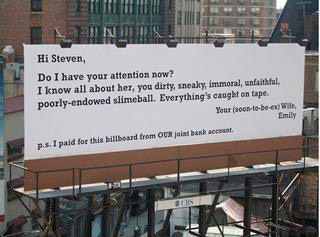
    PS: You should never, never piss her off. It’s worse than hell when she’s scorned. Here’s an American lady who passed on a sweet message to her philandering hubby through a hoarding. Wish Indian ladies did ditto. Tired of watching all those ugly thopdas of our politicians. 🙂


  • Anil Thakraney: Don’t kill Kohli

    By Anil Thakraney


    Young Virat Kohli must be pleased as punch. Not only did he manage to do the unthinkable – eclipse Sachin’s 100th 100 – the hot, new sensation is sitting on a goldmine. Imagine the excitement inside corporate boardrooms, as brand managers salivate at the prospect of signing multi million dollar contracts with the lucky dude. And also inside the buzzing rooms of editors and programming heads, as they plan huge spreads for the new found hero. What works even more for Kohli is that he looks reasonably good, unlike most desi cricketers. This makes him a huge media and ad property.


    I must quickly add here that I personally have very little respect for brand managers who piggyback on celebrities. This is their way of acknowledging that they are idea-less and want someone else to save their skin. But that’s a debate for another day. I have a larger worry at this point of time.


    Not every cricketer is mentally as strong and sorted as Tendulkar. Too much adulation and quick riches could easily go to Kohli’s head; he’s still very young, a 23-year-old lad. We have finally found a real match-winner in the cricket team, a player who doesn’t get intimidated by huge targets, and it’s in the nation’s interest that we carefully nurture this rare talent. We need to give the guy some space and time to mature (he’s got a long way to go), and both, the media and the marketers, must go easy on the young man. Hold the mega praises and the fat endorsement contracts for a bit, people. Let’s not kill the golden goose. We must think India first.


    Having said all of the above, I am equally aware that I am wasting my time out here. Our celeb-obsessed media and our idea-starved brand managers will pay no attention to this. They will go for the kill. What to do, we are like this only. All I can say is, one hopes Virat Kohli stays grounded. And keeps his head screwed on. Else, he’s finished. Like one Vinod Kambli.


    ***


    PS: Must read. An interesting profile of Imran Khan. From his playboy days to his new avatar as a devout Muslim. From captaining a difficult cricket team to the burning ambition to lead a ravaged nation. And of course, his recent bonhomie with dodgy mullahs and terror groups.


    Link: http://www.guardian.co.uk/world/2012/mar/04/imran-khan-pakistan-cricketer-politician


  • Is ‘Kahaani’ the gamechanger?

    By Anil Thakraney


    I watched Vidya Balan’s ‘Kahaani’ following all the brouhaha in the social media. As am sure many people did. It is also becoming increasingly clear that at least in the urban areas, Twitter and Facebook can, to a large extent, determine the fate of a film. This is the new word of mouth.


    On the subject of the movie itself, while I did yawn a couple of times and found that the climax lacked gravitas, I walked out of the multiplex with a good feeling. Because, at last, here was a Hindi film that had a real hero (and no, that’s not Balan… any actress with reasonably good acting skills could have pulled this off). And that hero is: Story.


    It is certainly refreshing to watch a desi film which doesn’t suffer from the Big Star disease that has infected Bollywood for a couple of decades now. Where movies are made and marketed solely on the basis of huge names like SRK, Salman, Aamir, Bachchan, Hrithik, etc. Where weak and often embarrassing stories are written with these demi-gods in mind. Where the audiences are expected to digest any drivel as long as the charismatic hero is in the frame. In fact, Salman Khan and Shah Rukh Khan have taken this nonsense to a ridiculous level… they not only act themselves in every film, they even gloat about it!


    This does not happen in world cinema, not in any other nation. In Hollywood, big stars like Brad Pitt, George Clooney and Jack Nicholson sink into the roles they enact, they seldom play themselves. This trap which Bollywood has dug for itself has resulted in standards of cinema plummeting to new depths of mediocrity. It has also resulted in film writers being paid poorly and treated like ‘extras’. Bollywood is the only movie industry in the world where producers FIRST sign the male hero and THEN think about the story. This is unheard of anywhere else.


    In that ridiculous scenario, ‘Kahaani’ comes as a breath of fresh air. One really hopes its success at the box office will make movie makers introspect and re-haul the current system. And go back to making the script the hero. Only when this happens will the rest of the world take Bollywood a bit more seriously. And we could dream of winning the elusive Oscar some day.


    [youtube width=”400″ height=”200″]http://www.youtube.com/watch?v=8t1_L7D7ZRg[/youtube]

    Yes, ‘Kahaani’ gives me hope.


    ***


    PS: Here’s a, well, interesting ad from The Singapore Tourism Board. I find the choice of words, ‘Get Lost’, quite offensive. Unless I am missing something out here, and the Aussies, to whom this ad is directed, like being abused. Methinks the advertiser has screwed up on this one.


  • Anil Thakraney: How can things improve at ad awards?

    By Anil Thakraney


    In my interview with Balki for MxMIndia, we discussed in detail his reluctance to take part in the industry award competitions. And he seems to make valid points. Broadly speaking, there are two big problems: One, the award competitions are designed to honour the ‘smart alecky’ stuff rather than the effective stuff. And two, the suspicious quality of the judges.


    I personally think both these issues can be dealt with if the organizers have the will to make things better, and more importantly, are ready to set their egos aside. These improvements will only make the awards a bit more worthy than they currently are.


    Let’s first examine the parameters for judging. Every entry must clearly spell out what the marketing problem was and how the campaign/advert helped solve it. This should be backed by credible facts and figures, and must carry comments/feedback from the concerned brand manager. Half the score must be reserved for this. As in, did the ad manage to meet the desired marketing objectives? The rest 50% of the marks must be awarded on how interestingly the message was communicated. This is where judges can be allowed to be subjective, and must reward only those ads which they believe achieved creative excellence. Though time consuming and tedious, this approach makes sense to me since advertising isn’t pure art, unlike poetry or painting. It’s commercial art. There is no use of pretty imagery if the brand went down the tube.


    Two, the judges. No current creative director must be allowed on the jury. This will eliminate the slimy agenda of some, who seize the opportunity to negate the chances of a rival’s ad winning. (By the way, this keeps happening all the time.) The jury must only consist of ace marketing directors who are reputed to have built brands or turned some around in their careers. And retired agency creative directors who are admired for the sparkling work they did during their days in advertising. The doyens who most industry professionals revere. Alyque Padamsee and Mohammed Khan come to mind immediately.


    [youtube width=”400″ height=”200″]http://www.youtube.com/watch?v=7VJJOfSVViw[/youtube]

    In short, I think things can be changed if people WANT them to be changed. Balki has made important points. Hope the industry leaders are paying some attention.


    ***


    PS: Must watch. Not just for those ad industry leaders who are past their sell-by dates, but all oldies in any sphere of work. People who continue to hang around, unsure of when to move on. (In fact, I think one Sachin Tendulkar must watch it too.) It’s based on the farewell speech made by Leo Burnett in 1967 upon his retirement.